

The last remaining barrier to rice exports has just been removed by India, the world's largest rice supplier. Will this affect the price of Vietnamese rice?
India has fully returned to the export market.
Late on March 7th (local time), the Indian government officially lifted the ban on the export of 100% broken rice. This decision was made to address record-high stockpiles in early February 2025, nearly nine times the government's target, as well as increasing international demand, and signals a major shift in India's trade and food security strategy.
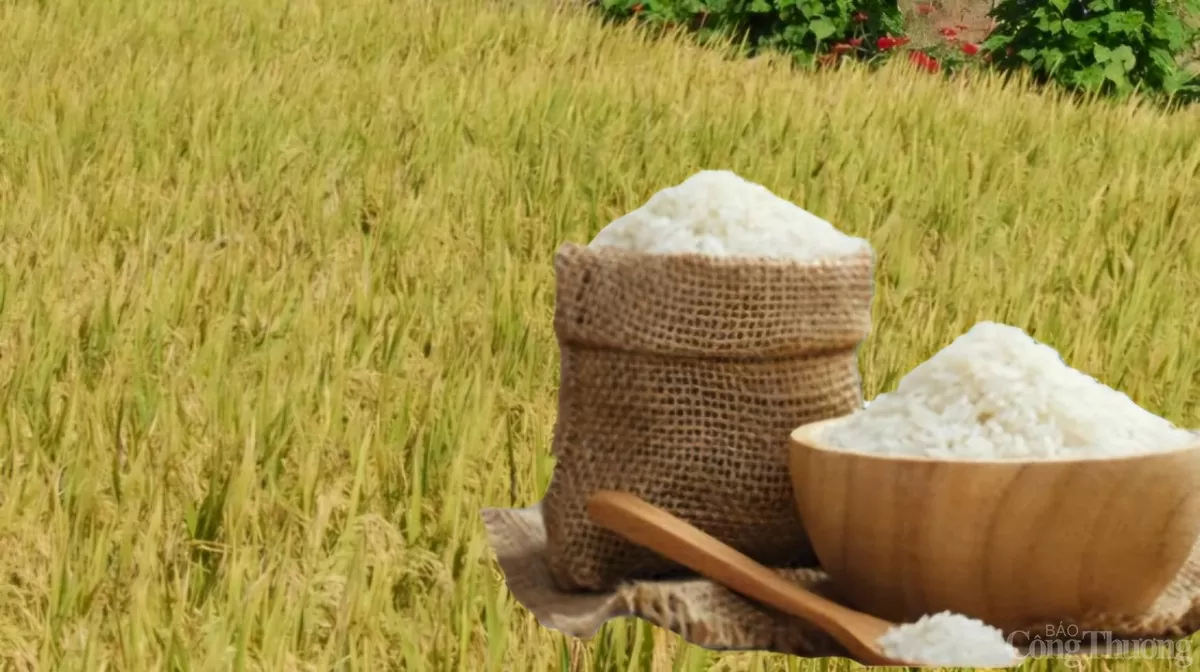 |
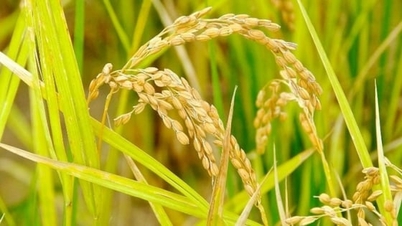
| India removes barriers; will Vietnamese rice be affected? |
The resumption of India's 100% broken rice exports would allow poorer African countries to secure grain supplies at lower prices, while also supporting Asian feed and ethanol producers who depend on this type of rice.
Previously, in September 2022, India banned the export of 100% broken rice. Then, in July 2023, the world's largest rice supplier banned the export of non-basmati white rice to ensure stable domestic supply and prices. A month later, India imposed a 20% export tax on parboiled rice (rice obtained from paddy soaked in hot water or steam-dried and then air-dried). These moves pushed rice prices in Asia to their highest level in 15 years in August 2023, rising from around $450/tonne to a peak of $700/tonne for 5% broken rice.
More than a year after banning exports of non-basmati white rice and imposing a 20% export tax on parboiled rice, on September 28, 2024, the Indian government suspended the export ban on non-basmati white rice. Simultaneously, it reduced the export tax on brown rice and parboiled rice from 20% to 10%, marking a gradual decline in global rice prices.
Accordingly, the sharpest price reductions have been recorded from around the end of 2024 and the beginning of 2025 to the present. Specifically, the price of 5% broken rice from Vietnam and Thailand has decreased by 38-45%. In Vietnam, the price of 5% broken rice has fallen from 680-700 USD/ton and has now plummeted to 390-400 USD/ton. This is an unprecedentedly large price drop.
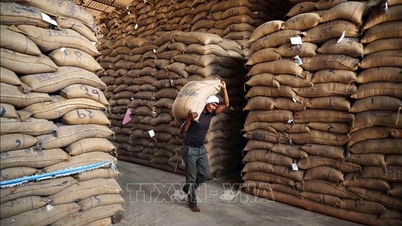
India accounts for approximately 40% of global rice trade and exports rice to around 150 countries. With the lifting of the ban on exporting 100% broken rice on March 7, 2025, the Indian market has fully returned to being an export market.
Industry experts believe that, along with an increase in global rice supply, decreased import demand with no signs of recovery in the short term will continue to put pressure on the global market.
Some opinions suggest that even if India does not lift its export ban, rice prices are expected to fall. This is attributed to the global oversupply of rice, wheat, and corn. Furthermore, it is predicted that the grain market will experience a period of oversupply and low prices over the next two years.
Vietnamese rice does not compete directly with Indian rice.
Speaking with a reporter from the Industry and Trade Newspaper, Mr. Do Ha Nam , Vice President of the Vietnam Food Association (VFA), stated that Indian rice varieties differ from Vietnamese rice. Indian rice is primarily low-grade and exported to the African market. In Vietnam, however, farmers have largely switched to growing high-quality rice varieties for export to key markets such as the Philippines, Indonesia, and Malaysia.
“Domestic paddy prices and export rice prices have continuously decreased since the beginning of 2025, making Vietnam one of the cheapest suppliers. However, 80% of exported rice is high-quality rice, not directly competing with India's 100% broken rice. Even so, pressure from India's large supply could still affect prices, especially in the lower-grade rice segment,” a VFA representative stated.
Previously, in an interview with the press, Mr. Phung Duc Tien, Deputy Minister of Agriculture and Environment, also noted that Vietnamese rice is mainly exported to countries in the Asian region such as the Philippines, Indonesia, Malaysia, China, and Singapore; while Indian rice is mainly exported to countries in Africa and the Middle East. It is clear that the export markets and segments of Vietnamese and Indian rice are very different.
Vietnam is entering its biggest rice harvest of the year – the Winter-Spring crop. Export businesses believe that with India's full return to the global rice market, Vietnamese rice will face even fiercer competition. Abundant production thanks to favorable weather conditions means that rice prices are unlikely to return to $500 per ton. Export businesses will also need to be more cautious in their procurement due to the constantly fluctuating market and slowing exports.
In response to developments in the rice market, the Ministry of Agriculture and Environment stated that it will direct localities in the Mekong Delta region to ensure production targets are met in terms of output and acreage, focusing initially on timely production and harvesting of the winter-spring rice crop; closely monitoring the planting schedule and drought and salinity conditions to minimize the impact on rice production.
At the same time, continue to direct and coordinate with localities in implementing the Project to Develop 1 million hectares of high-quality rice in the Mekong Delta. Strengthen promotion and trade facilitation, boost exports, research import and export policies of other countries, and create conditions to open markets for Vietnamese rice and agricultural products to export internationally.
Ministries, sectors, and localities should closely monitor market developments to develop appropriate response measures, coordinate with other ministries, sectors, and localities to closely monitor the global rice market; and understand rice demand in markets with remaining potential such as the United States, the EU, and Africa... in order to adjust production and export plans to suit market developments.
Regarding long-term solutions, the Ministry of Agriculture and Environment believes that it is necessary to research and organize production according to market demand and place orders with businesses. Based on overall production management, localities should proactively adjust the crop structure according to local characteristics to ensure favorable conditions for production and activities such as procurement, processing, and export.
| According to a report by the Ministry of Agriculture and Environment, Vietnam's high-quality rice segment currently accounts for 80% of total export production and remains stable in price due to less competition from Indian and Thai rice in the lower-quality segment. |
Source: https://congthuong.vn/an-do-go-rao-gao-viet-co-chiu-tac-dong-377445.html































































Comment (0)