


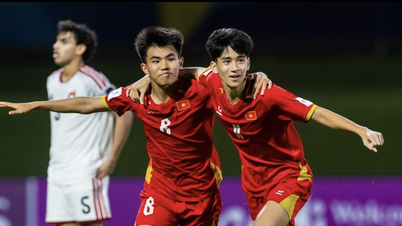
This figure was announced by the Vietnam Professional Football Joint Stock Company (VPF) at the conference to implement season preparation, after fully accounting for the breaks allocated for national teams according to the FIFA and AFC schedules.
From a positive perspective, this is not just a technical statistic, but also reflects an organizational mindset that is increasingly approaching the standards of professional football. The clearly defined and systematic schedule forces all parties involved (especially the clubs) to shift from a reactive mindset to a long-term management approach, from short-term solutions to operating according to professional standards.
According to the planned schedule, the 2026/2027 season will kick off with the National Super Cup on August 30, 2026, followed by the V.League from September 4, 2026 to May 22, 2027, the First Division from September 11, 2026 to May 16, 2027, and the National Cup from November 6, 2026 to May 30, 2027. Interspersed throughout the season will be four FIFA Days breaks, along with a break from mid-December 2026 to early February 2027 for the national team to prepare for and participate in the AFC Asian Cup 2027, coinciding with the Lunar New Year holiday.
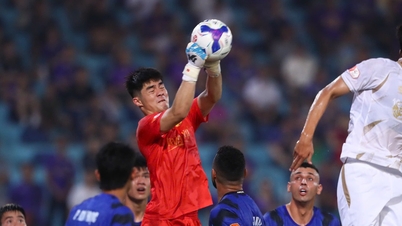
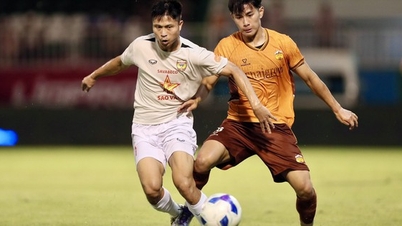
Early and transparent determination of all key timelines makes the season's schedule more transparent, stable, and predictable. This is a crucial element of professional leagues, because only by "knowing the game in advance" can clubs proactively plan their personnel, finances, training, and matches in a systematic way. With 14 V.League clubs and 14 First Division clubs, teams not participating in international competitions will play 27-33 matches, with an average frequency of about one match every six days. Meanwhile, clubs participating in AFC and AFF tournaments may have to play 32-54 matches, with periods of a match every 3-4 days.
At first glance, this seems like a packed schedule. But in the context of modern professional football, this is becoming an increasingly common standard. In many countries in the region and continent, playing matches continuously in short cycles is no longer unusual, but a necessary requirement if one wants to improve the quality and competitiveness of the league. Looking at Southeast Asia, Vietnam is not going against this trend, but is gradually approaching the organizational methods of its neighboring football nations. In Thailand, Thai League 1 lasts nearly 9 months, with each club playing 30 matches in the national league.
The schedule is spread out, allowing teams to maintain an average pace of one match every 6-7 days, even for clubs that regularly participate in continental cups. In Malaysia, the Super League runs from August 2025 to May 2026, with clubs playing 24-26 matches. The schedule is relatively more manageable, but it also demands stability in terms of squad strength. Meanwhile, Indonesia's Liga 1 has 18 teams, each playing 34 matches, with the season lasting nearly 10 months and featuring continuous matches.
At a higher level, South Korea and Japan are prime examples of a high-intensity professional football model. The K.League 1 runs from the end of February to the end of October, with clubs playing over 30 league matches, not including the FA Cup and continental cups. This continuous schedule with few long breaks helps players maintain a consistent playing rhythm.
In Japan, J.League clubs regularly play 34 league matches, plus the League Cup, Emperor's Cup, and AFC Champions League. A schedule of one match every 3-4 days is common, but it's supported by squad depth, sports science , and a modern management system.
Placed within that context, Vietnam's approximately 187-day match schedule shows that domestic football is entering a phase of "standardization" according to common practices, instead of maintaining "safe" periods that are only suitable for a semi-professional mindset. This higher-intensity schedule is becoming a driving force forcing clubs to mature. Building squad depth, investing in physical fitness and sports medicine, as well as applying scientific rotation and recovery methods, are no longer just encouraged options, but mandatory requirements.
From a management perspective, clubs can no longer rely on a thin squad or reactive operational methods. The 2026/2027 schedule forces teams to develop long-term plans, from recruiting and training young players to managing individual player workloads. This is the necessary "growth" process for professional football. Another benefit of a more tightly organized schedule is that it helps players maintain a consistent rhythm, limiting excessively long breaks that can disrupt their performance.
When properly managed, regular competition helps players improve their physical condition, adaptability, and competitive spirit—all crucial factors in enhancing the overall professional quality of the league. From a league perspective, a stable and more intense schedule also contributes to increased attractiveness and competitiveness, thereby enhancing the commercial value, television exposure, and image of national professional football leagues.
The 2026/2027 season, with approximately 187 matchdays, can be seen as a positive test for the professionalization of Vietnamese football. The challenges are real, but they also present opportunities for clubs to restructure, improve their governance, and approach regional and continental standards. If they overcome this test, Vietnamese football will have a crucial foundation for sustainable development, not only at the club level but also creating a positive premise for the national teams in the future.
Source: https://baovanhoa.vn/the-thao/ap-luc-de-truong-thanh-216146.html

![[Photo] National Assembly Chairman Tran Thanh Man working with the Standing Committee of the National Assembly's Ethnic Council](https://vphoto.vietnam.vn/thumb/1200x675/vietnam/resource/IMAGE/2026/05/21/1779337435930_ndo_br_1-jpg.webp)
![[Image] "Journey of Hope" promotes the organ and tissue donation movement in Vietnam.](https://vphoto.vietnam.vn/thumb/1200x675/vietnam/resource/IMAGE/2026/05/20/1779294400833_1-8910-jpg.webp)































































Comment (0)