

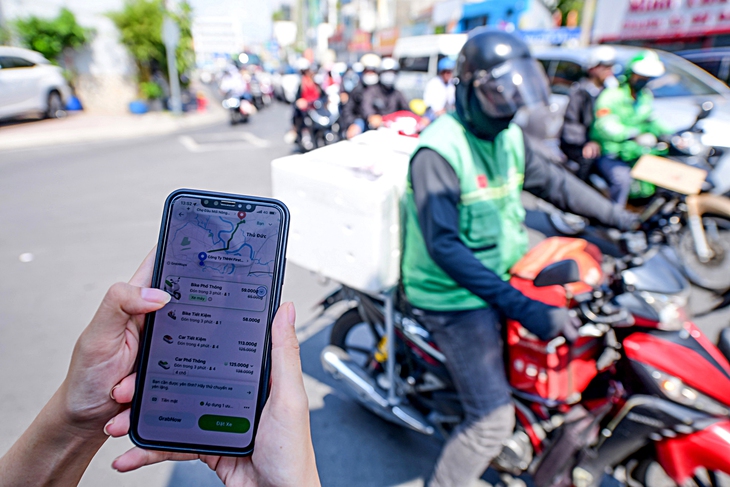
The current high fees are putting significant pressure on ride-hailing drivers - Photo: QUANG DINH
The Indonesian government has just made a notable decision regarding the ride-hailing industry. According to Reuters and several international sources, Indonesian President Prabowo Subianto has signed a new regulation requiring platforms like Grab and GoTo to reduce the fee charged to drivers from a maximum of 20% to 8% per trip.
The demand for ride-hailing platforms to lower fees charged to drivers is adding further pressure to the Vietnamese market, where many drivers say their income is decreasing.
Should Vietnam impose a discount ceiling?
In late April and early May, Grab and Be adjusted their fees and fares. Both cited reasons related to operating costs and driver support. Be announced a fare update after five years of maintaining stable rates. For two-wheeled ride-hailing services, the minimum fare is 13,817 VND in Ho Chi Minh City and 14,472 VND in Hanoi . From the 2nd to the 12th kilometer, the price ranges from 4,600 to 5,400 VND per kilometer.
For four-wheeled vehicles, the lowest fare for the first 2km ranges from 31,501 to 31,704 VND. For the next 12km, the price is from 11,000 to 14,000 VND per kilometer. Be stated that the adjustment was considered in the context of rising operating costs, especially fuel.
According to the company, the new pricing structure could help drivers earn an additional 2-11% per trip or delivery.
Previously, starting from April 28th, Grab also adjusted some fees. For motorbikes, the platform fee is 3,000 VND per ride.
For four-wheeled vehicle services, excluding taxis, the platform fee ranges from 5,000 to 19,000 VND depending on the pickup area and distance traveled. Grab stated that the adjustment aims to increase resources for driver support programs nationwide.
However, the fee increase has also sparked debate. Some customers question why, if the goal is to support drivers, the platform doesn't reduce its revenue instead of adding fees for users? "If fares increase, customers will consider using the service less."
"When there are fewer bookings, drivers also reduce the number of rides. The app says it's increasing fees to support drivers, but they need to prove that drivers are actually benefiting," said a frequent ride-hailing customer in Ho Chi Minh City.
The problem lies in the fee structure. Customers see the fare increase, but don't know where the extra money is going. Drivers see the amount deducted, but aren't always clear about each individual charge.
Meanwhile, the platform holds the data, pricing algorithms, and ride allocation mechanisms. When information is asymmetrical, each fare adjustment easily creates suspicion among drivers and customers.
However, the apps all explained that the fee increase was to support drivers and reinvest in enhancing user experience. Tuoi Tre newspaper has sent questions to Grab and Be and is awaiting official responses.
Meanwhile, an expert in the field of automotive technology argues that we shouldn't rush to consider Indonesia's 8% target as a formula that can be immediately applied to Vietnam.
According to this expert, each market has a different competitive structure, driver density, operating costs, user habits, and subsidy levels. If low commission rates were truly an absolute advantage, platforms might have lowered their rates to win drivers and customers.
"We can't just look at a number and impose a price. Nor can we let businesses charge whatever they want, especially when drivers have weak bargaining power," this person said.
According to this expert, platform businesses don't just collect money and then share it. They have to spend on technology, maps, payments, customer service, insurance, fraud control, complaint handling, marketing, promotions, and the operational team.
If the discount ceiling is lowered too much in the short term, the platform may compensate by increasing customer fees, reducing driver bonuses, cutting promotions, or scaling back services. In that case, the ultimate victims may still be drivers and users.
Therefore, the question is not just whether or not to impose a ceiling, but how to do it, with what roadmap, and to what extent transparency is required.

Source: Mordor Intelligence - a market research and business consulting company based in India - Graphics: Tuan Anh
Adjust the balance instead of applying an overly rigid ceiling.
Speaking to Tuổi Trẻ newspaper, Ms. Mai Linh, who has over 15 years of experience in technology, e-commerce, business, and logistics in Vietnam, said that if you only look at the numbers, the current fee of over 30% in Vietnam is quite high compared to many markets in the region, especially when compared to the 8% ceiling applied in Indonesia.
"However, the operational challenge of the platform model lies not only in the discount rate because businesses also have to bear many costs such as driver bonuses, promotions, operating technology, risk control, customer service, payments, and logistics," Ms. Linh said.
Therefore, if the discount rate drops too low, the platform will likely have to cut benefits or pass some of the costs on to users.
Conversely, if the deduction remains too high, drivers will feel that their actual income is significantly affected.
Specifically, if the ceiling is set too low, like in Indonesia, drivers may benefit in the short term, but in the long term, platforms will likely have to cut bonuses, increase user fees, or reduce service quality. In that case, it's not certain that drivers' actual income will increase sustainably.
Based on her experience, Ms. Linh believes that Vietnam should aim for a "balance point" instead of imposing overly rigid ceilings.
"I believe a more appropriate deduction rate for the Vietnamese market could be in the range of 15-20%, which would be sufficient for businesses to maintain operations and invest in technology, while also providing drivers with a more stable and transparent income," Ms. Linh suggested.
According to this expert's analysis, a 15-20% margin is relatively reasonable considering the actual operating cost structure of current delivery platforms.
According to typical market estimates, this ratio needs to be sufficient for businesses to cover cost categories such as operational technology, payments, customer service, risk control, as well as reward programs and driver retention. The remainder is the room for reinvestment and ensuring operational efficiency.
In addition, as commission rates decrease, platforms will need to shift their revenue models towards value-added areas such as digital finance, advertising, logistics, or membership programs instead of relying too heavily on driver fees.
"In my opinion, the role of regulatory agencies should focus on increasing transparency and ensuring healthy competition rather than excessive administrative intervention in market pricing mechanisms," Ms. Linh added.
Meanwhile, Ms. Nguyen Thi Anh Hong - Director of e-commerce at the 24hStore retail system - commented that the policy of reducing the commission ceiling to 8% in Indonesia is a very clear decision to protect workers.
However, it's important to recognize that this 8% figure reflects a model with strong state intervention and comes with certain market trade-offs such as reduced promotions, decreased investment, or changes to the platform's operational structure.
In Vietnam, from an overall market perspective, a fee exceeding 30% can be considered high and creates significant pressure on drivers.
Income pressure will fall on the delivery workforce, which could affect service quality, driver supply stability, and ultimately the user experience.
"However, reducing it immediately to 8% is not really appropriate given the current operating conditions," Ms. Hong commented.
According to this expert, a more reasonable adjustment could be in the range of 15-20% to ensure the platform remains operational and reinvests, while reducing income pressure on drivers and maintaining market supply and demand stability.
Regarding the role of regulatory bodies, Ms. Anh Hong stated: "Vietnam should have regulatory participation, but in a balanced way rather than rigidly imposing regulations."
Specifically, this involves increasing transparency in how fees are calculated and the revenue sharing ratio between the platform and the driver; monitoring and providing reasonable recommendations instead of imposing absolute caps; and prioritizing policies that protect workers in the platform economy ...
"From a service user's perspective, I agree that the current high fees are putting significant pressure on the drivers – those who directly generate operational value every day."
Therefore, adjustments are necessary, but a roadmap and balance are needed to avoid causing major disruptions to the entire ecosystem," Ms. Anh Hong shared.
Transparency before imposing price caps.
According to experts, the commission rate for ride-hailing apps shouldn't just be a question of what percentage is reasonable.
What needs to be clarified is what deductions are being made from drivers' accounts, such as platform fees, taxes, service fees, insurance, promotions, or support programs.
For many drivers, the feeling of insecurity stems not only from high deductions, but also from a lack of transparency in how income is calculated, bonuses and penalties are imposed, ride allocation is determined, and policy changes occur.
Before discussing a cap of 8% or 10-20%, each ride needs to clearly show how much the customer pays, how much the driver receives, how much the platform collects, how much is taxed, what are the platform fees, and which portion goes back to support the driver.
"When drivers know exactly why they are being charged, the debate about commissions becomes more justified. When consumers know whether the additional fees truly support drivers, the market will feel less ambiguous," suggested an expert.
Furthermore, a more independent complaint handling mechanism is needed for drivers. Currently, if their accounts are locked, bonuses are reduced, ride acceptance conditions are changed, or violations are penalized, many drivers find it difficult to directly communicate with the platform. A clear accountability mechanism would help bridge the gap between the two parties.

The income of ride-hailing drivers is under pressure as the costs of gasoline, battery charging, maintenance, and vehicle depreciation all increase - Photo: QUANG DINH
One ride, many ways to split the fare.
Looking at it from Vietnam's perspective, the Indonesian story immediately raises the question: if Indonesia can require platforms to reduce their fares per ride, should Vietnam do the same?
This issue has become a hot topic in the context of Grab and Be recently adjusting their fees and fares. Many drivers have reported that their net income is under pressure as the costs of fuel, battery charging, maintenance, vehicle depreciation, and waiting time have all increased.
With a 100,000 VND ride, customers often assume that most of the money goes into the driver's pocket. In reality, this is only the gross revenue.
From this amount, the platform may deduct app usage fees, service fees, platform fees, taxes, payment fees, or other adjustments depending on the type of service, region, and time of application.
According to our research, the term "discount" is commonly used by drivers. In reality, each company may use a different name such as app usage fee, service fee, commission, or revenue sharing.
Therefore, these percentage figures are only for reference, not a fixed rate for all drivers and all rides.
Surveys from public policy and market observations indicate that revenue sharing methods among apps currently vary considerably.
With Grab, many drivers have noted that app usage fees can vary depending on the type of service, driver group, and time of application; in some services, this rate has been recorded at around 20-25%.
However, the actual amount a driver receives depends on taxes, surcharges, promotions, payment methods, and how each trip is accounted for.
With Be, the company announced discounts of around 15-20% on some car services, depending on the service and region. For motorbike, delivery, or food delivery services, the calculation may vary depending on the program, including platform fees, taxes, and any subsidies.
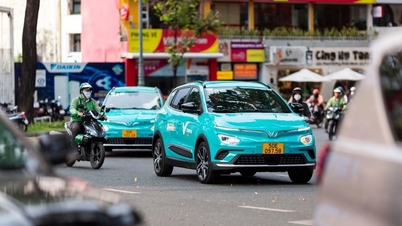
TADA chose a marketing model that doesn't charge drivers a percentage-based commission on each trip. This allows drivers to retain a larger portion of their fare compared to the traditional commission-based model.
However, end-of-day earnings still depend on the number of passengers, the frequency of trips, and the operating area.
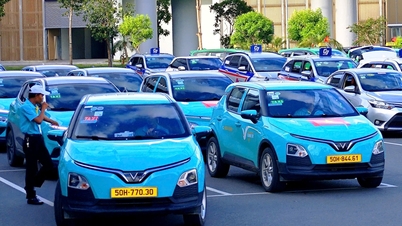
With Green SM, driver income depends on the partnership model, vehicle type, area, time slot, bonus program, and revenue sharing rate at any given time. Therefore, it is difficult to convert this into a single commission rate for all drivers.
For example, for a ride costing 100,000 VND, in some models where the fare is based on a percentage, the driver might have around 75,000 - 85,000 VND left before deducting fuel, battery charging, maintenance, and depreciation.
This amount may be lower if taxes, fees, or other adjustments are added. Conversely, with a model that doesn't charge a percentage commission, drivers can keep a larger portion of the fare but face the challenge of securing more customers.
For drivers, it's not just about the percentage of commission, but also the rate of customer usage of the app that increases their activity frequency. A platform with low commission but few customers may not necessarily help drivers earn more than a platform with higher commission but stable orders.
Le Van Binh, a ride-hailing driver with over 5 years of experience in Ho Chi Minh City, said that a 100,000 VND fare might seem large on the app, but after deducting fees and operating costs, the remaining amount is not much.
"Filling in the gas tank costs 50,000 dong, and after a few trips like that, we barely have enough money for food. We're practically racing against the app's algorithm now," said Binh.
On the other hand, Minh Hoang, a driver who recently switched to TADA, said that not having a percentage-based commission deduction makes it easier for him to calculate his income per trip, but the difficulty is that the customer base is not yet stable.
"Sometimes I stand and wait for an hour without getting a ride. In the end, I still have to use multiple apps simultaneously," said Minh Hoang.
Indonesia plans to lower the interest rate ceiling to 8%.
With the Indonesian government's decision requiring platforms like Grab and GoTo to reduce the fee charged to drivers from a maximum of 20% to 8% per trip, this means drivers can retain at least 92% of their revenue, instead of around 80% as before.
The Indonesian government argues that this policy aims to improve the income and working conditions of the foundational workforce – a group that is growing rapidly in the digital economy.
In addition to lowering fare caps, ride-hailing platforms in Indonesia must also provide accident and health insurance for drivers. The Indonesian president said that if businesses do not want to comply with the regulations, they "shouldn't be doing business in Indonesia."
This regulation is seen as a strong intervention by the government in the ride-hailing market. However, the specific timing of its implementation still needs further monitoring.
Source: https://tuoitre.vn/app-goi-xe-truoc-suc-ep-giam-chiet-khau-20260508084215977.htm








































































































Comment (0)