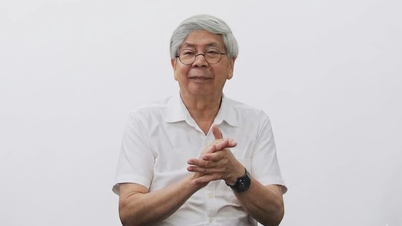
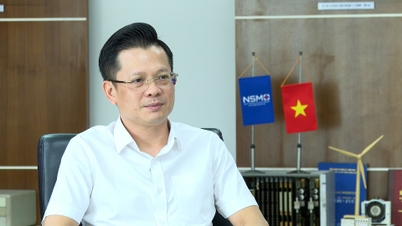
Dr. Phan Van Kien, Director of the Institute of Journalism and Communication Training, shared his views on the future of print journalism and the three core competencies journalists need to possess: social knowledge, professional skills, and technology.
Print media is redefining its role.
- In the context of social media and digital platforms increasingly dominating information consumption, what are the core values that help print journalism maintain its unique position and influence in today's journalistic landscape?
- Over the past two decades, every time a new media technology emerges, the question of the future of print journalism is raised. From the development of television, the explosion of online newspapers, the rise of social media, and more recently, the ability of AI to create content in seconds, many predictions suggest that print newspapers will soon disappear. However, reality shows that print newspapers still exist and maintain a certain position in the media landscape.
In my opinion, this stems from the core values that print media possesses. First and foremost is the reliability and accuracy of information. In the digital environment, the public faces a massive amount of information, including a significant portion of fake news, unverified information, or content produced solely to attract interaction. In this context, print media is still perceived as a highly credible information space, thoroughly vetted and strictly adhering to journalistic standards.
Secondly, there's the ability to provide in-depth information. While social media and many digital platforms compete on speed and reach, print newspapers are better positioned to focus on analysis, commentary, investigation, and explanation of issues. The public turns to print newspapers not to know what just happened a few minutes ago, but to understand the nature of the event, the context of the issue, and its long-term impact on society.
Another important value is the reading experience. Reading print newspapers is a different form of information consumption compared to browsing on a phone. It requires concentration, reflection, and selective information processing. In a world where human attention is fragmented by a multitude of notifications and algorithms, print newspapers create a slower, deeper, and more culturally rich space for information reception.
In the future, print newspapers may no longer hold the central position in terms of audience size as they once did, but they will still exist as a high-quality form of journalism, serving audiences who need in-depth, reliable information with lasting value.
- Many argue that print media isn't disappearing but rather repositioning its role within the media ecosystem. In your opinion, how should print media change to adapt to this new context?
- I agree with that point of view. The issue isn't about directly competing with social media or online newspapers in terms of speed of news delivery, because that's not a strength of print newspapers. In the future, print newspapers need to shift strongly from a news-providing model to a knowledge-providing model. Short, continuously updated information should be delivered on digital platforms. Meanwhile, print newspapers need to focus on in-depth content such as investigative journalism, policy analysis, thematic articles, major social issues, or human stories with lasting value.
In terms of format, print newspapers also need to innovate in a more modern direction. Many newspapers around the world are developing high-quality print products with beautiful designs, attractive graphics, visual data, and storytelling rich in experiential elements. Print newspapers are not only a means of transmitting information but also become a cultural product, a valuable intellectual product that can be preserved.
More importantly, print journalism needs to be placed within a multi-platform media ecosystem. A journalistic piece today can start on social media, expand to online news sites, be discussed on podcasts or videos , and then be synthesized and analyzed in more depth in print. In this context, print journalism doesn't operate in isolation but becomes a crucial link in the production and distribution chain of a modern newsroom.

What do journalists need in the age of AI?



- What skills will become mandatory requirements for journalists in the future, sir?
Future journalists need to possess three sets of competencies. The first is technological competence. Journalists need to understand data, know how to use AI tools, be able to work in a multi-platform environment, and adapt to the digital content production process. This will be a fundamental requirement of the profession, similar to using computers or the Internet today.
The second group consists of core professional competencies. No matter how much technology advances, skills such as topic discovery, source building, interviewing, fact-checking, investigation, and storytelling remain fundamental to journalism. AI can assist in data processing or content editing, but it cannot completely replace a journalist's ability to identify social issues and their professional responsibility.
The third, and in my opinion the most important, group is the foundation of knowledge in social sciences and humanities. In the age of AI, many people believe that technology is the deciding factor. But the reality shows that as information becomes increasingly easy to create, what becomes more valuable is the ability to understand people and society.
Journalists need to understand history to place events in context; politics, economics, and law to explain public issues; and psychology, sociology, and culture to identify changes in social life. These skills enable journalists not only to transmit information but also to explain and create meaning for that information. AI can generate text, images, and videos very quickly. However, AI lacks social experience, emotions, moral responsibility, and a true understanding of the complexities of human life. Therefore, especially in the age of AI, the value of knowledge in social sciences and humanities becomes increasingly important for journalism.
Connecting training with practice.
- From a training perspective, how do you assess the gap between the practical requirements of current media organizations and the capabilities of recent graduates?
- The gap between training and professional practice has always been a concern, not only in journalism but in most higher education programs. In the context of digital transformation, the rapid development of AI, big data, and converged newsroom models, this gap is even more frequently discussed as the demands of the labor market change very quickly.
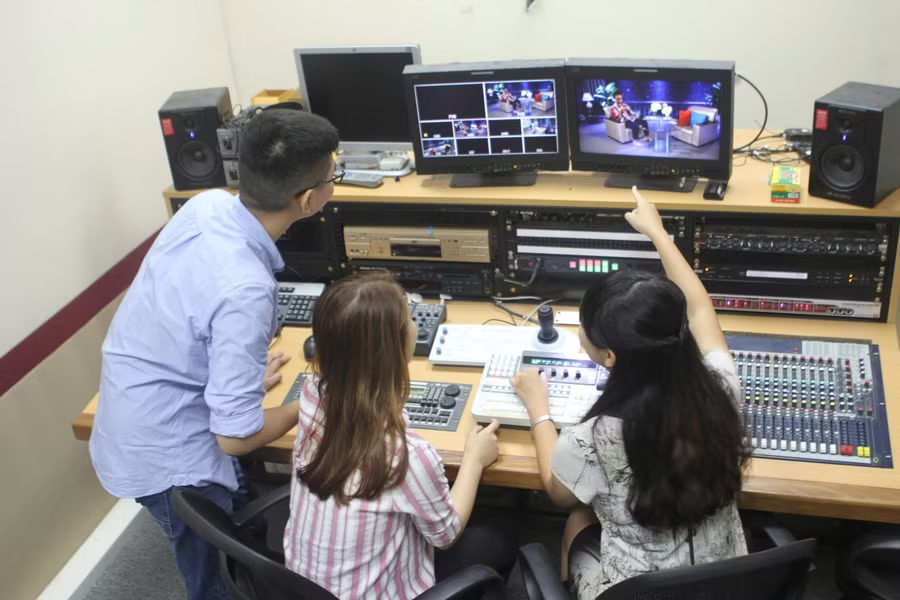
In the field of journalism and media, technology and the work environment are constantly changing. Therefore, it is more important than training a specific skill to help students develop the capacity to adapt to the changing nature of the profession. This is the long-term value of higher education. This does not mean that universities underestimate practical training. In recent years, journalism training programs have significantly increased the proportion of practical training, internships, and professional experience. At the Institute of Journalism and Media Training, students participate in real-world content production projects, intern at media agencies and businesses, and learn directly from many experienced journalists, editors, and editorial leaders. We always consider the connection between the university and the professional environment as a crucial requirement of modern journalism training.
In my opinion, instead of focusing on the need for recent graduates to be able to do everything immediately, it's more important that they have a solid foundation to learn quickly, adapt quickly, and develop a long-term career. A student who is well-trained in professional thinking, journalistic ethics, research methods, information analysis skills, and the ability to work in a digital environment will have a much greater chance of sustainable development than someone who only masters a few short-term technical skills.
To bridge the gap between training and practice, collaboration is needed from both sides. Schools must continuously update their training programs, enhance practical training, and connect with media agencies and businesses. At the same time, employers need to be more involved in the training process, providing opportunities for students to intern, gain experience, and develop career development paths after recruitment.

Training to master AI



- What innovations will the Institute of Journalism and Communication Training implement to prepare human resources for journalism and communication to meet the demands of digital transformation?
Over the years, the Institute of Journalism and Communication Training has continuously reviewed and updated its training programs to more closely link the academic foundation with the practical requirements of the journalism and communication industry.
In the upcoming 2026-2027 academic year, the Institute will continue to strengthen its focus on journalism training in a digital environment. Content related to AI, media data, multi-platform content production, digital media, social media management, and strategic communication will be enhanced in the training program. However, what we particularly emphasize is that we are not training students to compete with AI, but rather to enable them to use AI effectively, responsibly, and creatively. Technology is a tool to support the profession, but the decisive factor remains the human element.
The Institute continues to leverage its strengths as a training unit within the University of Social Sciences and Humanities. We consider foundational knowledge in social sciences and humanities a distinct advantage for journalism students in the age of AI. Because when technology can support information creation, what makes a journalist valuable will be their ability to understand society, understand people, analyze public issues, and their responsibility to the community.
I believe that the future workforce of successful journalists will not be those who are only good at technology or only good at traditional skills. They will be those who can harmoniously combine social knowledge, professional competence, and technological skills.
Thank you very much, sir!
Source: https://giaoducthoidai.vn/ba-tru-cot-cua-nha-bao-thoi-ai-post782125.html






































![[Image] Ho Chi Minh City: Ma Lang area, Chicken-Rice Market about to change its appearance](https://vphoto.vietnam.vn/thumb/1200x675/vietnam/resource/IMAGE/2026/06/25/1782377698627_ndo_br_m1-jpg.webp)