

Stemming from the very nature of our State as a state of the people, by the people, and for the people, the overarching goal of a service-oriented administration is to serve the people and for the benefit of the people. To effectively achieve this goal, the administration must be built in a professional, responsible, and modern manner. This is also a demand of the times, a demand of the people for both the entire administrative apparatus and each individual official and employee within it!

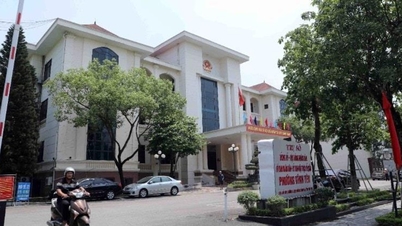
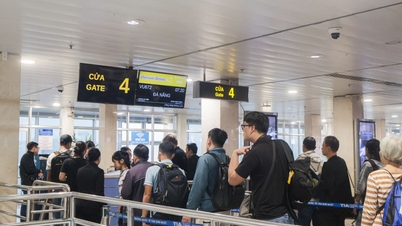
The provincial police guide citizens through the entire online application process for ordinary passports. Photo: NQ
Treating the fear of responsibility
As a bank employee, Mr. TA cited his experience at an administrative office: "According to legal regulations, document certification can take several days, but in reality, it can be completed in just one day. However, in many cases, applications are submitted on Friday mornings, and even though they could be completed by the afternoon of the same day, the One-Stop Service center staff still delay processing them until the following week, resulting in unnecessary additional costs."
He explained that this is why "bribes" are necessary to make things go more smoothly and conveniently. And it's also the "unofficial cost" that businesses often have to bear to avoid obstacles in their operations!
According to experts, the responsibility of officials and civil servants in performing their duties is demonstrated through many criteria, but the most important is through how they behave and contribute to achieving the highest efficiency in performing their duties, aiming to make society better and improve the lives of the people.
In other words, in a service-oriented administration, public servants must truly live with the people, share their pain and worries, find ways to resolve their difficulties, and do everything in their power to share their burdens. And the "people being served" here are not only the people at the grassroots level but also businesses, the entities that create wealth for society through their production and business activities.
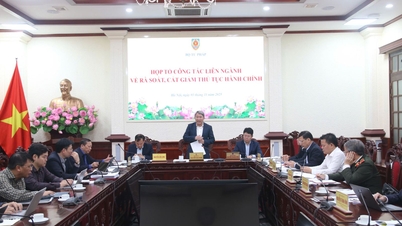
At a press conference on the province's socio -economic situation in March 2024, the Chairman of the Provincial People's Committee, Pham Van Thieu, stated that the provincial administrative apparatus suffers from a "hot at the top, cold at the bottom" situation. The Provincial Party Committee and the Provincial People's Committee are very decisive, but "the lower levels become cold." While this situation has improved with a higher PAPI index, the Chairman also acknowledged that "the fear of responsibility is currently widespread. I often tell my colleagues in specialized agencies that we should just work for the people, for the country, for the common good, and avoid corruption, then there's nothing to fear." This fear of responsibility, as pointed out by the Provincial People's Committee leader, has stifled the dynamism, creativity, and flexibility of the staff and civil servants, causing the public administration to operate rigidly, unprofessionally, and fail to provide good service, as assessed by businesses and reflected in the scores for each component of the PCI index.
Therefore, if we want to improve the PCI index, or more broadly, improve the effectiveness and efficiency of the public service apparatus and build a service-oriented administration that earns the people's recognition, one of the first things we must do is enhance the accountability of the team of officials and civil servants.
In addition to macro-level regulations and policies, at the local level, such as Bac Lieu , necessary solutions include restructuring and reorganizing the staff of officials and civil servants at all levels and sectors according to job positions and competency frameworks, ensuring the right person is in the right job. This also involves innovating the content and methods of training and professional development to enhance the capacity, skills, and qualities of officials and civil servants. Furthermore, it includes strengthening administrative discipline and order while creating incentives for reform within the ranks of officials and civil servants…
In fact, these solutions have been implemented in Bac Lieu, but the results have not been as effective as desired. Many solutions have been implemented merely superficially, and the changes are not yet clearly visible. Therefore, greater determination, consistency, and effort are needed from all levels and sectors, especially from the leaders.
Modernizing the administrative system.
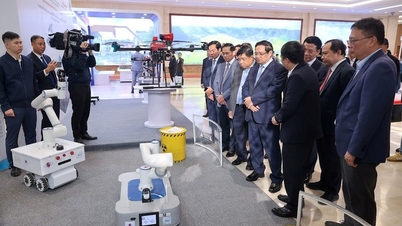
While the Fourth Industrial Revolution is creating rapid changes worldwide , shifting real-world activities to the digital environment, a modern administrative system is also an inevitable trend. Boosting investment in technical infrastructure and applying information technology in the operations of state management agencies will not only contribute to reducing operating costs and saving time but also provide better services for citizens and businesses.
The component indicators measured in the PCI index, such as administrative procedure reform, transparency, and dynamism, are also assessed in an online environment alongside in-person activities. Importantly, modernizing the administrative system will help change the working methods and styles of officials and civil servants, strengthening their responsibility for assigned tasks. The administrative system will therefore shift from management to service, as desired by citizens and businesses.
To modernize public administration, there is no better way than to accelerate digital transformation. In the digital environment, state management agencies develop applications and services to serve citizens and businesses through the Public Service Portal; develop and connect information systems and databases of various sectors and localities…
All efforts are aimed at improving the efficiency of the administrative apparatus from the provincial to the grassroots level. However, for successful digital transformation, the key factor remains the human element, as government and provincial leaders have repeatedly affirmed.
To build a modern administration, transitioning from a traditional to a digital environment, civil servants and public employees must change their mindset and recognize their role in the digital transformation.
Transitioning from paper-based administrative work to computer-based work and online information and data exchange is no easy task for civil servants who are traditionally trained in the old way. Therefore, alongside training and capacity building to work in a digital environment and meet the demands of digital transformation, the province also needs policies to attract young intellectuals and talented individuals to work in the state apparatus, rather than focusing solely on downsizing the workforce.
PAPI and PCI are measurement indicators, so the evaluation results are only relative and depend on the conditions under which the votes were taken, the methods of collection, etc. However, the impact of the results of these indicators is quite clear. When the province's PCI index consistently falls into the lowest group nationwide, the image of Bac Lieu as a dynamic, open, and proactive investor is tarnished, replaced by apprehension among investors and large businesses wanting to come here.
As a result, Bac Lieu lacks leading enterprises that can guide and create a dynamic and attractive business environment. Consequently, the Provincial Competitiveness Index (PCI) does not receive high scores from large enterprises, but only reflects the perspective of small and medium-sized enterprises. This vicious cycle will hinder Bac Lieu's aspiration to become a prosperous province if the root cause of the problem is not addressed.
Meanwhile, while the PAPI index is among the top in the country, we cannot be complacent with the results achieved. We must always strive to maintain citizen satisfaction. Because if all localities make efforts, standing still means we are already falling behind. And also, citizen satisfaction is a prerequisite for building a complete and service-oriented administration.
According to Thanh Lam (Bac Lieu Newspaper)
Source: https://vietnamnet.vn/bac-lieu-xay-dung-nen-hanh-chinh-so-phuc-vu-nhin-tu-chi-so-papi-va-pci-2284747.html

































































































Comment (0)