

Information from the Ho Chi Minh City Department of Health confirms that the increase in respiratory cases among children is not due to a new respiratory disease.
Dismisses rumors of a new respiratory illness.
The current increase in respiratory illnesses among children is not a "new respiratory disease."
The main cause is common viruses such as Rhinovirus, respiratory syncytial virus (RSV), Adenovirus, seasonal influenza, etc., which often appear when the weather changes.
 |
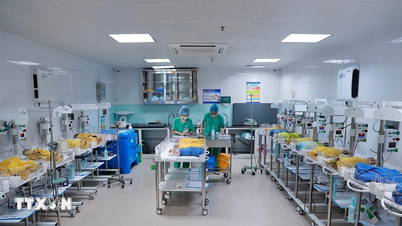
| Illustrative image |
According to statistics from Children's Hospital 1, Children's Hospital 2, and City Children's Hospital, respiratory illnesses in children are most common in the last months of the year.
Specifically, statistics from Children's Hospital 1 show that the number of children hospitalized due to respiratory illnesses tends to increase during the period from September to December each year.
The main causes are common viruses such as Rhinovirus, Respiratory Syncytial Virus (RSV), Adenovirus, seasonal influenza, etc. Respiratory illnesses often appear when the weather changes, creating favorable conditions for viruses and bacteria to thrive.
According to statistics, in 2024, Children's Hospital 1 received a number of patients with respiratory illnesses equivalent to the same period in 2023 and previous years.
Specifically, as of October 6, 2024, the number of bronchiolitis patients recorded at Children's Hospital 1 was 4,693 cases (equivalent to 129% compared to the same period in 2023), and the number of pneumonia patients was 8,176 cases (equivalent to 90.8% compared to the same period in 2023).
Comparing the figures over the five years from 2019 to 2024, the number of respiratory patients in 2024 remained largely unchanged, with approximately 5,000 cases of bronchiolitis per year and around 10,000 cases of pneumonia per year. A similar situation was observed at other pediatric hospitals in Ho Chi Minh City.
The respiratory infection surveillance system of the City's Center for Disease Control also recorded an average of about 17,000 cases of acute respiratory infections per week throughout the city; the progression fluctuates seasonally.
The weeks with the lowest number of respiratory infections are in February and March, while the weeks with the highest number of cases are from October to December, with over 20,000 cases per week. Children account for approximately 60% of the total cases citywide and follow a similar pattern.
During transitional seasons, and especially at the start of the school year, respiratory illnesses in children tend to increase due to fluctuating weather conditions and the spread of disease in the classroom environment.
To prevent and limit the increase in respiratory illnesses during this period, the health sector recommends that people and educational institutions implement the following measures:
Ensure cleanliness and good ventilation in classrooms: Educational institutions, schools, nurseries, and kindergartens need to regularly clean classrooms and keep them well-ventilated.
Enhance children's health monitoring: Educational institutions need to closely monitor students' health, promptly identify cases with symptoms such as fever, cough, and runny nose, and notify healthcare facilities in a timely manner.
Supplementing with a proper diet: A balanced diet helps children boost their immune system to fight off diseases.
Practice good personal hygiene: Children need to wash their hands frequently with soap and clean water. This helps reduce the risk of contracting respiratory infections.
Complete vaccination: Parents should take their children to healthcare facilities for complete and timely vaccinations as recommended by the health sector. Vaccination will help strengthen children's immune systems.
The health sector also advises parents not to worry too much, but instead to adhere to preventive measures to protect the health of their children and families. The respiratory disease situation in the city is still well controlled and shows no unusual signs compared to previous years.
To address the overcrowding issue, the City's Health Department is strengthening its efforts in patient admission and treatment, infection control, and prevention of cross-infection in medical facilities.
Hanoi : Increased surveillance and epidemiological investigation of infectious diseases.
Hanoi's health sector predicts that several diseases such as dengue fever, hand, foot and mouth disease, measles, and whooping cough may continue to increase in the coming period, especially dengue fever, which is currently in its annual peak season in Hanoi. In addition, scattered cases of rubella, meningococcal disease, streptococcal disease in pigs, and Japanese encephalitis may be recorded in the near future.
According to information from the Hanoi Center for Disease Control (CDC), in the week from September 27 to October 3, the city recorded 284 cases of dengue fever, an increase of 5 cases compared to the previous week.
Patients were distributed across 29 districts, counties, and towns, with some districts recording a high number of patients, such as: Dan Phuong (35 patients); Thanh Xuan (30 patients); Ha Dong (25 patients); Thanh Xuan (21 patients); and Chuong My (18 patients). The cumulative number of cases in 2024 was 3,814, with no deaths, a decrease of 78.7% compared to the same period in 2023.
Hand, foot, and mouth disease also recorded 41 cases (down 24 cases compared to the previous week). Cumulatively from the beginning of 2024 to date, the entire city has recorded 2,112 cases, with no deaths.
Additionally, four cases of measles were recorded, including two unvaccinated individuals and two vaccinated individuals. The cumulative total for 2024 is 17 cases.
Specifically, a 10-month-old female patient from Tay Ho district, with no prior measles vaccination history, developed symptoms on September 15th. She was examined at Medlatec Hospital and tested positive for measles IgM.
A 9-month-old male patient from Dan Phuong district, with no prior measles vaccination history, developed symptoms on September 27th. He was examined at the National Children's Hospital and tested positive for measles IgM.
A female patient (18 months old, residing in Ha Dong) had received the measles vaccine. She developed symptoms on September 14th, and on September 15th, she was examined at the National Children's Hospital and tested positive for measles.
A 21-month-old female patient from Nam Tu Liem district, with a history of measles vaccination, developed symptoms on September 20th. She was examined at the National Children's Hospital and tested positive for measles.
Notably, this week the city recorded three additional cases of whooping cough in the districts of Dong Anh, Nam Tu Liem, and Tay Ho, an increase of two cases compared to the previous week.
The cumulative total for 2024 is 236 cases across 29 districts, counties, and towns, with no deaths. The age distribution is as follows: 143 cases under two months (60.6%); 46 cases from 3 to 12 months (19.5%); 20 cases from 13 to 24 months (8.5%); 17 cases from 25-60 months (7.2%); and 10 cases over 60 months (4.2%). Other infectious diseases such as Covid-19, Japanese encephalitis, meningococcal meningitis, and rubella were not recorded during the week.
According to the Hanoi Department of Health, the dengue fever epidemic and the number of cases in Hanoi may increase rapidly in the coming period because it is currently the peak season for dengue fever outbreaks every year.
Meanwhile, measles cases are starting to show an upward trend, with scattered cases recorded in the area, mainly among young children who are not yet old enough to be vaccinated or have not been fully vaccinated; whooping cough continues to appear sporadically, mainly in young children who are not yet old enough to be vaccinated or have not been fully vaccinated.
In addition, scattered cases of rubella, meningococcal disease, streptococcal infection in pigs, Japanese encephalitis, etc., may be recorded in the coming period.
To proactively and effectively prevent and control infectious diseases, especially to prevent their spread and outbreaks in the community, the Hanoi Department of Health continues to request that local health departments strengthen surveillance activities for dengue fever and measles-like rash, conduct epidemiological investigations of confirmed and suspected cases, and organize the containment and thorough treatment of areas with patients and outbreaks according to regulations.
Local health units, in coordination with relevant agencies, especially the education sector, are reviewing the measles vaccination history of all children aged 1 to 5 years living in the area to prepare for the implementation of supplementary measles-rubella (MR) vaccination for children aged 1 to 5 who have not received all the required doses, as directed by the Ministry of Health and the People's Committee of the City .
Closely coordinate with the veterinary sector to closely monitor the rabies situation in animals; implement inter-sectoral activities on the prevention and control of zoonotic diseases.
At the same time, strengthen communication efforts to provide timely and comprehensive information on the disease situation; and measures to prevent and control certain diseases such as dengue fever, whooping cough, measles, hand, foot and mouth disease… For diseases with vaccines, people are advised to proactively get vaccinated fully and on schedule according to the guidelines of the health sector.
Two successful allogeneic bone marrow transplants were performed on patients with thalassemia.
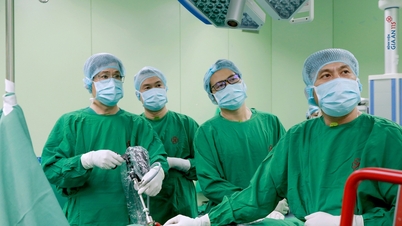
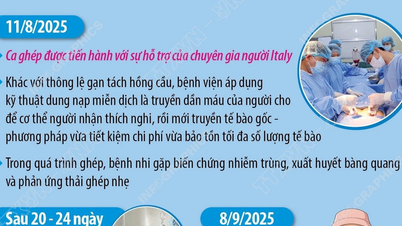
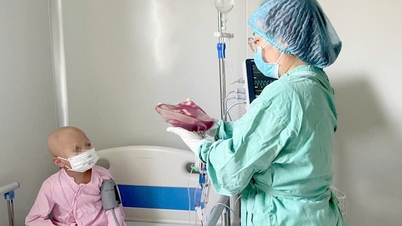
Hue Central Hospital has successfully performed its first two allogeneic bone marrow transplants on patients with thalassemia.
The first case is a child, Tran Viet Th. (42 months old, residing in Da Nang City). Since the age of 2, Th. has been diagnosed with congenital hemolytic anemia and has had to receive monthly blood transfusions at the hospital.
Doctors performed HLA testing and found that the child was a perfect match for her biological sister. Under the guidance of Professor Lawrence Faulkner (Germany), the team of doctors at Hue Central Hospital successfully performed a bone marrow transplant for Th.
Despite experiencing the rare complication of diffuse alveolar hemorrhage, thanks to the timely care and detection by the medical team, Th recovered and has now been discharged from the hospital, with scheduled follow-up appointments.
The second patient is Pham Le HV (8 years old, also residing in Da Nang City). V. was diagnosed with congenital hemolytic anemia at 17 months old and has had to receive monthly blood transfusions at Da Nang Obstetrics and Pediatrics Hospital since 2018.
After testing, the child was a perfect match for her older sister. Therefore, she underwent an allogeneic bone marrow transplant. During the transplant, she experienced a complication of fever and neutropenia, but the infection was mild and she recovered quickly.
According to Professor Pham Nhu Hiep, Director of Hue Central Hospital, thalassemia is a group of various genetic diseases characterized by the absence or reduced production of normal hemoglobin, causing microcytic anemia.
For moderate and severe cases, pediatric patients become dependent on blood transfusions, affecting their quality of life. Particularly in adulthood, anemia significantly impacts physical and mental development, and patients experience considerable bone pain due to extramedullary hematopoiesis.
The best treatment is allogeneic bone marrow transplantation, giving the child a new lease on life. From now on, the child will no longer be dependent on blood transfusions, will be healthy, and will have a normal development like other children.
The success of allogeneic bone marrow transplantation in thalassemia patients not only offers hope for children with thalassemia, but also brings hope to children with other diseases requiring allogeneic bone marrow transplantation, such as bone marrow failure, congenital immunodeficiency, and recurrent cancer, who are being treated at Hue Central Hospital.
Source: https://baodautu.vn/tin-moi-y-te-ngay-810-bac-tin-don-co-benh-ho-hap-moi-d226820.html
![[Photo] Prime Minister Pham Minh Chinh holds a phone call with Angolan President João Manuel Gonçalves Lourenço](https://vphoto.vietnam.vn/thumb/1200x675/vietnam/resource/IMAGE/2026/03/16/1773674632171_ndo_br_dsc-4772-jpg.webp)
![[Photo] Prime Minister Pham Minh Chinh receives the Ministers of Foreign Affairs, Defense, and Public Security of China.](https://vphoto.vietnam.vn/thumb/1200x675/vietnam/resource/IMAGE/2026/03/16/1773659638054_ndo_br_dsc-4386-6157-jpg.webp)
![[Photo] Prime Minister Pham Minh Chinh presides over meetings of the Government Standing Committee to discuss several important issues.](https://vphoto.vietnam.vn/thumb/1200x675/vietnam/resource/IMAGE/2026/03/16/1773674631996_ndo_br_img-5789-jpg.webp)
![[Photo] General Secretary To Lam receives the Chinese Ministers of Foreign Affairs, National Defense, and Public Security attending the Conference on the “3+3” Strategic Dialogue Mechanism](https://vphoto.vietnam.vn/thumb/1200x675/vietnam/resource/IMAGE/2026/03/16/1773659640884_a1-bnd-0963-2144-jpg.webp)

![[Photo] Secretary of the National Assembly Party Committee, Chairman of the National Assembly presides over the fourth meeting of the National Assembly Party Committee Executive Board.](https://vphoto.vietnam.vn/thumb/1200x675/vietnam/resource/IMAGE/2026/03/16/1773656046264_ndo_br_bnd-0533-jpg.webp)















































































Comment (0)