


Sweden's determination and NATO's progress
Following Finland's relatively smooth accession to the alliance, the remaining issue that is causing the most concern for NATO this year is Sweden. According to NATO Secretary General Jens Stoltenberg, officials from Turkey, Sweden, and Finland will meet at the end of June, expected to begin on June 12th, to try to resolve the issues that have delayed Sweden's accession process, which are facing opposition from Turkey and Hungary. At the same time, NATO defense ministers are also scheduled to meet in Brussels, Belgium, on June 15-16.
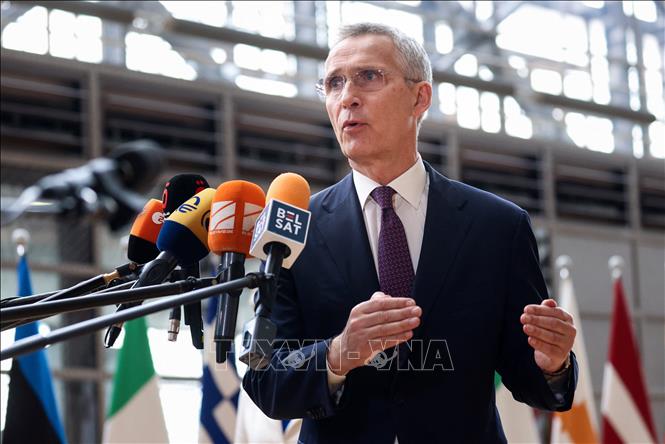
NATO Secretary General Jens Stoltenberg speaks to reporters in Brussels, Belgium on May 23. Photo: AFP/VNA
Earlier, at a NATO foreign ministers' meeting in Oslo, Norway, on June 1st, several NATO foreign ministers expressed optimism that Ankara would cease its opposition to Sweden's accession after the domestic elections. Sweden, along with Finland, applied for NATO membership last year, ending decades of military non-alignment. The applications from these two Nordic nations were approved at the NATO summit in June 2022. However, to officially become NATO members, the applications must be ratified by all member states of the alliance.
To date, Sweden has yet to receive the approval of Turkey and Hungary, with Turkey being the most concerned, as it insists that Sweden harbors members of groups that Ankara considers terrorist. The United States, the country with the most significant influence on the NATO alliance, has also stated that Sweden should be admitted to NATO "as soon as possible." Sweden itself has taken important concrete steps to address Turkey's concerns, including amending its Constitution and strengthening counter-terrorism cooperation with Ankara. Swedish Foreign Minister Tobias Billstrom recently stated that his country has met all the conditions and that "it is time for Turkey and Hungary to begin ratifying Sweden's membership." However, when the accession process will be completed remains an open question.
Deep divisions over the intention to admit Ukraine.
What are the prospects for Ukraine's accession? This is a question that concerns not only Ukraine but also other members of the bloc, sparking debate and even division. NATO leaders believe that now is not the right time to discuss the process of admitting Ukraine, with Secretary General Jens Stoltenberg stating: "It is impossible to discuss the admission of a country as a member while there is fighting." Germany has also voiced its caution. "Clearly, we cannot talk about admitting a new member while there is war (between Russia and Ukraine)," said German Foreign Minister Annalena Baerbock.
Eastern European member states have long been increasing pressure on the bloc to provide a clear roadmap for Ukraine's accession and commitment to the issue, rather than maintaining the ambiguous stance it has maintained for so long. Naturally, Russian President Vladimir Putin has also criticized NATO's admission of former Soviet states, viewing it as a threat to Russia's security.
On the Ukrainian side, in the latest developments, Ukrainian President Zelensky declared: "If we were not recognized and given a signal in Vilnius, I believe that Ukraine would not be present at this summit."
Earlier, on June 1st, Volodymyr Zelensky also expressed his stance, stating: “This year is the year to make decisions. At the NATO summit in Vilnius (Lithuania) this summer, there needs to be a clear invitation from NATO members and security guarantees on the path (to Ukraine) becoming a NATO member.”
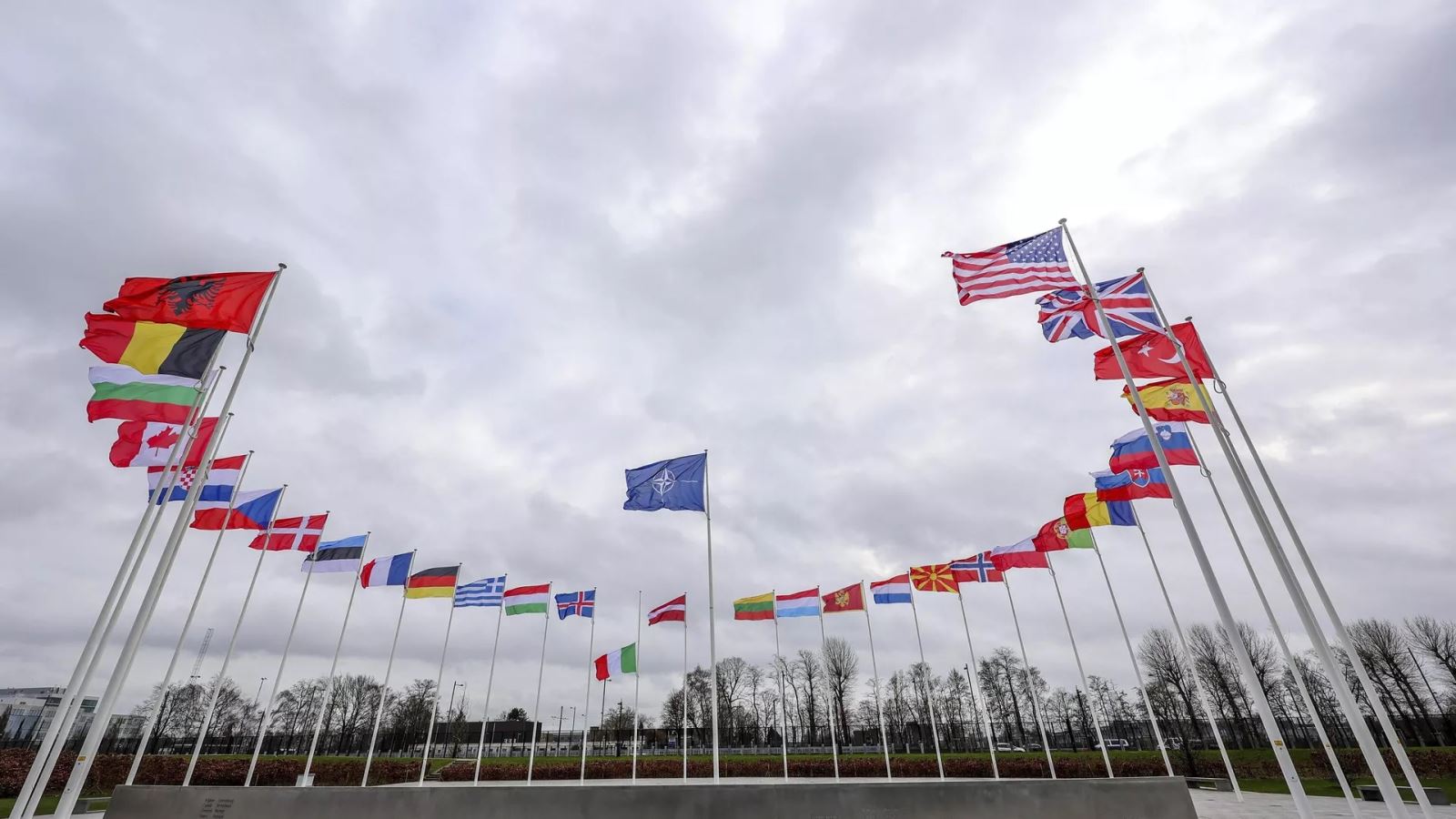
Finding a new Secretary-General: NATO's headache.
Ahead of the NATO summit in Vilnius, Lithuania, this July, besides the ratification of new members Ukraine and Sweden, the selection of the alliance's new Secretary-General is a new concern for NATO member states.
To date, after nine years in office, Jens Stoltenberg is considered to have not only overcome many major challenges but also achieved outstanding results as Secretary General, ensuring the stability of the military alliance. It is precisely because of these "outstanding achievements" that there have been reports suggesting NATO wants to extend his term as Secretary General (scheduled to end on September 30, 2023) until April 2024, as NATO continues to seek stability amidst the ongoing conflict in Ukraine. Furthermore, NATO members also want Jens Stoltenberg to chair the summit commemorating the 75th anniversary of the organization's founding in Washington in April 2024.
However, Jens Stoltenberg does not seem to intend to renew his term. Recently, the German newspaper Welt am Sonntag reported that Jens Stoltenberg could become President of the World Bank when David Malpass leaves office around the same time.
Despite having only 31 member states, achieving absolute consensus within the bloc has never seemed easy for NATO. While many countries are hesitant to gauge the reaction of Jens Stoltenberg, hoping to retain him as Secretary General, many members of the military alliance are looking for a replacement for Stoltenberg during or even before the NATO summit in Lithuania in mid-July. This means that replacing Jens Stoltenberg is not only necessary but also very urgent.
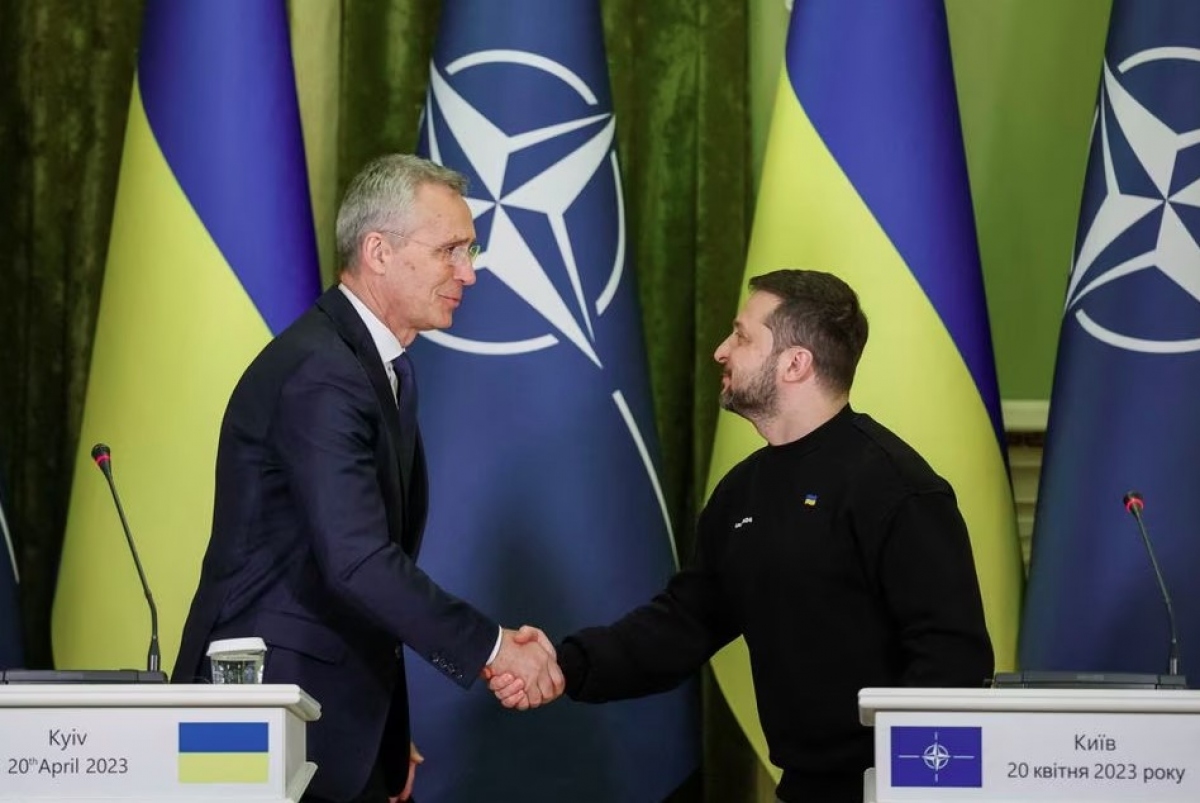
NATO Secretary General Jens Stoltenberg and Ukrainian President Volodymyr Zelensky. Photo: Reuters
And with such a difficult position and for such a short period, finding a new occupant is no easy task. As Reuters (UK) put it, whoever holds the position of NATO Secretary General at this time will face the dual challenge of keeping allies supporting Ukraine while guarding against any escalation that could draw NATO directly into conflict with Russia.
Moreover, as mentioned, NATO is notoriously characterized by a system of "nine people, ten opinions," making consensus difficult. Furthermore, according to many unofficial sources, the individual must also receive support from Washington – the largest source of funding for NATO. France is expressing its desire for a figure from a European Union (EU) country in the hope of closer cooperation between NATO and the EU; the Netherlands is expected to nominate its defense minister, Kajsa Ollongren; the UK also wants to nominate Defense Minister Ben Wallace; former Italian Prime Minister Mario Draghi; Romanian President Klaus Iohannis; and Canadian Deputy Prime Minister Chrystia Freeland are also being considered… Meanwhile, many member states favor former prime ministers or presidents to ensure the NATO Secretary General has the highest level of political influence, while others believe it is time for NATO to have its first female Secretary General, with Danish Prime Minister Mette Frederiksen emerging as a strong candidate.
Letter Page
Source






























![[Photo] A large number of people offer incense and visit the Ho Chi Minh Memorial Church.](https://vphoto.vietnam.vn/thumb/1200x675/vietnam/resource/IMAGE/2026/02/21/1771668099014_ndo_br_12-resize-7721-jpg.webp)


































































Comment (0)