Evidence that Qin Shi Huang was mistaken in searching for the ancient elixir of immortality.
New discoveries reveal details about Qin Shi Huang's ambition for immortality: ancient stone inscriptions record a thousand-year-old order to hunt for the elixir of immortality.
Báo Khoa học và Đời sống•18/09/2025
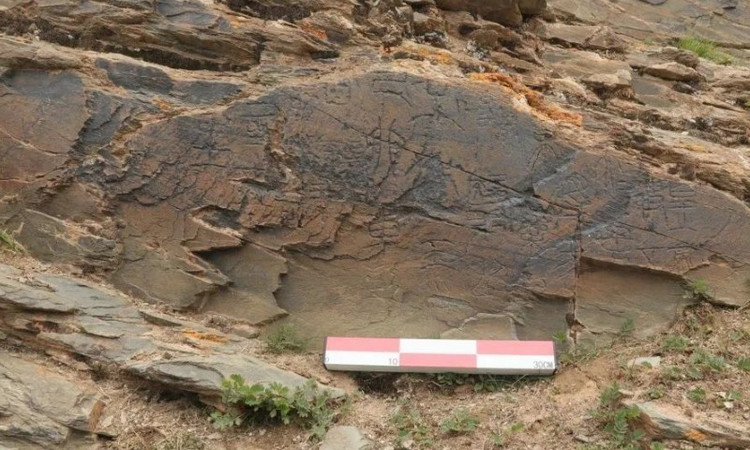
Recently, the National Cultural Heritage Administration confirmed that the inscription on a stone slab found near a lake in Mada County, Qinghai Province, referring to a previously unknown expedition ordered by Qin Shi Huang to search for the elixir of immortality in 210 BC, is authentic. (Photo: globaltimes) According to experts, the inscription, consisting of 37 characters, was discovered in 2020 on a rock along the lake's edge, at an altitude of approximately 4,300 meters above sea level. The inscription is in the typical seal script style of the Qin Dynasty (221 BC to 206 BC), with characters spread across an area of 0.16 square meters, 19 cm above the ground. Photo: CHINA DAILY.
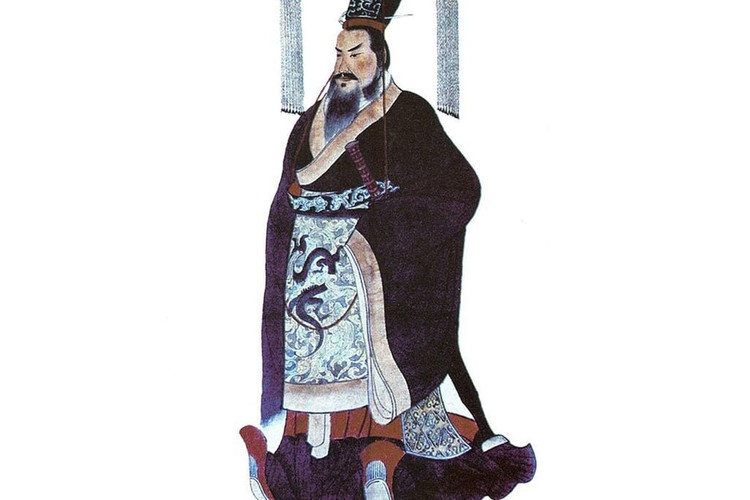
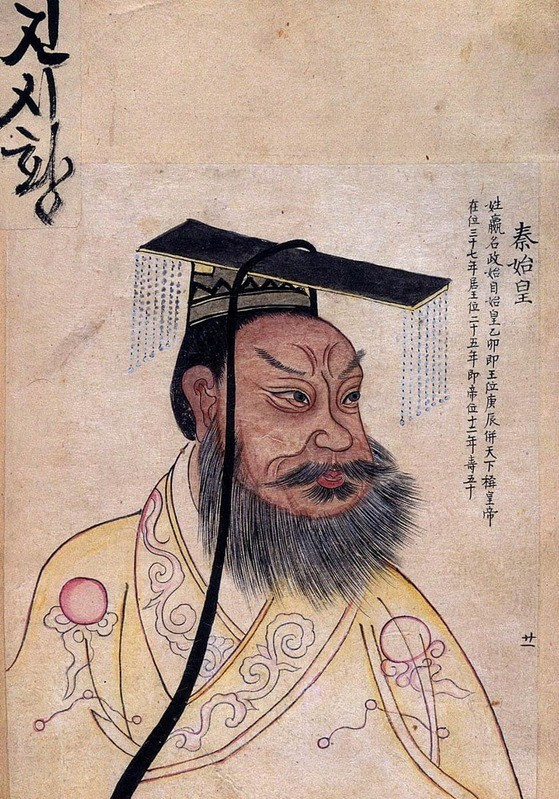
Tong Tao, an archaeologist from the Chinese Academy of Social Sciences, visited the site in 2023 and recognized the special significance of the inscriptions on the stone slabs. Except for a few unidentified characters, he found that the remaining words revealed that this inscription contained previously unknown historical records. Photo: CHINA DAILY. The inscriptions record that Qin Shi Huang, the first emperor of a unified China, sent a high-ranking official named Yi to lead alchemists to collect medicinal herbs on Mount Kunlun. This is the only surviving Qin Dynasty inscription in its original location, potentially providing crucial reference information about the location of Kunlun. Photo: Public Domain.
However, after archaeologist Tong published his initial findings in the Guangming Daily in June 2025, the inscription became the subject of a lengthy debate. While some scholars agree the stone carving dates from the Qin Dynasty, many doubt the artifact's authenticity and believe it is a modern product due to its well-preserved condition. Photo: Yu Yige/Shanghai Daily.
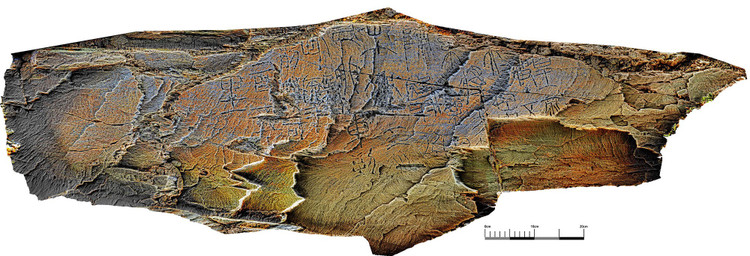
At a press conference on September 15 in Beijing, Deng Chao, Director of the Historical Relics Department of the National Cultural Heritage Administration, said that laboratory analysis indicated the inscribed stone was quartz sandstone, which has high abrasion resistance and strong durability against weathering. (Image: The British Library and Britannica/ Bibliothèque Nationale de France and Ohio State University.) Through high-resolution examination, experts identified clear tool marks on the engraved characters, proving they were created with blunt-tipped carving tools, consistent with the craftsmanship of that historical period. (Image: The British Library and Britannica) Li Ling, an archaeologist and researcher of ancient script at Peking University, conducted a detailed comparative study of the stone inscriptions found at Mada and previously confirmed Qin Dynasty stone inscriptions. He stated that the majority of the expert panel agreed with the conclusion that the characters on the stone slabs found at Mada belonged to the Qin Dynasty, although the writing showed some variations compared to the recorded script. (Image: Bibliothèque Nationale de France and Ohio State University)
The diverse carving techniques used on the rock carvings suggest that the creator did not intentionally pursue uniformity and was more at ease in handling the varying conditions of the bedrock. Evidence of dating emerges from the distinctive style of the characters. For example, the character "lun" in the word Kunlun is a rare script found only during the Qin Dynasty, identical to the script found in a document written on bamboo slips unearthed in Hunan Province in 2002. Image: Wikimedia Commons. Newly released information also clarifies some of archaeologist Tong's initial interpretations. Tong had previously deciphered two ambiguous characters as "twenty-six," suggesting the herb-gathering activity took place in "the 26th year of the Qin Dynasty" (including the time Qin Shi Huang ruled a vassal state before unifying China), which is 221 BC. However, the expert panel concluded that the meaning of the two characters was "thirty-seven," referring to 210 BC, the year of Qin Shi Huang's death. (Image: Wikimedia Commons)
Readers are invited to watch the video : The strange love affair between a Chinese Emperor and a palace maid 17 years his senior.





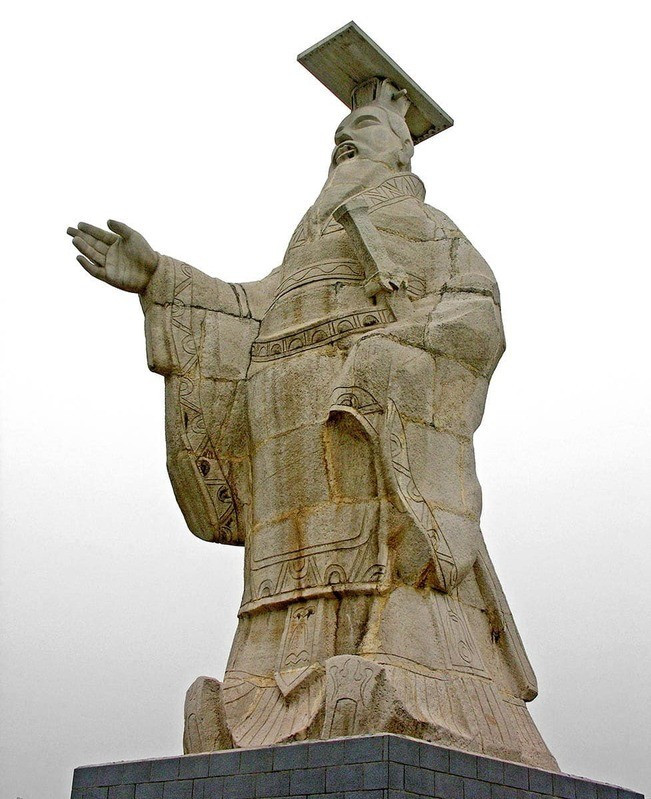

 Báo Khoa học và Đời sống•18/09/2025


![[Image] Close-up view of the interchange connecting the two expressways and Long Thanh Airport.](https://vphoto.vietnam.vn/thumb/1200x675/vietnam/resource/IMAGE/2026/05/25/1779703378210_ndo_br_z7863716673926-224453a31600126cce10622af6290afd-4549-jpg.webp)


![[Image] Hanoi's urban life under the challenge of a "scorching hot" environment](https://vphoto.vietnam.vn/thumb/1200x675/vietnam/resource/IMAGE/2026/05/25/1779706979265_nang-nong-t5-2026-minh-duy-7-4636-jpg.webp)

















![[GALLERY] A completely different iPhone for the 20th anniversary edition](https://vphoto.vietnam.vn/thumb/402x226/vietnam/resource/IMAGE/2026/05/25/1779686871893_212-jpg.webp)







































































Comment (0)