

To restrict private vehicle use, we must increase public transportation.
Besides focusing resources on building and developing infrastructure, the Government requires relevant units to improve management, operation, and coordination among forces in ensuring traffic order and safety. Specifically, the Ministry of Transport needs to quickly develop a comprehensive strategy for the development of service industries; accelerate the restructuring of transport services towards reducing the market share of road transport and promoting an increase in the market share of air, rail, and inland waterway transport based on modern and digital technologies; coordinate with localities in the management and development of urban transport towards a civilized, modern, and environmentally friendly system, with public transport as the foundation; and complete the construction of high-capacity passenger transport routes in Type 1 cities. In particular, attention should be paid to accelerating the completion of the urban rail network in Hanoi and Ho Chi Minh City. Organize traffic in a way that encourages an increase in the proportion of public passenger transport, in accordance with the conditions of each locality; establish a roadmap to increase the usage rate, moving towards primarily using environmentally friendly means of transport.
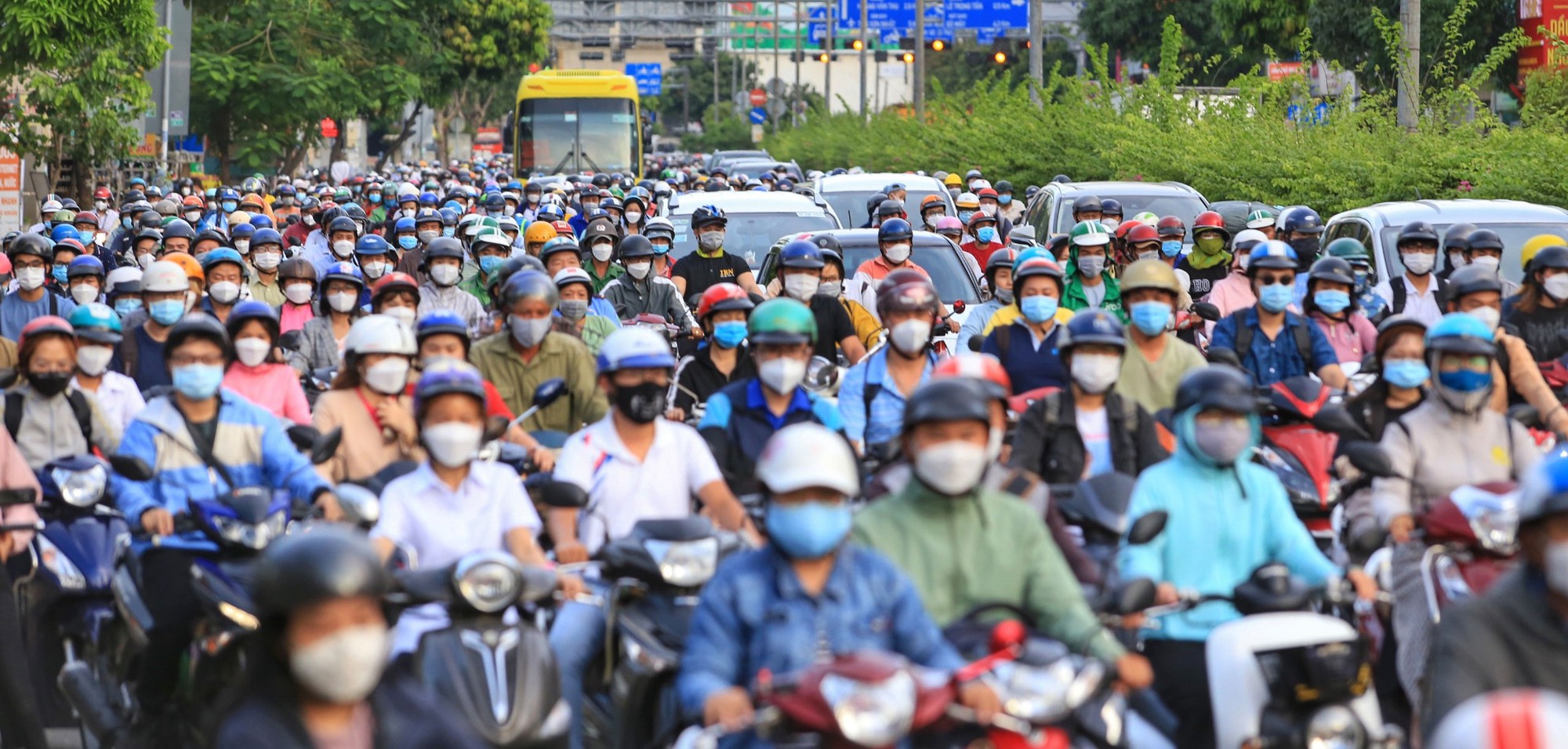
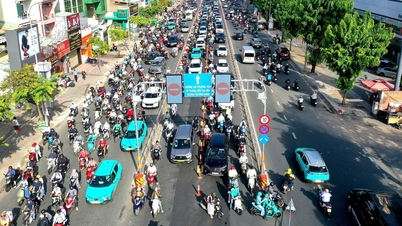
Accelerating the improvement of the public transportation system and reducing the use of private vehicles will contribute to reducing traffic congestion.
"Local authorities need to prioritize investment in public transport, especially high-traffic modes. People are encouraged to switch to green transportation in line with the gradual reduction of private vehicles in major cities. Urban railway lines in Hanoi and Ho Chi Minh City need to ensure timely completion. Connecting transportation routes to urban railways and Bus Rapid Transit (BRT) need to be built. A complete bus network is needed, including small buses suitable for transfer points, transportation hubs, and connections to urban railways...", according to the Government's Action Program implementing the Central Party Secretariat's Directive on strengthening the Party's leadership in ensuring traffic order and safety in the new situation.
According to the project "Strengthening public transport combined with controlling private motorized vehicles participating in traffic in Ho Chi Minh City" approved by the People's Committee of Ho Chi Minh City, the city aims for public transport to meet 15% of people's travel needs by 2025 and 25% by 2030. From now until 2025, the city plans to pilot areas restricting motorbikes on some central roads during peak hours. By 2030, motorbikes will be banned from areas with frequent traffic congestion.
The leaders of the Ho Chi Minh City Department of Transport determined that before implementing measures to restrict private vehicles, the first priority must be improving the capacity of the public transport system. Therefore, in 2022, they focused on stabilizing the operation of the bus system, continuing to tender for route operation with criteria aimed at better service quality; periodically organizing bus service quality assessments; and deploying diverse types of new buses such as electric buses, river buses, and buses serving tourists ...
In Hanoi, in June, the People's Committee of Hanoi City issued a decision approving the "Urban Economic Development Plan for Hanoi City" from 2025, with a vision to 2030. This plan assigns the Department of Transport to lead and coordinate with relevant units to develop a plan for "zoning areas to restrict motorbike activity in accordance with infrastructure and the service capacity of the public transport system, aiming to completely stop motorbike operation in the districts by 2030." Additionally, a plan to "charge fees for motorized vehicles entering certain areas of the city with a high risk of traffic congestion and environmental pollution to limit the number of motorized vehicles" has also been assigned to relevant units for implementation during the 2025-2030 period, five years earlier than previously planned. Part of the reason for this is the commissioning of the Cat Linh - Ha Dong railway line, which supports the passenger transport capacity of the public transport system.
Start controlling emissions.
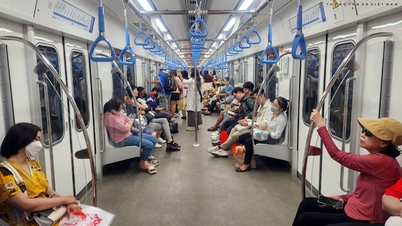
Ms. Bao Ngoc (residing in Thu Duc City, Ho Chi Minh City) is eagerly awaiting the launch of the first metro line so she can commute to work daily. The distance from her home (Masteri apartment complex, Thao Dien Ward) to her office in District 4 is nearly 7 km. Currently, her daily commute by motorbike takes about 30 minutes, sometimes 40-50 minutes if there's traffic congestion. Since her house is right in front of Thao Dien metro station, Ms. Ngoc plans to take the metro to Ben Thanh station, which takes about 10 minutes, and then walk to her office in District 4. "I really enjoy walking as a form of exercise, so the nearly 2 km distance from Ben Thanh station to my office is no problem. Taking the metro would avoid traffic jams, be more civilized, and satisfy my walking hobby. Not to mention, according to the city's projected metro fare, it would only cost about the same as daily parking fees, so if there's a metro, I definitely won't commute by motorbike anymore," Ms. Bao Ngoc said.
Like Ms. Ngoc, many office workers in Ho Chi Minh City have also started downloading the city's bus app to calculate routes and combine bus and metro travel. According to calculations by the Ho Chi Minh City Urban Railway Management Board (MAUR), after the completion of Metro Line 1, along with the feeder bus network and connecting infrastructure such as pedestrian bridges, it can transport 110,000 passengers daily, somewhat reducing pressure on Ho Chi Minh City's transportation infrastructure. Therefore, the metro network is being supplemented with new lines with higher density, reaching deeper into many areas where Ho Chi Minh City is actively seeking special mechanisms to expedite completion.
However, Ho Chi Minh City is not waiting until the public transport system is complete to consider restricting private vehicles. Controlling emissions will be the first step in the roadmap to control motorcycles and scooters in the city. According to the plan, Ho Chi Minh City will control emissions starting from the central area and then moving to the entire city, applying to vehicles that are 5 years old or older (from now until 2025) and then to controlling emissions from all vehicles (after 2025). The goal for the period 2026-2030 is to continue raising emission standards, expanding the zones requiring strict environmental protection to regulate motorcycle traffic, and eventually completely stop the operation of private vehicles in central districts when the public transport system and access conditions are met.
Notably, Ho Chi Minh City is expected to issue a plan to support people in exchanging their old motorcycles for electric ones in the fourth quarter of this year and implement it in the first quarter of 2024. This plan will include preferential policies to support people in exchanging their old fossil fuel-powered motorcycles for new electric vehicles, which use clean energy. The policies will be structured at different levels: encouragement, support, and incentives.
"Resolution 98 allows Ho Chi Minh City to develop mechanisms related to emission control and to implement the conversion of motorized vehicles from fossil fuels to green energy. The National Assembly has allowed the city to pilot and submit to the People's Council for promulgation mechanisms and policies to encourage the purchase of old vehicles, combined with improving the conversion of private transportation to public transportation. This is a large and very important program. The city will implement these push-pull measures synchronously, smoothly, and effectively to serve the people of the city in making their travel more convenient, faster, and more modern," the leader of the Ho Chi Minh City Department of Transport affirmed.
Along with the final push towards completion of Metro Line 1 (Ben Thanh - Suoi Tien line), Ho Chi Minh City is also finalizing a bus restructuring plan, forming a network of nearly 50 bus routes that penetrate deep into residential areas, university campuses, industrial zones, and high-tech zones... to gather passengers, with the expectation of increasing the number of passengers using Metro Line 1 by 60% in the initial phase of operation.
Leaders of the Ho Chi Minh City Department of Transport
Source link


















































































Comment (0)