

Surprise and anxiety were my feelings when I read the admission regulations for grades 6 and 10 recently issued by the Ministry of Education and Training.
Circular No. 30/2024/TT-BGDĐT of the Ministry of Education and Training, signed on December 30, 2024, promulgates the Regulations on Admission to Junior and Senior High Schools. Even those of us who were most eager to read it didn't get to see it until 10 days later. Halfway through, we were surprised and worried. Not only me, many people have asked and expressed their concerns, so I would like to share a few things before we all "overcome the many obstacles."
Admissions: The history of "beautifying" academic records and chasing awards repeats itself.
Since 2018, two methods of admission to grade 6 have existed: selection based on academic records or a combination of selection based on academic records and aptitude testing (if the number of applicants exceeds the enrollment quota). This regulation is in line with reality and overcomes the difficulties faced by specialized schools such as private schools and high-quality schools that do not have designated enrollment zones and have too many applicants: 1 in 5, 1 in 10, or even 1 in 20 in some places…
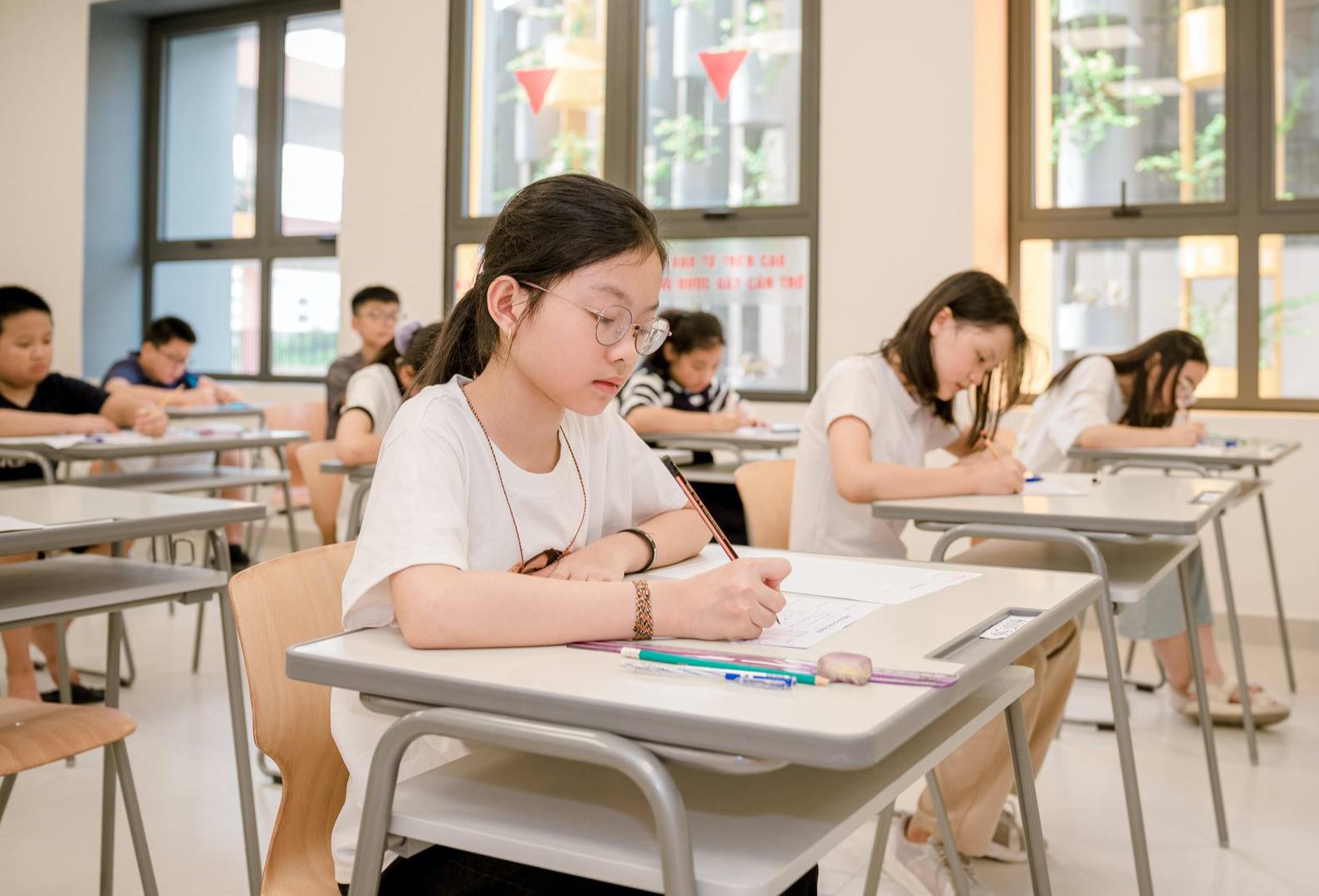
Completely ending entrance exams for grade 6 in specialized schools has raised concerns that it will lead to a repeat of the practice of falsifying academic records.
The Ministry's latest draft still retains the two methods of admission to grade 6 as in previous years. When the official regulations were announced, everyone was surprised to read Article 4, Clause 2: "Admission to junior high school shall be conducted through selection based on academic records." This means that direct assessment of students' abilities to select grade 6 students will no longer be allowed, even if the number of applicants far exceeds the enrollment quota.
The regulations specify the admission criteria as guided by the Department of Education and Training. However, on what basis are these admission criteria determined, if not based on academic transcripts and certain "achievements" in cultural, artistic, and sports competitions...?
Recently, the Ministry of Education and Training has restricted university admissions based on high school transcripts. Why? The most convincing answer can only come from the Ministry of Education and Training itself. Elementary school transcripts are even "less impressive" than high school transcripts, with over 90% showing excellent grades.
I asked someone who organizes international math competitions for elementary school students about the award system: Gold medals for the top 5%, silver medals for the top 15%, and bronze medals for the top 30%. Each time, tens of thousands of students participate, and thousands win medals.
This school year, instead of focusing on exam preparation, parents will be "racing" to create impressive report cards and accumulate various medals to secure a place in a "high-quality" or "popular" school. In such a situation, will the entrance exam for 6th grade achieve the desired goals: fairness, objectivity, and transparency?
In fact, previously (2015-2017), the Ministry had "banned" entrance exams for grade 6. However, the situation in major cities like Hanoi and Ho Chi Minh City became complicated. Therefore, from 2018, the Ministry revised the regulations to include an additional method of "assessing abilities" in combination with selection based on academic records.
Commenting on the newly issued regulations, a reader of Thanh Nien Newspaper wrote: "The Ministry should let the departments decide for themselves because each locality has different characteristics. Hanoi is not like Cao Bang, Ho Chi Minh City is not like Ca Mau ." I agree.
Third subject for the 10th grade entrance exam: Should we just choose a foreign language for three years first?
Regarding the 10th grade entrance exam, there have been many suggestions and the Ministry of Education and Training has made several adjustments. Most notably, Ho Chi Minh City proposed a stable exam format with three subjects: mathematics, literature, and a foreign language.
The official regulations stipulate that the exam consists of three subjects: mathematics, literature, and a third subject or test chosen from among the subjects with graded assessments in the lower secondary education curriculum, ensuring that the same subject or test is not chosen for more than three consecutive years; the third subject or test will be announced after the end of the first semester but no later than March 31st of each year.
Thus, regarding the third exam subject, the official regulations are slightly more stable than the draft (for three consecutive years) and are allowed to be announced two months earlier (January instead of March).
After the official regulations were issued, Ho Chi Minh City announced that the third exam subject for 2025 would be a foreign language. It's highly likely that the following two years (2026, 2027) will also be a foreign language. Let's stabilize the third exam subject for three years first. Perhaps the Ministry will then revise the regulations to ensure long-term stability. In my opinion, other localities should follow Ho Chi Minh City's example.
Today, a reputable newspaper polled its readers: What are your thoughts on the Ministry of Education and Training's choice of a third exam subject? The results: 25% agree, 7% disagree, and 68% believe English should be fixed as an exam subject.
Source: https://thanhnien.vn/quy-che-tuyen-sinh-lop-6-lop-10-bat-ngo-va-lo-lang-185250109083043926.htm












































































Comment (0)