

One of the highlights of these military shifts is the Balikatan 2023 (Shoulder to Shoulder) exercise, the largest ever between the US and the Philippines, involving more than 17,000 troops (approximately 12,200 US troops, 5,400 Philippine troops, and over 100 Australian troops). For the first time, the participating forces included live-fire exercises in the South China Sea and practiced amphibious landings on Palawan Island in western the Philippines.
The U.S. military also deployed Patriot missiles and the HIMARS high-precision missile system in this exercise. Major General Eric Austin, Commander of the U.S. Marine Corps, said that through this exercise, Philippine and U.S. forces will enhance their operational capabilities, combat skills, and coordination abilities to jointly respond to challenges.
Also in the Philippines, after what was considered a "pivot to China," Manila took a step to "rebalance with the US" by granting the US access to four additional military bases in the country under the Enhanced Defense Cooperation Agreement (EDCA), in addition to the five existing sites. Speaking after the 2+2 meeting between the US and Philippine defense and foreign ministers on April 11, Philippine Foreign Minister Enrique Manalo emphasized that both sides have increased their commitment to modernization, recognizing that the partnership needs to play an even stronger role in maintaining a rules-based international order. Under the agreement, the US is granted access to bases in the Philippines to conduct joint training, pre-install equipment, and build military infrastructure such as runways and fuel depots.
Although not defined as a permanent presence, these steps have made the Philippines an important part of the U.S. Indo- Pacific strategy. In other words, Washington will be the security guarantor for Manila.
In addition to bilateral activities, the Philippines is also considering a plan to establish a trilateral security framework with the United States and Japan, abbreviated as JAPHUS. Although this is only a proposal, according to Philippine President Ferdinand Marcos Jr., it is part of a process of further strengthening alliances to prepare for unforeseen circumstances.
The security landscape in East Asia is predicted to become more complex, increasing the risk of friction and tension, because in addition to JAPHUS (if formed), the region currently has other multilateral mechanisms such as: the US-Japan-Australia-India Security Quadrilateral (QUAD), the trilateral defense agreement between the US, UK, and Australia, and the US-Japan-South Korea alliance. Recent moves between the US and the Philippines have provoked a reaction from China. The Chinese embassy in Manila called the expanded military agreement between the US and the Philippines "part of the US effort to encircle and contain China."
Recently, dozens of J-16 and J-10C fighter jets, along with numerous warships and frigates of the People's Liberation Army of China, participated in the "Joint Sharp Sword" exercise in the area around Taiwan (China). This marked the first time that China's Shandong aircraft carrier was deployed to participate in the exercise.
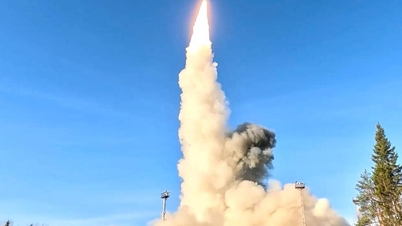
In addition to bilateral exercises, early April also saw numerous multilateral anti-submarine and anti-aircraft exercises involving the navies of South Korea, the United States, and Japan. These joint anti-missile and anti-submarine exercises are expected to be held regularly by the three countries. In an effort to enhance its ability to respond to a rapidly changing strategic environment, Japan has also upgraded its security cooperation with the North Atlantic Treaty Organization (NATO). Meanwhile, North Korea has been conducting a series of ballistic missile tests, most recently the test of the Hwa-song 18 solid-fuel intercontinental ballistic missile (ICBM).
Enhancing deterrence and response capabilities necessitates increased defense spending. Leading the list of countries spending heavily on defense is the United States, with $817 billion in fiscal year 2023. Following closely behind is China, which increased its defense spending for the eighth consecutive year, reaching nearly $225 billion. The Japanese cabinet also approved a defense budget increase of 26.3% compared to the previous fiscal year, reaching approximately $51 billion. Of this, $1.6 billion was allocated to the purchase of Tomahawk cruise missiles.
The Indian government also proposed a defense spending of $72.6 billion, a 13% increase from previous estimates, to add fighter jets and build more roads along the border. Last March, Australia also secured a major defense deal, purchasing three Virginia-class nuclear submarines from the US for a total of $15 billion. This is part of a $200 billion plan to build nuclear-powered submarines between the US, UK, and Australia.
Clearly, these exercises, declared as annual events, are taking place with increased frequency and scale compared to previous years. Many experts believe this stems from competition among major powers and the strategic adjustments made by nations to adapt to new developments. In the context of the Asia-Pacific region being impacted by geopolitical tensions and competition among major powers, and with multilateral cooperation frameworks struggling to achieve high levels of consensus, the model of bilateral or multilateral cooperation with fewer members, involving multiple interwoven mechanisms as mentioned above, seems to be becoming the preferred choice for many countries.
This also shows that the security structure in the Asia-Pacific region is still undefined. Cooperation always goes hand in hand with competition, and the intertwining of various cooperation models within an unstable security structure easily leads to misunderstandings and a lack of trust; disagreements and conflicts can escalate. This reality presents small and medium-sized countries with many difficult challenges, increasing the pressure to "choose sides" and testing how to maintain independence and autonomy in foreign relations.
Another reality is that in the current context, competition will continue. Each country has its own calculations and pursues different security models and paths in its policies towards major powers. But whatever the choice, self-reliance, self-strengthening, consolidating national position, and maintaining consistency in foreign and security policies will always be a solid foundation in a volatile security environment. This helps the country avoid dependence or becoming the frontline in the competition between major powers.
Self-reliance does not mean remaining aloof, but participation requires a high sense of responsibility towards the international and regional community, especially major powers. In a competitive context, strengthening defense capabilities is an inevitable trend. To prevent this trend from becoming an arms race and to maintain genuine peace, all parties need to uphold a sense of responsibility and ensure transparency in defense policy, thereby avoiding suspicion, misunderstanding, and loss of strategic trust, which could lead to dangerous consequences.
In line with the Party's independent, self-reliant, multilateral, and diversified foreign policy, the 2019 Vietnam National Defense White Paper affirms the national defense policy of "four no's": No participation in military alliances; no alignment with one country against another; no allowing foreign countries to establish military bases or use Vietnamese territory to fight against other countries; and no use of force or threat of force in international relations. |
THANH SON
Source






































































Comment (0)