

This space, embodying the image of a white lotus flower, is steadily spreading the ideological, moral, and stylistic values of President Ho Chi Minh to the public both domestically and internationally, providing inspiration to today's generations in their journey of building and developing the country.
Preserving the memory of Him
Located behind the Ho Chi Minh Mausoleum, on the historic Ba Dinh Square – where President Ho Chi Minh read the Declaration of Independence, giving birth to the Democratic Republic of Vietnam in 1945 – the Ho Chi Minh Museum has long been a sacred destination for people nationwide and international friends.
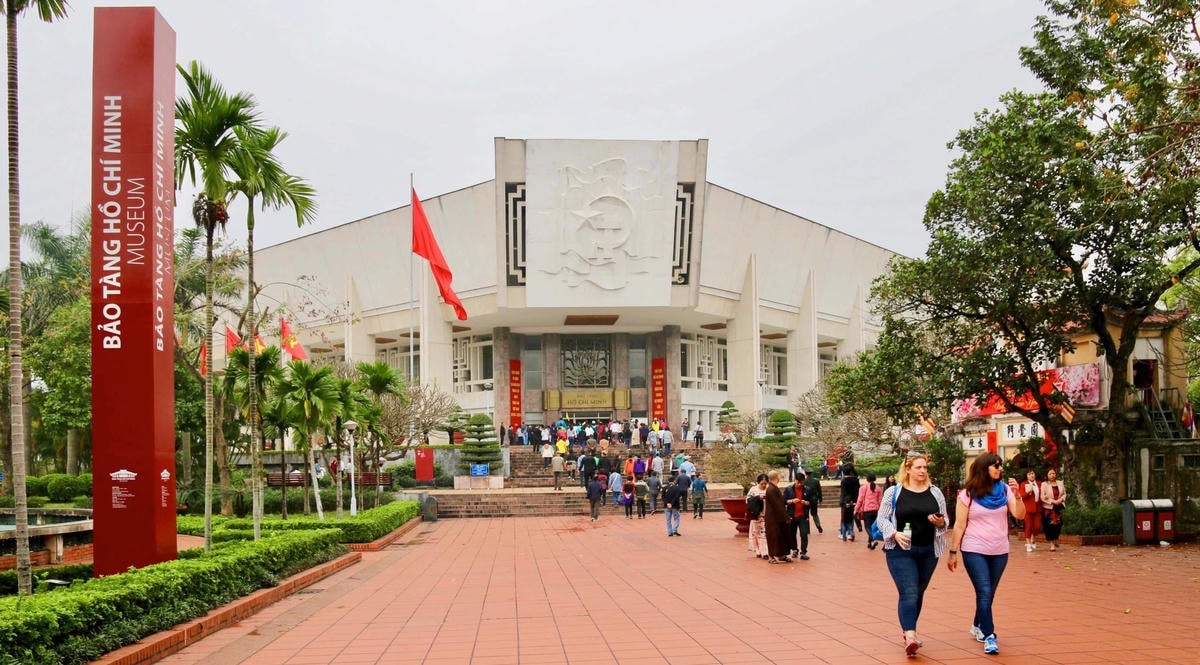
Construction began on August 31, 1985, and the museum was inaugurated on May 19, 1990, the 100th anniversary of President Ho Chi Minh's birth. The museum building is shaped like a white lotus flower, symbolizing the simplicity and elegance of President Ho Chi Minh.
The Ho Chi Minh Museum is a place that comprehensively and fully displays and introduces the life, career, thoughts, ethics, and style of President Ho Chi Minh - the hero of Vietnam's national liberation and an outstanding cultural figure.
Deputy Director of the Ho Chi Minh Museum, Do Thi Thu Hang, shared that the Ho Chi Minh Museum is a place that preserves, protects, and promotes nearly 170,000 documents and artifacts, which are invaluable legacies of President Ho Chi Minh.
The main exhibition space is themed around different historical periods of President Ho Chi Minh's life and revolutionary career, in connection with the nation and the era.
Part 1 focuses on the life and revolutionary career of President Ho Chi Minh and the Vietnamese people's implementation of his Last Will and Testament.
Part 2 focuses on Vietnam, the struggles and victories of the Vietnamese people in the Ho Chi Minh era.
Part 3 consists of thematic booths on some world historical events that impacted the revolutionary life of President Ho Chi Minh and the Vietnamese revolution.
Sharing about the mementos from President Ho Chi Minh's journey to find a way to save the country, such as the image of the Admiral Latouche-Tréville ship, and the simple belongings he used during his time in France, such as a heating brick or a small cupboard, Ms. Do Thi Thu Hang affirmed that these artifacts bear witness to President Ho Chi Minh's aspiration for national independence, his thirst for knowledge, and his vision that was ahead of its time.
“It was a journey of overcoming countless difficulties, proactively approaching and constantly learning from the finest aspects of human culture to find the right path to liberation for the Vietnamese nation. That journey remains a profound source of inspiration today, reminding every generation of Vietnamese people of their patriotism and responsibility to the Fatherland,” the Deputy Director of the Ho Chi Minh Museum emphasized.
"The lecture hall" spreads the values of Ho Chi Minh's legacy.
To better meet the needs of the people and serve them, the Ho Chi Minh Museum is open seven days a week, serving as a "lecture hall" to welcome and guide visitors. The museum also promotes the application of digital technology in the management, preservation, and display of artifacts.
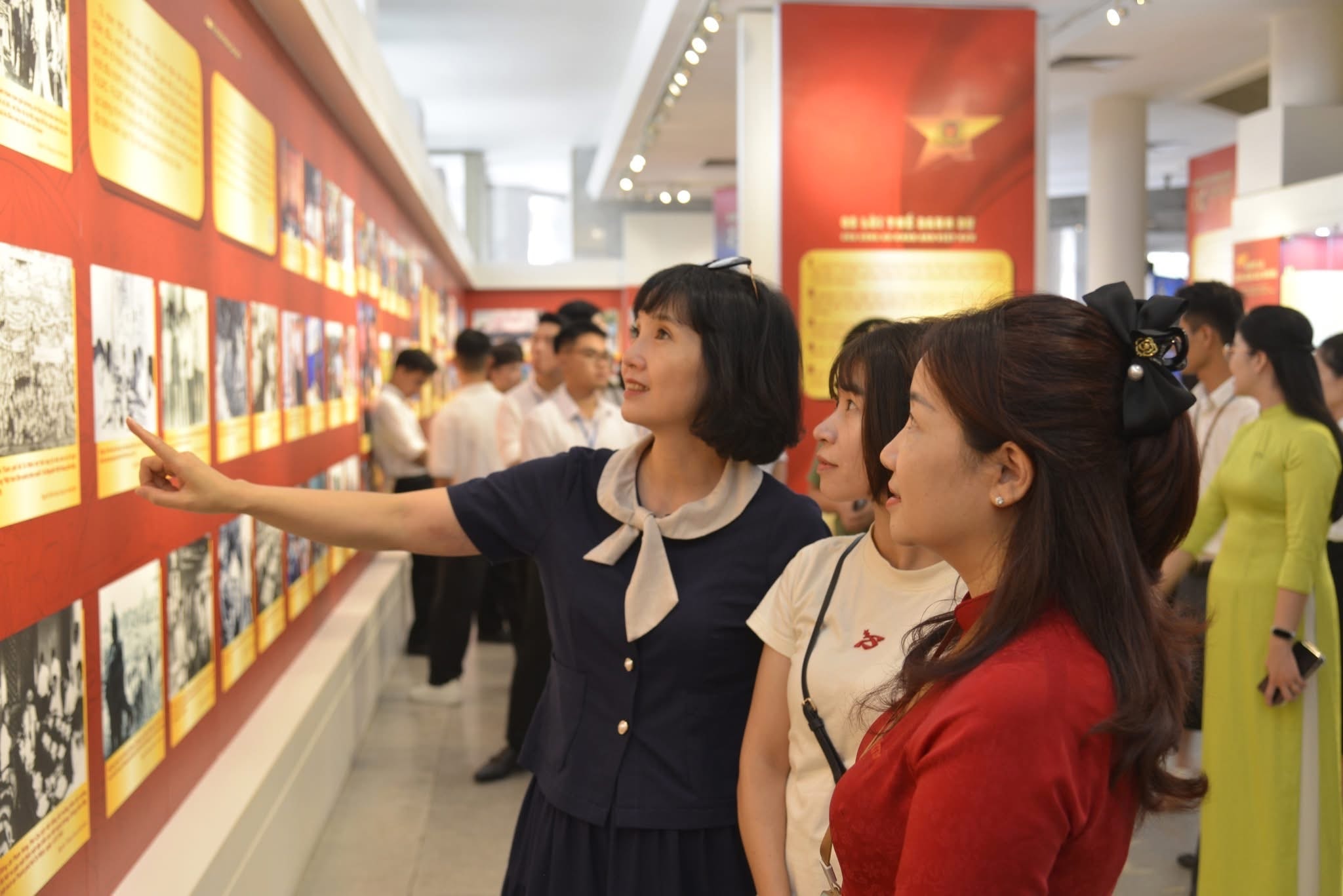
Tens of thousands of documents and artifacts have been inventoried, scientifically documented, and digitized to effectively serve research and data exploitation. During the Covid-19 pandemic, the Ho Chi Minh Museum implemented 3D online exhibitions integrated on its website for the public to visit and learn from. Thematic online exhibitions such as "The Man Who Sought the Image of the Nation," and "Each Artifact Tells a Story," continue to be accessed daily by the public worldwide.
According to Deputy Director of the Ho Chi Minh Museum, Do Thi Thu Hang, the museum welcomes nearly 100,000 visitors each year, the majority of whom are students coming to learn about the life and career of President Ho Chi Minh.
To help today's young generation truly appreciate the value of President Ho Chi Minh's legacy when visiting the Ho Chi Minh Museum, the institution has been implementing many innovative activities in exhibition and public education.
"Through experiential activities, seminars, video clips telling stories about President Ho Chi Minh, and the application of technology in exhibitions, the Museum aims to bring the image of President Ho Chi Minh closer to young people through the most authentic and everyday stories," said Ms. Do Thi Thu Hang.
During her visit to the Ho Chi Minh Museum, Nguyen Gia Thuy (a student from Cau Giay Secondary School, Yen Hoa Ward, Hanoi) expressed: “The exhibition combines traditional artifacts with modern technology through storytelling clips and documentary images, which is very engaging and memorable. We were able to learn many touching stories about Uncle Ho's life, which further motivated us to study and follow his example.”
In the future, the Ho Chi Minh Museum will continue to innovate its content and exhibition methods, enhance interactive activities and experiences so that every young person who visits the Museum will not only gain a deeper understanding of history, but also be inspired to live beautifully, responsibly, and make positive contributions to the country.
The museum is also determined to become a national and regional-level cultural, educational, and research center, where all Vietnamese people and international friends can learn about, study, and deeply appreciate the life, thoughts, and style of Ho Chi Minh.
The Ho Chi Minh Museum is not only a place to preserve and disseminate the values of his legacy, but also a cultural bridge connecting the past with the present, connecting Vietnam with friends around the world, transforming the noble values of his legacy into a source of spiritual strength in the journey of national development today and in the future...
Source: https://hanoimoi.vn/ben-bi-lan-toa-gia-tri-di-san-thieng-lieng-ve-bac-750900.html





















![[Podcast] Content on drafting and issuing implementing documents for the Capital City Law 2026](https://vphoto.vietnam.vn/thumb/402x226/vietnam/resource/IMAGE/2026/05/25/1779672775296_ban-hanh-mot-so-van-ban-quy-pham-phap-luat-theo-co-che-dac-thu.png)





























































Comment (0)