

At the Giang Bien ward local market (Long Bien district, Hanoi ), at 5 a.m., Ms. Dao Thi Thanh (42 years old) and her husband, Mr. Nguyen Huu Thinh (50 years old), begin their workday at their flower stall. Both have been selling goods at the market for over 10 years and are self-employed, not subject to mandatory social insurance. However, five years ago, the couple started participating in voluntary social insurance, contributing 5 million VND per month – equivalent to their average family income.
Ms. Thanh shared: “Initially, we didn't think too much about it, but gradually realized that paying for insurance is necessary. Having a pension later on will ease our worries, and our children won't be burdened if we get sick or are no longer able to work.”

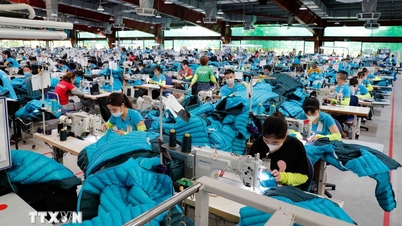
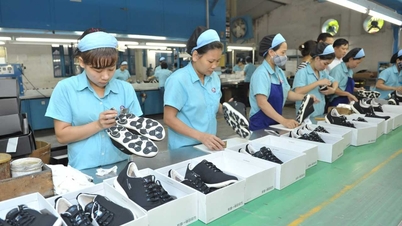
Voluntary social insurance - a practical option for self-employed workers. (Illustrative image)
The case of Ms. Thanh's family reflects a shift in the perception of many self-employed workers today. Previously, paying a monthly fee for voluntary social insurance was considered a burden, especially when income was unstable. However, with policy improvements and government support during certain periods, people are beginning to see the long-term benefits that social insurance provides.
It's not just middle-aged workers who are interested in voluntary social insurance; increasingly, young people are becoming aware of the need to proactively protect their future. Nguyen Minh Ngoc (born in 2004), a second-year student majoring in Economic Law at the National Economics University, is one example. Ngoc currently runs a small English center that she founded herself. Since January 2024, Ngoc has participated in voluntary social insurance, contributing 2 million VND per month.
“I think I should join early. Even if I don't need it now, I'll definitely need it later. Paying regularly every month as a fixed expense helps me be more responsible for myself and my long-term financial plan,” Ngoc shared. According to Ngoc, proactively participating in social insurance is not only about financial planning but also demonstrates a planned lifestyle – a factor that the younger generation is increasingly concerned about in the context of a rapidly changing labor market, where many people work freelance, short-term jobs, or don't stay with a specific company for a long time.
The story of Ms. Thanh and her husband, and their friend Ngoc, illustrates how voluntary social insurance is gradually expanding its reach to many social strata, regardless of age, occupation, or educational level. People, regardless of their circumstances, are increasingly realizing that participating in social insurance is necessary for a stable future and to minimize risks when they are no longer able to work.
According to statistics from the Vietnam Social Security, by the end of 2024, the total number of people participating in voluntary social insurance reached nearly 2.3 million – more than 10 times higher than in 2017. This is the result of many efforts in reforming administrative procedures, strengthening communication work, as well as policies supporting contribution levels for certain target groups.
Notably, from July 1, 2025, the amended Social Insurance Law will officially come into effect, adding many significant benefits for voluntary social insurance participants. Two of the most prominent points are: the addition of maternity benefits and a reduction in the contribution period required to qualify for a pension from 20 years to 15 years. This is a strong incentive, especially for those who join late or have low incomes and find it difficult to maintain contributions for an extended period.
Furthermore, the amended law also adds regulations restricting lump-sum withdrawals of social insurance contributions, aiming to ensure the sustainability of the social security system. In reality, many people who have previously withdrawn their contributions in a lump sum have expressed regret at no longer having a stable income in their old age. Tightening the conditions for lump-sum withdrawals helps protect the rights of workers in the future.
Ms. Thanh also considered withdrawing her social insurance contributions in a lump sum: “There was a period when our family faced difficulties, and we thought about withdrawing the insurance to handle personal matters. But after discussing it again, we felt it was more reassuring to leave it as is. With a monthly pension, we always have something to rely on.” For Ngoc, the decision to participate in voluntary social insurance while still in university was not common among her peers. However, for Ngoc, it was a sound investment: “No one knows the future, but if you prepare well, you will be less caught off guard later. Participating in social insurance early is a way to live proactively and responsibly.”
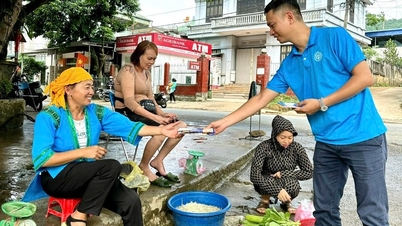
Along with expanding the policy, many localities are also actively implementing support, consultation, and communication solutions to bring voluntary social insurance closer to the people. Voluntary social insurance collection agents and socio- political organizations such as the Women's Union, the Farmers' Association, and the Youth Union also play an important role in disseminating information and assisting people in completing the participation procedures.
The coordinated efforts of the policy system, management agencies, and the people are helping voluntary social insurance gradually become a familiar part of life. From being only available to a select few with financial means, this policy has now reached vulnerable groups, those with unstable incomes, and those who have difficulty accessing traditional insurance schemes. As more and more workers proactively incorporate voluntary social insurance into their life plans, this policy not only contributes to the improvement of the social security system but also raises individual awareness of protecting their own future.
Source: https://baolaichau.vn/xa-hoi/bhxh-tu-nguyen-lua-chon-thiet-thuc-cho-nguoi-lao-dong-tu-do-954925


![[Photo] Prime Minister Pham Minh Chinh presides over a meeting on private sector economic development.](/_next/image?url=https%3A%2F%2Fvphoto.vietnam.vn%2Fthumb%2F1200x675%2Fvietnam%2Fresource%2FIMAGE%2F2025%2F12%2F20%2F1766237501876_thiet-ke-chua-co-ten-40-png.webp&w=3840&q=75)


































































Comment (0)