

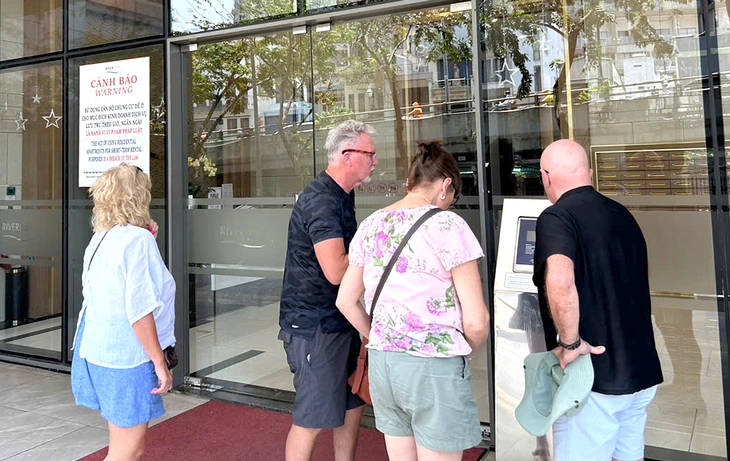
Notice regarding security and order control at Saigon River Gate building, District 4, Ho Chi Minh City - Photo: TTD
Airbnb and other shared accommodation platforms are becoming an important component of the modern tourism ecosystem. However, this short-term accommodation business model is controversial because it sells different types of rooms, from hotels to apartments, houses, and condominiums.
The Ho Chi Minh City Department of Tourism announced that it is participating in providing feedback on the development of a plan to manage the sharing economy model in accommodation, including a separate legal framework, a smart registration and monitoring system, and a multi-sectoral coordination mechanism.
Opportunities for tourism, challenges for policy.
For many years, whenever they visited Ho Chi Minh City, Ms. Tran Phuong Thao's family (residents of Hue City) usually chose to rent an apartment in a condominium in Binh Thanh District for a stay of 2-3 days.
For the upcoming April 30th holiday, Ms. Thao's family and relatives have also booked two two-bedroom apartments here to stay throughout the holiday.
According to Ms. Thao, because her family often travels in large groups and has young children, renting an apartment through an online booking platform meets their daily needs for cooking and doing laundry.
Similarly, Anne Blunt's family (from the UK) also said that this was their second visit to Ho Chi Minh City, so she booked an apartment in a condominium in District 4 to be close to the city center, making it convenient for the four family members to live comfortably during their four-day experience in Ho Chi Minh City.
"We've traveled to many countries around the world, and wherever we can find affordable apartments, we choose them because they're all available on the app. We usually prioritize apartments where we can live together as a family," said Anne Blunt.
Ms. Lo Thanh Diem, who provides room rental services, said that one of the reasons tourists choose to rent rooms instead of hotels is because this service is quite popular in many countries with the advantage of good prices, especially apartments.
"Apartments directly from the owners can be discounted even further if the owners reconsider their pricing," Ms. Diem said.
Speaking to Tuổi Trẻ newspaper , Mr. Nguyen Chau A - founder and CEO of Oxalis Group - acknowledged that Airbnb initially started as a platform for selling individual rooms, but now sells various types of accommodations including apartments, houses, condominiums, hotels, and homestays, and is developing very well worldwide.
"The fact that tourists prefer short-term apartment rentals during their trips alleviates many tourism infrastructure problems during peak season. Local authorities are not under pressure to invest heavily in large-scale accommodation facilities while still being able to welcome a large number of tourists," Mr. Á expressed.
Support is needed, but strict control is required.
As a travel agency, a representative from Vietluxtour stated that, following global trends, online accommodation services such as renting rooms and apartments through platforms like Airbnb, while quite different from traditional forms of lodging, still make significant contributions to the tourism industry from an economic perspective and in promoting local culture.
"To develop this type of service professionally and, especially, safely and legally for both tourists and apartment owners, a stricter and more professional Airbnb service management policy is needed," a representative from Vietluxtour suggested.
Dr. Duong Duc Minh, deputy director of the Institute for Economic and Tourism Development Research, acknowledged that Airbnb and similar shared accommodation platforms are increasingly becoming an important component in the modern tourism ecosystem.
Particularly during peak seasons like the April 30th holiday or summer vacation, this service has helped alleviate accommodation pressure, making good use of resources from local households and meeting the increasingly diverse and personalized needs of tourists, especially families and young travelers.
However, the rapid and uncontrolled development of shared accommodation is also posing many challenges and consequences such as a lack of clear legal framework; tax evasion and unfair competition; impacts on urban communities; and difficulties in security control, especially for foreign guests...
Mr. Minh argued that management policies need to be adaptable, flexible, and proactive, not only to overcome current shortcomings but also to capitalize on the enormous potential in promoting the sustainable development of Vietnam's tourism industry, especially during peak periods such as the April 30th holiday, when domestic and international tourism demand surges.
"As an inevitable trend of the sharing economy, we need to perfect the legal framework and appropriate management tools to regulate it effectively. Specifically, this includes building a separate legal framework for the shared accommodation model, requiring business registration or reporting to local authorities, and assigning management codes to each location."
In particular, the application of digital technology in management and data connectivity between platforms like Airbnb and government agencies (Department of Tourism, police, tax authorities) ensures transparency.
Furthermore, developing standardized alternative accommodation models, such as "community-based homestays" and "tourism serviced apartments" that are licensed, properly trained, and managed according to standards, will both increase supply and preserve local identity," Mr. Minh proposed.
Mr. Nguyen Chau A also suggested that with the rental model in apartment buildings, homeowners should register with the authorities or the building management board; ensuring compliance with business regulations and security and order.
In addition, it is necessary to establish a service registration process for homeowners and issue regulations related to order, security, and safety that both guests and homeowners must comply with.
How can we harmonize the interests of tourists, residents, and homeowners?
From a state management perspective, Mr. Le Truong Hien Hoa, Deputy Director of the Ho Chi Minh City Department of Tourism, stated that shared accommodation is becoming a flexible accommodation option, helping to alleviate the burden on traditional hotel systems, especially during peak seasons such as the April 30th and May 1st holidays.
This model is popular with families, young travelers, and international tourists seeking an authentic experience and privacy.
However, this rapid development has brought about many drawbacks such as: lack of safety, lack of tax transparency, inconsistent service quality, and unfair competition with traditional hotels. This is especially true for the model of renting apartments in apartment buildings.
Ho Chi Minh City does not advocate for a ban, but rather aims for controlled management using technology to ensure the legitimate rights of tourists, residents, and homeowners, while promoting sustainable tourism development.
The Department of Tourism is collaborating on a project to manage this type of accommodation, with solutions including: a separate legal framework, a smart registration and monitoring system, and an inter-agency coordination mechanism. The goal is to develop a diverse, safe, transparent, and digitally-oriented accommodation ecosystem.
Source: https://tuoitre.vn/bit-lo-hong-quan-ly-airbnb-trong-chung-cu-20250418224409351.htm


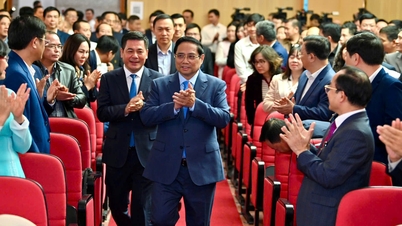
![[Photo] Prime Minister Pham Minh Chinh attends the Conference on the Implementation of Tasks for 2026 of the Industry and Trade Sector](/_next/image?url=https%3A%2F%2Fvphoto.vietnam.vn%2Fthumb%2F1200x675%2Fvietnam%2Fresource%2FIMAGE%2F2025%2F12%2F19%2F1766159500458_ndo_br_shared31-jpg.webp&w=3840&q=75)







































































Comment (0)