

CHINA - Following the college entrance exam, a Chinese parent revealed that they spent 700,000 yuan (RMB) over three years on their child's extra tutoring to achieve a score of 645/750.
Sharing on Chinese social media, a parent stated that they spent 700,000 yuan (approximately 2.4 billion VND) over three years on their child's extra tutoring to achieve a score of 645/750 on the university entrance exam. This story has sparked considerable debate, with many questioning whether such a large investment was worthwhile. According to Sohu , several factors need to be considered to answer this question.
Firstly, from an economic perspective, 700,000 RMB is a large sum of money, even a burden for many families. Parents could use this money for various purposes such as buying a house, investing, or saving for the future. Investing in extra tutoring for children doesn't yield a clear "profit." High grades might help them get into top universities, but success in life depends on factors like soft skills, practical experience, and even luck.
University entrance exam scores depend not only on extra tutoring but also on effort, study methods, and the learning environment. Investing heavily in extra tutoring for children is a significant risk if the results are not as expected. Even if a child achieves high scores and gets into a good university, their future job opportunities and career development remain unpredictable.
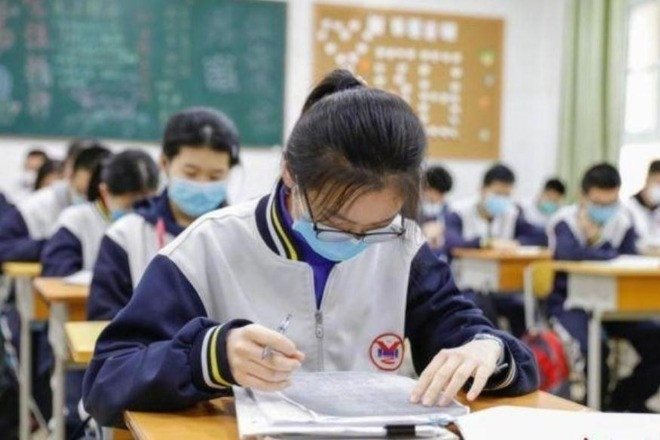
Secondly, from an educational perspective, facing high family expectations can put psychological pressure on students, leading to anxiety and even depression. This stress affects students' physical and mental health, as well as their academic performance. Over-reliance on extra tutoring to achieve high grades hinders a child's development. Excessive dependence on teachers during learning can lead to a lack of independent thinking, communication, and teamwork skills.
Academic pressure also negatively impacts students. Growing up in a stressful learning environment can easily lead to a loss of interest and enthusiasm for learning, and even a fear of going to school. Furthermore, the high cost of extra tutoring creates a barrier for disadvantaged students, increasing inequality in education. Despite much debate, it must be acknowledged that extra tutoring has helped students fill knowledge gaps and achieve good results in university entrance exams.
Thirdly, from a social perspective, the story clearly reflects parents' anxieties about the current education system in China. To help their children excel in the highly competitive university entrance exam, parents are willing to invest heavily. This inadvertently turns education into a pragmatic pursuit.
The story raises questions about the state of Chinese education. On the one hand, the college entrance exam is a method of selecting talent, with exam scores playing a crucial role. On the other hand, is it reasonable to assess students' abilities and future potential solely based on scores? Or should the country's education system focus on cultivating students' character and creativity?
Source: https://vietnamnet.vn/bo-me-chi-2-4-ty-tien-hoc-them-de-con-do-dai-hoc-lieu-co-xung-dang-2335516.html
![[Photo] Prime Minister Pham Minh Chinh presides over a meeting on private sector economic development.](/_next/image?url=https%3A%2F%2Fvphoto.vietnam.vn%2Fthumb%2F1200x675%2Fvietnam%2Fresource%2FIMAGE%2F2025%2F12%2F20%2F1766237501876_thiet-ke-chua-co-ten-40-png.webp&w=3840&q=75)






























































































Comment (0)