.jpg)
From counterfeit designer handbags and bottles of unverified dietary supplements to pirated computer software, intellectual property issues are no longer solely the concern of managers or businesses, but reflect how society perceives and respects the value of creativity.
To prevent wrongdoing from becoming the norm.
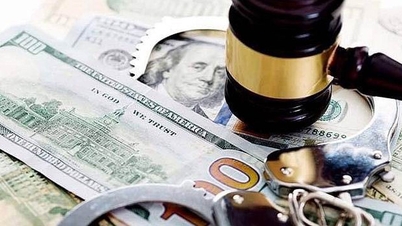
In recent days, the fact that the Phu Tho Provincial Police have initiated the first case nationwide related to the illegal provision and use of Windows and Microsoft Office software has generated much debate.
What's noteworthy isn't just the case itself, but also the reaction of many people who believe that using cracked software or pirated keys has long been commonplace. Many have implicitly considered installing a Microsoft Office suite costing a few tens of thousands of dong instead of spending millions to buy a licensed version as a "money-saving trick," rather than an infringement of intellectual property rights.
For many years, we have become all too familiar with using "almost genuine" items at unusually low prices. A branded handbag for just a few hundred thousand dong, a pair of copied shoes, an unusually cheap bottle of "imported" cosmetics, or software activated with a cracked code… they all have one thing in common: buyers want to own the value of a brand but don't want to pay the true value that the brand creates. This is the fertile ground for counterfeit goods to thrive.



In Da Nang , inspections by authorities have revealed the significant scale of this problem. Thousands of infringing products, ranging from shoes, bags, clothing, eyeglasses, and phone accessories to consumer goods, have been ordered to be destroyed. These figures reflect the sophistication of intellectual property infringement and raise a thought-provoking question: What continues to fuel the counterfeit market?
The answer lies in a rather common contradiction: many people want quality goods from reputable brands but are always looking for the lowest possible prices. Of course, not all cheap products are fake, and no one forces consumers to buy expensive goods. The real concern isn't the desire to buy a good product at a reasonable price, but the expectation of owning a premium product at an unreasonable price.
Because behind every genuine product are the costs of research, design, technology, quality control, branding, and the hard work of the people who created it. When consumers accept counterfeit goods that are "similar to the real thing but much cheaper," they inadvertently fuel the counterfeit market.
Develop the habit of knowing the price to pay for creativity.
The fight against counterfeit goods and intellectual property infringement cannot succeed if it relies solely on intensive inspection campaigns. A violating store may be shut down, a batch of counterfeit goods may be destroyed, but if consumers continue to accept the fakes, the market will quickly see other sellers emerge. To address the root cause, a "triangle of solutions" is needed: strong institutions, transparent technology, and a culture of responsible consumption.
In the context of the booming e-commerce, social media, and livestreaming sales, the "detect and then handle" approach is increasingly struggling to keep up with the evolving methods of violation. Therefore, the requirement is to shift from handling individual cases to managing the entire supply chain, demanding close coordination among relevant agencies, specialized bodies, and digital platforms.
Furthermore, technology needs to become a new "shield." The fundamental approach is to build a system for identifying and tracing the origin of products. For example, the draft Decree of the Ministry of Public Security on the identification, authentication, and traceability of goods aims to create data that identifies the product throughout its entire lifecycle, from production to consumption; or from July 1, 2026, many high-risk product groups under the management of the Ministry of Industry and Trade will also have to be traceable through the VeriGoods system or equivalent connected systems. At that time, QR codes or electronic labels will become the "digital identity" of products. For a city aiming for a creative economy like Da Nang, this is also an important tool to protect OCOP products, traditional crafts, and local specialties from the risk of brand theft.



However, technology and law can only address the symptoms. The deepest root cause lies in social awareness. The recent controversial case of using pirated Microsoft software reveals a thought-provoking reality: many people still consider it normal to use intellectual property without paying royalties. This mentality is also evident in the purchase of a "look-alike" designer bag, or a bottle of "imported" cosmetics at an unusually low price... but costing only a fraction of the original price. A society that respects creativity doesn't mean everyone has to use expensive items. Consumers can choose products that suit their financial capabilities, but they need to abandon the idea of wanting to own the value of a branded product without being willing to pay the true value that the brand creates.
Ultimately, a healthy market only forms when each consumer understands that buying at fair value is also a way to protect creativity. And each person needs to understand that the value of creativity must be paid for at a commensurate price. Only when society learns to say no to "cheap imitations" will genuine brands be protected and the economy be able to develop based on true value.
Source: https://baodanang.vn/bo-tu-duy-ngon-bo-re-3341194.html