Inspections of oil tankers recently seized by the U.S. have revealed a sophisticated camouflage technology system that allows these vessels to falsify their locations, conceal their identities, and evade global maritime surveillance networks.
The new findings not only reveal the scale of operations by "ghost fleets" specializing in transporting oil to evade sanctions, but also raise concerns about growing security risks on international shipping lanes.
When U.S. and allied forces launched a crackdown on oil tankers suspected of illegally transporting goods, what they found was more than just shipments of oil worth millions of dollars.
Inside the wheelhouses of many aging ships, technical experts discovered a range of electronic devices capable of manipulating navigation and identification systems – technologies considered fundamental to ensuring global maritime safety.
According to experts, the evidence gathered has provided the clearest picture yet of how countries under sanctions, such as Iran and Venezuela, and their underground transportation networks maintain oil exports despite Western controls.
Turning oil tankers into "ghosts" at sea.
According to international regulations, large commercial vessels must continuously transmit signals via the Automatic Identification System (AIS), allowing authorities and other vessels to track their location, speed, and route to avoid collisions at sea.
However, for ships belonging to the "ghost fleet," this system is used as a tool to deceive monitoring authorities.
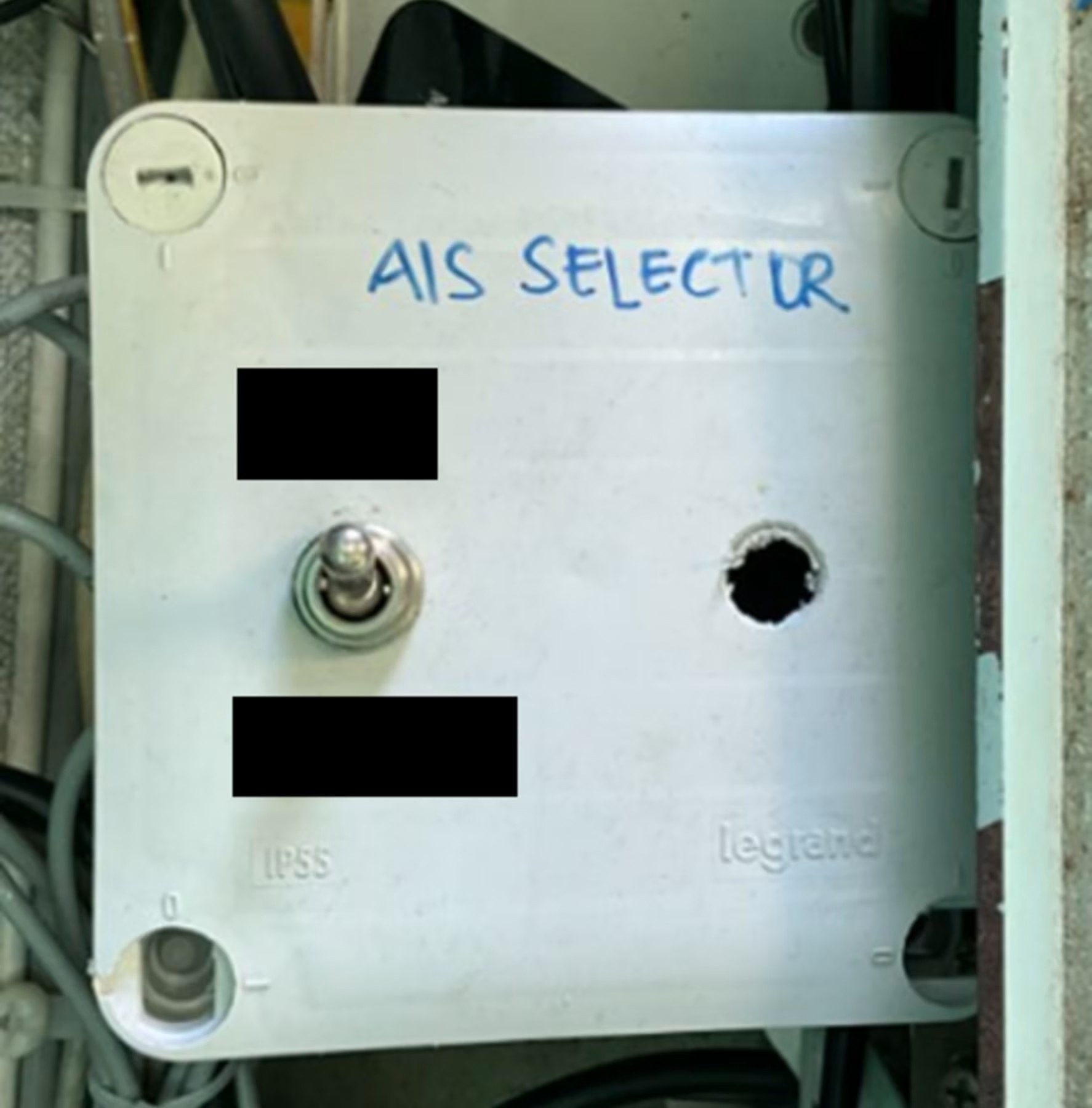 |
A toggle switch allowed the crew of the “ghost fleet” to change the ship’s name to avoid detection. An Ethernet cable helped them transmit false information about the ship’s location. Photo: U.S. Coast Guard (USCG). |
Instead of completely switching off their location signals—an action that would easily attract the attention of satellite tracking agencies—many ships have used AIS spoofing technology. This system continuously broadcasts fictitious coordinates, causing the location displayed on monitoring platforms to differ significantly from the ship's actual position.


In many cases, an oil tanker may appear on monitoring screens as anchored off the coast of Southeast Asia or navigating normally in the Indian Ocean. In reality, the vessel is operating in sanctioned ports in the Middle East or engaging in illegal oil transfers between ships at sea at night.
Experts warn that the falsification of navigation data is creating dangerous "blind spots" on international shipping lanes. When a ship carrying hundreds of thousands of tons of oil appears in a different location than it actually is, the risk of collisions with legitimate commercial vessels increases significantly, especially in high-traffic areas.
Maritime identity theft tactics
In addition to faking their positions, the ships of the "ghost fleet" also employ more sophisticated methods to conceal their origins and activities.
During the inspection, authorities discovered devices capable of altering or copying the IMO identification code – a unique registration number assigned to each ship by the International Maritime Organization and virtually impossible to change under normal operating conditions.
By using information from decommissioned vessels or legally operating ships elsewhere, smugglers can adopt a completely new identity. This allows them to easily appear in international maritime records with a clean operating history, thereby reducing the risk of detection when docking or conducting commercial transactions.
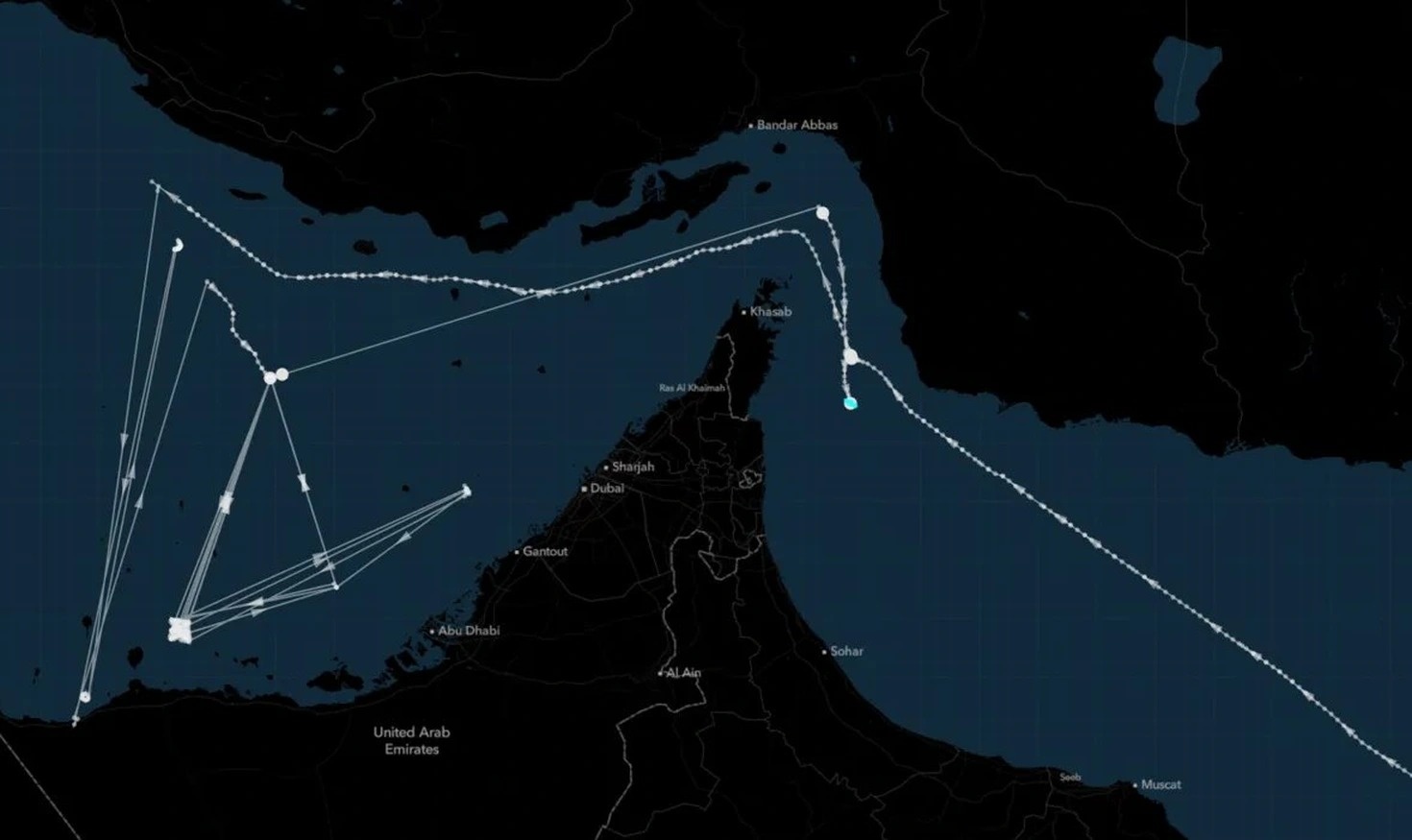 |
The "ghost ship" Nabiin had been in the Persian Gulf since the start of hostilities in Iran, before leaving on March 22 and subsequently appearing in the Gulf of Oman. However, data suggests that Nabiin was actually taken to a scrap yard in Bangladesh five years prior. Photo: Bloomberg. |
In parallel, many specialized software systems have been designed to monitor the activities of maritime patrol forces. Thanks to the ability to continuously update the location of U.S. Coast Guard vessels and allied forces, captains can choose the appropriate time to activate jamming devices, change identification, or adjust their course to avoid inspection.
Some ships also frequently change their flags, taking advantage of countries with lax regulations to erase traces of their operational history and true ownership.
The race for new technologies on the ocean.
What was discovered on the seized ships shows that the fight against oil smuggling is no longer simply a matter of patrolling or enforcing maritime law.
According to US officials, the sophistication of the seized equipment suggests that the "ghost fleet's" operations may have been backed by large-scale technological, financial, and logistical support. This partly explains why, despite increasingly stringent sanctions, oil flows from sanctioned countries continue to find their way to international markets.


A U.S. maritime security official told the Wall Street Journal that the world is witnessing a new "technological race" at sea, where smuggling networks are constantly upgrading their digital camouflage methods to counter modern surveillance systems.
This reality is forcing Washington to adjust its strategy against oil smuggling. Instead of relying solely on warships and direct inspections, the U.S. is increasingly investing in big data analytics and artificial intelligence (AI).
Next-generation AI systems are expected to detect anomalies in the trajectories, speeds, and movement patterns of ships, thereby identifying "digital ghosts" lurking among the tens of thousands of commercial vessels operating daily on the ocean.
Source: https://znews.vn/boc-tran-ham-doi-ma-qua-mat-the-gioi-post1660231.html
![[Image] Schools organize meetings and introduce teaching models to students admitted to grade 10.](https://vphoto.vietnam.vn/thumb/1200x675/vietnam/resource/IMAGE/2026/06/25/1782368077271_ndo_br_z7970052192242-1ec8daeb77a6eed1a4e9f58c564ddd3e-jpg.webp)
![[Image] Ho Chi Minh City: Ma Lang area, Chicken-Rice Market about to change its appearance](https://vphoto.vietnam.vn/thumb/1200x675/vietnam/resource/IMAGE/2026/06/25/1782377698627_ndo_br_m1-jpg.webp)

![[Photo] General Secretary and President To Lam receives Palestinian Ambassador Saadi Salama](https://vphoto.vietnam.vn/thumb/1200x675/vietnam/resource/IMAGE/2026/06/25/1782365384740_a1-bnd-9423-8322-jpg.webp)
















![[Video] Weather forecast for tonight and tomorrow, June 26, 2026: Northern Vietnam to end heatwave from tomorrow, Central Vietnam to continue experiencing a heatwave.](https://vphoto.vietnam.vn/thumb/402x226/vietnam/resource/IMAGE/2026/06/25/1782392692278_thumb-dem-png.webp)