

 |
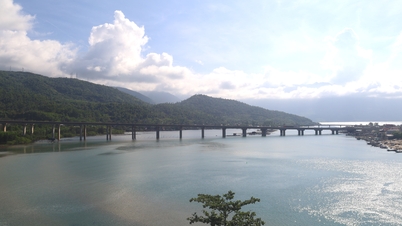
| Thuan An seaport overpass. Photo: Tuan Kiet |
Solid foundation
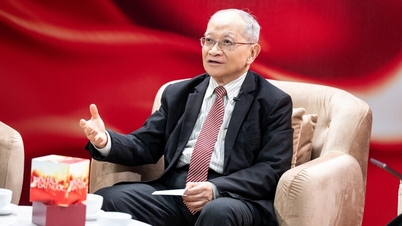
In the years following liberation, Hue was a city that suffered heavy losses due to the consequences of war. “Infrastructure was dilapidated, transportation was limited, and the population was sparse. Main roads like Le Loi, Hung Vuong, and Tran Hung Dao were narrow. The area south of the Perfume River developed slowly, while the north mainly consisted of old residential areas with low density. The city at that time had a quiet appearance, both recovering from the war and gradually seeking a new direction for development,” shared Mr. Nguyen Trung Chinh, former Standing Deputy Secretary of the former Provincial Party Committee (now the Hue City Party Committee).
After the liberation of the homeland, facing countless difficulties, the Party Committee and the city government led the people in overcoming the consequences of war, restoring production, and stabilizing people's lives. The urbanization process was carried out cautiously, focusing on restoring essential infrastructure, renovating the city, and improving people's living standards.
Early constructions such as new bridges across the Perfume River and An Cuu River, and expanded residential areas in An Cuu and Vy Da wards, laid the foundation for the long-term development of Hue city.
“That was a crucial ‘healing’ period, laying the groundwork for the city to flourish in the following decades. From a poor locality after the war, with the concerted efforts of the entire political system and the people, Hue gradually recovered and developed its socio-economic aspects, creating a solid foundation for the urbanization process,” said Mr. Nguyen Trung Chinh.
After a long journey of striving and effort, a historical turning point arrived on January 1, 2025, when Thua Thien Hue officially became the 6th centrally-governed city in the country. This is not only an important milestone but also opens a new phase of development, propelling Hue to even greater heights. The choice of urban development based on culture and heritage has created a sustainable growth impetus, helping Hue preserve its unique identity.
 |
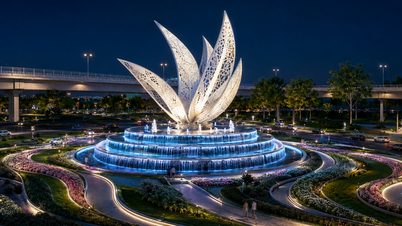
| Modern urban areas and increasingly integrated technical infrastructure systems. |
Urban areas are expanding, and infrastructure is becoming increasingly modern.
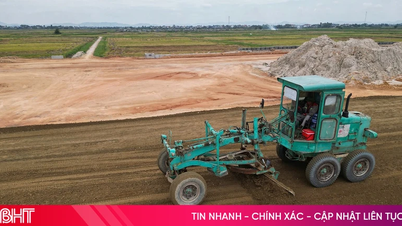
In recent years, Hue's urban space has continuously expanded. Resources have been mobilized to invest in the comprehensive development of infrastructure, especially transportation infrastructure. A series of strategic projects have been started, and many completed projects have been put into use, creating a new face for the city of Hue.
Over a cup of hot tea at the start of the day, Mr. Ho Minh Dung, former Chairman of the Veterans Association of Phu Vang District (formerly), expressed his pride: “From the Binh Thanh suspension bridge, the bridge over Con Hen islet; from the Thuan An sea gate overpass to the Nguyen Hoang bridge and a series of other bridges that are being prepared for investment and construction… these projects have helped to make the appearance of Hue city increasingly more attractive and opened up new development opportunities.”
Currently, the city has many key projects underway, expanding development from the lowlands to the highlands, from the coast to the lagoons. Notably, the North-South expressway sections from Cam Lo to La Son and La Son to Hoa Lien are being expanded from 2 to 4 lanes. The coastal road and the Thuan An estuary overpass project are preparing for technical opening. Previously, the Nguyen Hoang bridge was put into use, and the Nguyen Hoang road is currently being accelerated; the Ring Road 3 project aims to connect inter-regional areas, creating momentum for development in the southwestern part of the city. Interspersed within the city are modern high-rise social housing projects that have been and are being invested in and constructed, showing a younger and more dynamic Hue.
 |
| The pedestrian walkway system has been expanded with investment. |
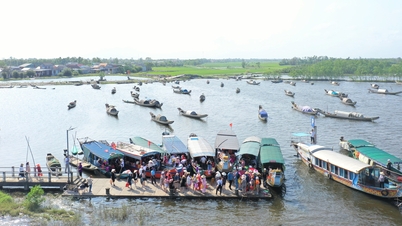
The transportation infrastructure in the Tam Giang - Cau Hai lagoon area has also seen remarkable development. Previously, the area was isolated, with people primarily traveling by boat. Now, many sturdy bridges have been built, opening up new opportunities for socio -economic development in the lagoon and coastal region.
According to the upcoming plan, three bridges crossing the Tam Giang lagoon connecting Phu Vang - Phu Vinh, Phu Vang - Vinh Loc, and Quang Dien - Phong Quang will also be invested in with a total capital of thousands of billions of VND. In the period 2026-2030, the city will continue to invest in bridges in coastal and lagoon areas, contributing to the completion of the transportation system, opening up new development opportunities, and promoting the development of the marine economy and tourism.
Affirming this development journey, Standing Committee Member of the Hue City Party Committee and Permanent Vice Chairman of the Hue City People's Committee, Hoang Hai Minh, emphasized: "More than 50 years after liberation, Hue has transformed from a small city, suffering many consequences of war, into a centrally-governed city with a modern and elegant appearance. In the journey of urban development in the coming time, Hue will remain steadfast in preserving its cultural identity and natural landscape, so that it can both develop strongly and live up to its reputation as a unique heritage city of Vietnam."
Source: https://huengaynay.vn/kinh-te/buoc-chuyen-cua-do-thi-hue-164962.html
























































Comment (0)