

 |
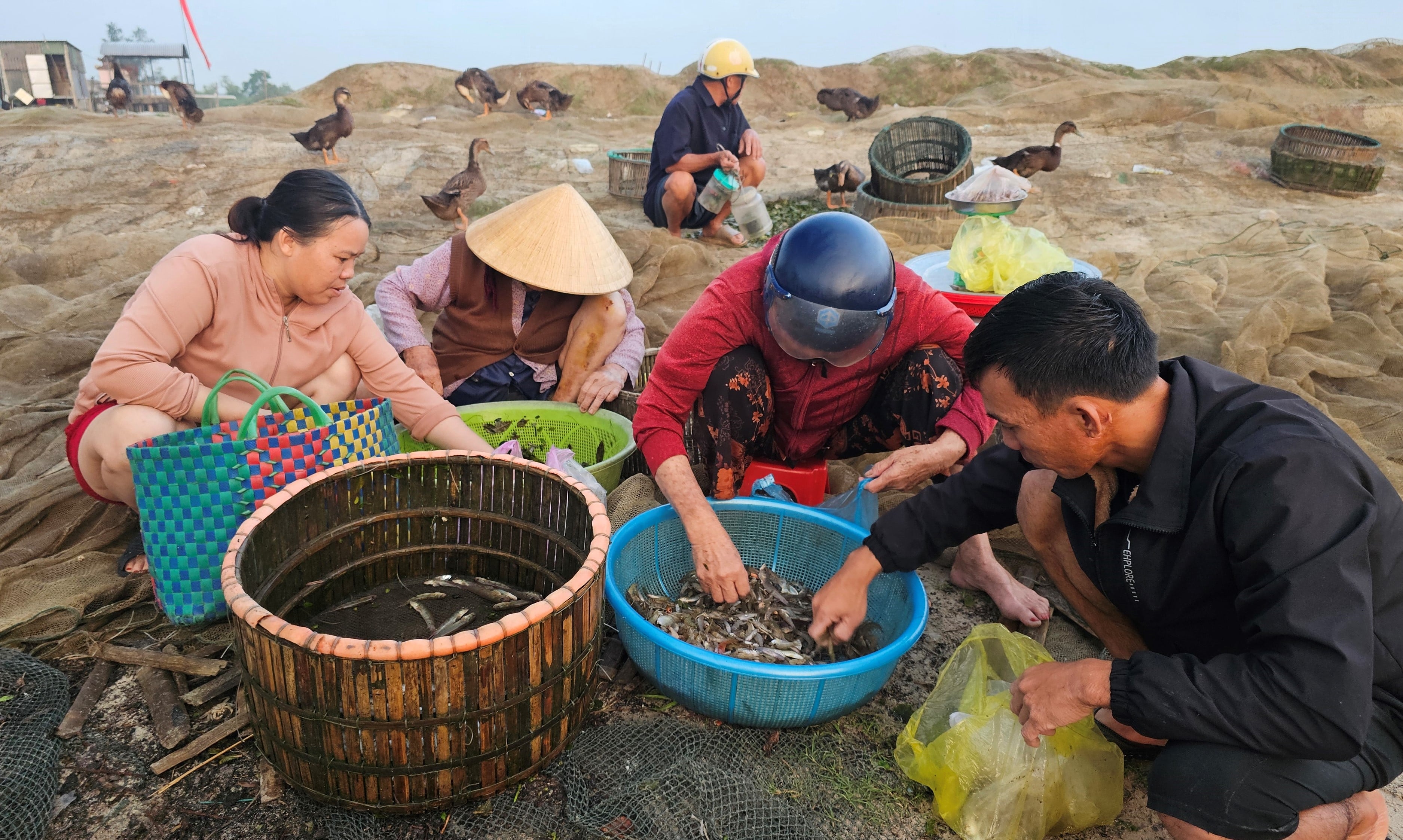
| Fishermen sort the fish caught from Tam Giang lagoon early in the morning. |
Multi - valued ecosystem
What makes the Tam Giang - Cau Hai area special is not its size in square kilometers. Its greatest value lies in the fact that it is a space where many layers of time and values coexist.
There you'll find nature and people, saltwater and freshwater, traditional crafts and future aspirations, fishing village memories and modern experiential tourism, the meditative tranquility of Hue and the rhythm of life along the lagoon. If Hue wants the world to know about Tam Giang - Cau Hai, perhaps it shouldn't just promote it as a "tourist attraction," but rather tell it as a "story of waterfront civilization."
Perhaps Hue needs to shift from a "visiting heritage" mindset to a "living with heritage" mindset.
Tourists come to the Imperial Citadel to see the past, but they come to Tam Giang - Cau Hai to experience the life that continues every day. To achieve this, Tam Giang - Cau Hai needs to be viewed as a multi-valued ecosystem, not just a body of water used for aquaculture.
The first layer is ecological value: This is the coastal "green shield," nurturing biodiversity, regulating the climate, and protecting communities from climate change.
The second layer is cultural value: the traditional craft of fishing with bamboo traps, fishing villages, customs of lagoon dwellers, seafood cuisine , and a way of life adapted to the tides… all create a unique aquatic culture unlike anywhere else in Hue.
The third layer is artistic and emotional value: The Tam Giang - Cau Hai area has the potential to create images with strong cinematic, poetic, and painterly qualities. It is a "natural stage" for photography, music, light festivals, installation art, and healing tourism.
The fourth layer is the value of indigenous education and knowledge: It is where the younger generation is told the story of how people have lived in harmony with the brackish water ecosystem for hundreds of years.
And finally , there's the future value: If properly planned, Tam Giang - Cau Hai could become an international model for lagoon-side eco-economy, community tourism, conservation linked to livelihoods, and urban living in harmony with nature.
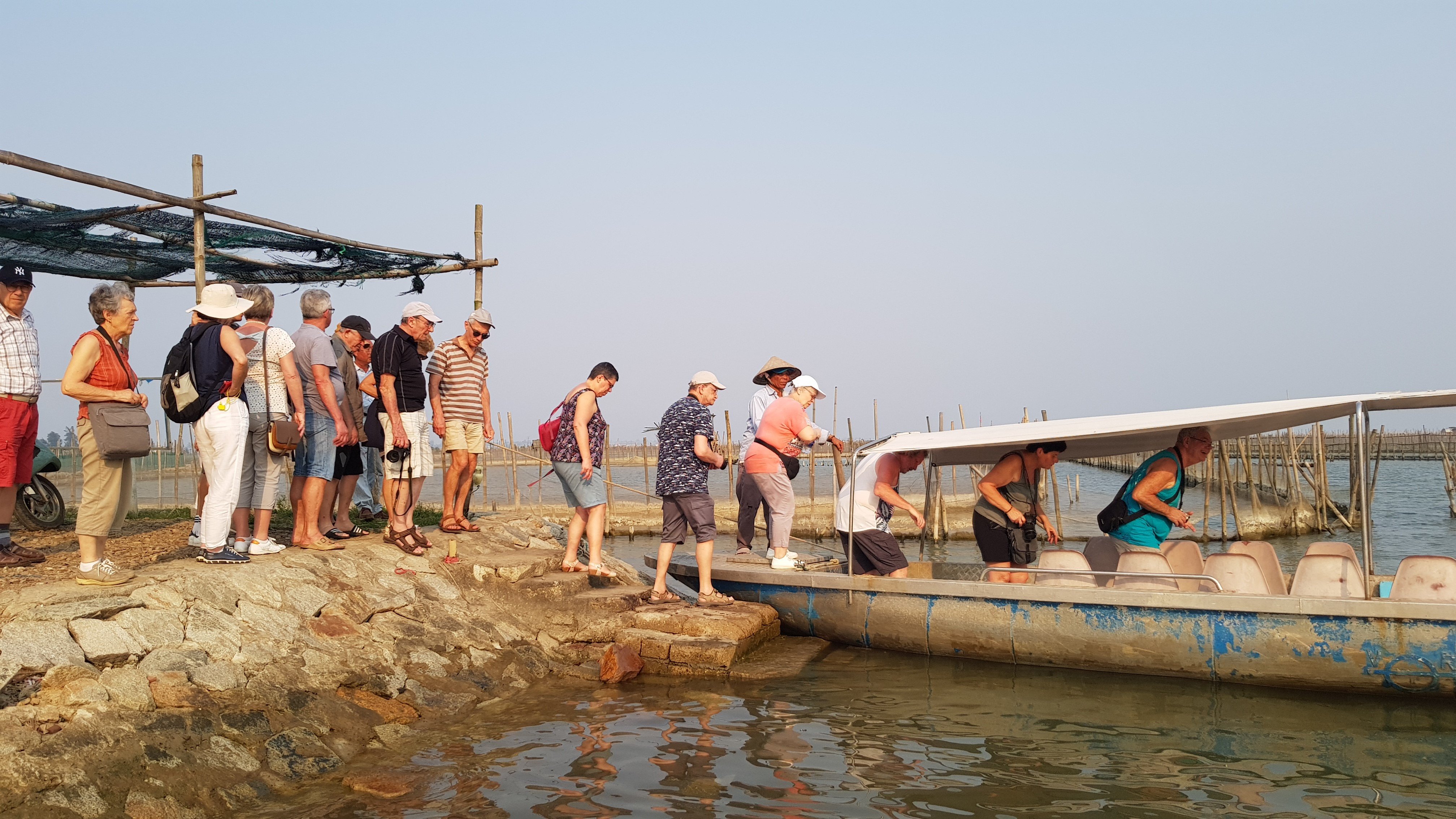 |
| International tourists experience the lagoon. |
A new "grand narrative" is needed for the lagoon system .
I believe that instead of promoting each check-in point individually, we should create a cohesive identity: "Hue, where the Imperial Palace is located on land and a palace of nature is situated on the water." Or: "During the day, listen to history tell stories in the Imperial Citadel; in the afternoon, listen to the stories told by the water at Tam Giang."
If we want the world to remember Tam Giang - Cau Hai, we need to make it an experience that cannot be replicated.
Don't turn it into a mass-market tourist area with concrete.
Don't turn the fishing village into a makeshift theater.
Instead, we preserve the authentic charm of life along the lagoon, then elevate its value through sophisticated landscape design, storytelling, international visual communication, documentaries, lagoon festivals, local cuisine, slow tourism, water sports, and creative spaces integrated with nature.
Many countries are famous not because they have more beautiful resources than Vietnam, but because they know how to transform their landscapes into "global emojis".
Santorini, Greece , is a story of sunsets.
Venice, Italy, is the story of a city built on water.
Kyoto, Japan, is a story of tranquility and meditation.
Hue can certainly tell the world that it is a place where a waterfront civilization still lives. And Tam Giang Lagoon - Cau Hai Lagoon is the "water surface of Hue's soul."
 |
| Inspect mangrove seedlings for planting along the Tam Giang lagoon. |
"Dialogue with Nature"
Seeking environmentally friendly solutions for sustainable development is the right direction. Environmental friendliness should become a strategic mindset in management and development. The development of the Tam Giang - Cau Hai lagoon area requires an interdisciplinary approach, integrated coastal zone management, and the integration of environmentally friendly solutions to enhance climate resilience.”
Based on that mindset, perhaps Tam Giang - Cau Hai should not develop by "conquering nature," but rather by learning to "dialogue with nature."
"Following nature's course" doesn't mean passively surrendering to it. It means understanding the laws of water, wind, tides, and ecosystems, and then designing livelihoods, infrastructure, and economic development in harmony with those laws.
The first environmentally friendly solution is to restore the natural ecosystem of the lagoon area. Mangrove forests along the lagoon, seagrass beds, and natural breeding grounds for aquatic life should be considered "green infrastructure" rather than just environmental resources. This is the ecological buffer that helps reduce wave action, prevent erosion, and increase resilience to climate change.
The second solution is to shift from single-sector exploitation to a multi- value ecological economy. On the one hand, water resources are not only used for shrimp and fish farming, but can also generate value in tourism, education, culture, art, scientific research, and creative economics. When communities have more sources of livelihood, the pressure of unsustainable exploitation on the ecosystem also decreases.
The third solution is to develop tourism in harmony with nature . Avoid dense concrete construction along the lagoon. Do not destroy the landscape to build artificial structures that are alien to nature. Small accommodations using local materials, renewable energy, and low-rise architecture that blends into the water and fishing villages will create far more sustainable value than mass-market tourist areas.
The fourth solution is to restore and empower the communities living along the lagoon. The local people are the "living memory" of Tam Giang - Cau Hai. Fishermen who understand the tides, fishing seasons, wind direction, and local ecological practices should be considered key players in the development process, not just beneficiaries.
The fifth solution is integrated coastal zone management based on an interdisciplinary approach . Lagoons cannot be managed in isolation, considering tourism, fisheries, environment, transportation, or urban planning. Every development decision needs to view the entire ecosystem as a living organism interconnected by water currents.
And perhaps the most important aspect of a nature-oriented mindset is changing the way people view nature.
Instead of viewing lagoons merely as "surface water" to be exploited, they should be seen as a living heritage for the future.
Because when people learn to live in harmony with nature, nature not only nourishes their livelihoods, but also nurtures the culture, memories, and identity of a region.
Source: https://huengaynay.vn/kinh-te/mat-nuoc-cua-tam-hon-hue-165857.html

![[Photo] National Assembly Chairman Tran Thanh Man working with the Standing Committee of the Law and Justice Committee](https://vphoto.vietnam.vn/thumb/1200x675/vietnam/resource/IMAGE/2026/05/21/1779378929214_ndo_br_1-4610-jpg.webp)
![[Photo] General Secretary and President To Lam presides over a working session with the Central Policy and Strategy Committee on the development of the materials industry.](https://vphoto.vietnam.vn/thumb/1200x675/vietnam/resource/IMAGE/2026/05/21/1779359935432_a3-bnd-3129-1412-jpg.webp)


















































Comment (0)