

By 2045, approximately 60 state-owned enterprises will be among the top 500 largest enterprises in Southeast Asia; and 5 state-owned enterprises will be among the top 500 largest enterprises in the world. All state-owned enterprises will implement modern corporate governance based on digital platforms; 100% of state-owned economic groups and corporations will apply OECD governance principles… Continued focus will be placed on investing in and developing a number of large-scale state-owned economic groups and enterprises capable of playing a leading role in key strategic sectors and fields.
The resolution also emphasizes that state economic resources must be fully reviewed, inventoried, evaluated, and accounted for according to market principles; linked to socio-economic development goals and ensuring national defense and security. At the same time, it harmonizes the relationship between the state, the market, and society. It also separates the use of state resources in providing public goods and services and fulfilling political tasks from production and business activities.
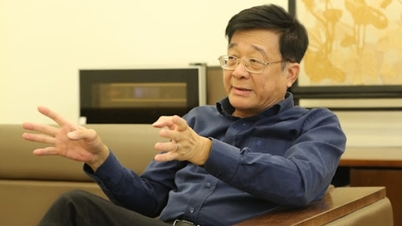
According to many experts, the Politburo's issuance of Resolution 79 represents a significant shift in thinking. Specifically, when political tasks, public service activities, and business operations are clearly separated and accounted for transparently according to market principles, the performance of enterprises will be assessed more accurately. This means that when the State assigns enterprises political tasks, it must ensure corresponding resources are provided; it is unacceptable to assign tasks while simultaneously requiring enterprises to cover losses. Conversely, enterprises must adhere to market principles, measuring their performance through productivity, efficiency, and return on capital.
From another perspective, one expert argues that, in the past, state-owned enterprises had to wear an administrative "garment" that was too tight for their business "body," leading to them being stuck between the roles of both market entities and units executing administrative orders. However, with the spirit of Resolution 79, these bottlenecks will be removed, opening up new opportunities for state-owned enterprises to develop in accordance with their functions.
The state-owned economy plays a leading role, pioneering in strategic, long-term areas, high-risk sectors, and areas where the private sector lacks resources or is not yet ready to invest, in order to create spillover effects, activate supply chains, promote public-private partnerships, and expand development space for the entire economy. In addition, the state-owned economy ensures major balances, stability, macroeconomic regulation, and the implementation of medium- and long-term strategic tasks.
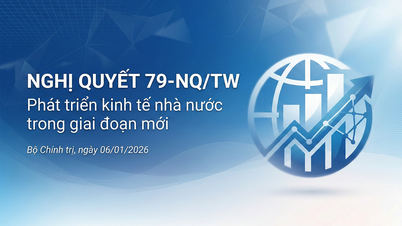
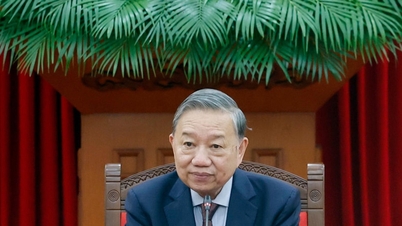
This has been proven in practice. Therefore, as stated by General Secretary To Lam at the recent National Conference on studying, understanding, and implementing Resolution No. 79-NQ/TW and Resolution No. 80-NQ/TW of the Politburo, the state-owned economy must occupy the "strategic command high points" of the economy.
To truly capture the "strategic high points" of the economy, the state-owned economic sector must be strongly restructured, focusing on key industries, strategic areas, and those with high spillover effects. Its leading role must be demonstrated through its leadership capacity, effectiveness, and substantial contributions to macroeconomic stability, economic security, and medium- and long-term development.
"In areas where the state needs to maintain control, it must do so firmly, efficiently, and effectively. In areas where the state should only play a leading role, creating a foundation and paving the way, mechanisms must be designed to allow the private sector to participate, compete, and develop together. In areas where the state does not need to be involved or is ineffective, it must be resolutely restructured according to market principles, transparency, and against 'group interests,' 'backroom deals,' 'manipulation,' and 'profiteering' from policies," General Secretary To Lam emphasized.
Source: https://daibieunhandan.vn/buoc-doi-moi-quan-important-ve-tu-duy-10408053.html
![[Photo] Prime Minister Pham Minh Chinh holds a phone call with Angolan President João Manuel Gonçalves Lourenço](https://vphoto.vietnam.vn/thumb/1200x675/vietnam/resource/IMAGE/2026/03/16/1773674632171_ndo_br_dsc-4772-jpg.webp)
![[Photo] Prime Minister Pham Minh Chinh presides over meetings of the Government Standing Committee to discuss several important issues.](https://vphoto.vietnam.vn/thumb/1200x675/vietnam/resource/IMAGE/2026/03/16/1773674631996_ndo_br_img-5789-jpg.webp)
![[Photo] Prime Minister Pham Minh Chinh receives the Ministers of Foreign Affairs, Defense, and Public Security of China.](https://vphoto.vietnam.vn/thumb/1200x675/vietnam/resource/IMAGE/2026/03/16/1773659638054_ndo_br_dsc-4386-6157-jpg.webp)

![[Photo] General Secretary To Lam receives the Chinese Ministers of Foreign Affairs, National Defense, and Public Security attending the Conference on the “3+3” Strategic Dialogue Mechanism](https://vphoto.vietnam.vn/thumb/1200x675/vietnam/resource/IMAGE/2026/03/16/1773659640884_a1-bnd-0963-2144-jpg.webp)
![[Photo] Secretary of the National Assembly Party Committee, Chairman of the National Assembly presides over the fourth meeting of the National Assembly Party Committee Executive Board.](https://vphoto.vietnam.vn/thumb/1200x675/vietnam/resource/IMAGE/2026/03/16/1773656046264_ndo_br_bnd-0533-jpg.webp)















































Comment (0)