

A test for a megacity of 14 million people.
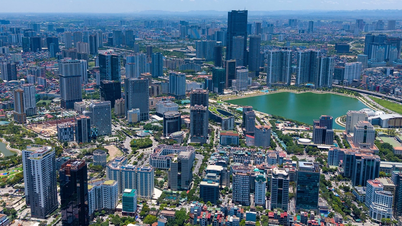
July 1st, 2025 marks a new milestone in Ho Chi Minh City's development, as the three leading economic hubs of the Southeast region – Ho Chi Minh City, Binh Duong, and Ba Ria - Vung Tau – merge. This is an unprecedented turning point in Vietnam's urban history, making Ho Chi Minh City the country's first megacity, encompassing 168 communes, wards, and special zones, covering an area of approximately 6,773 km², and home to 14 million people.
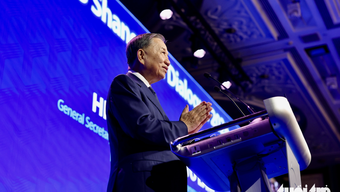
In his directive speech at the First Congress of the Ho Chi Minh City Party Committee, term 2025-2030, General Secretary To Lam affirmed that Ho Chi Minh City is currently where the three most dynamic development poles converge; the birthplace of many innovative initiatives and aspirations for advancement.
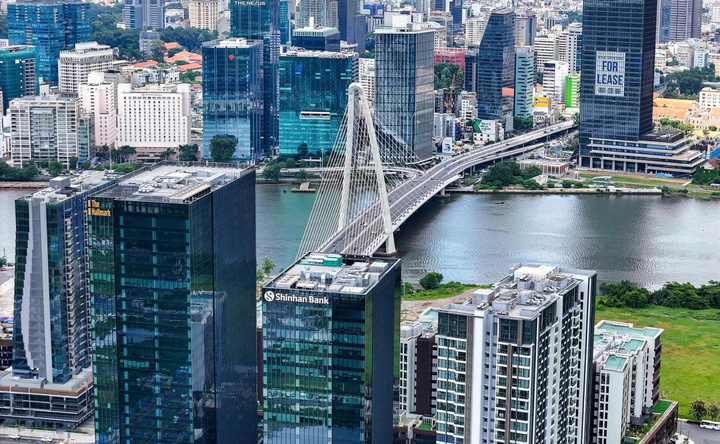
Ho Chi Minh City's economy currently exceeds 3 trillion VND, accounting for 23.5% of the country's GDP; its budget revenue accounts for more than 30% of the total national revenue.
The merger of Ho Chi Minh City is a historic turning point. The Central Party Committee, the National Assembly , the Government, and the entire nation have high expectations that Ho Chi Minh City will become a model megacity and generate new growth drivers.
By the end of 2025, Ho Chi Minh City had strongly affirmed its leading role, with a GRDP growth rate of 8.3%; the value of its products reached 3.03 trillion VND, accounting for 23.5% of the national GDP.
A notable figure demonstrating the economic powerhouse's contribution is its budget revenue. Ho Chi Minh City has contributed over 800,000 billion VND to the state budget, accounting for more than one-third of the total national budget revenue.
The results of the six-month "trial run" of the two-tiered local government system are seen as a springboard for the new Ho Chi Minh City, which has become a unified development entity.
“From the tradition of the three localities ‘sharing the same river, sharing the same destiny’ closely intertwined throughout history; to today, mountains connected to mountains, rivers connected to rivers, and seas connected to seas – creating a new development space, a new synergistic strength, opening up a period of development with greater stature, position and aspirations,” as affirmed by City Party Secretary Tran Luu Quang.
'Laboratory' of new mechanisms
After four decades of development and innovation, Ho Chi Minh City continues to be entrusted with the role of "pioneer" in implementing institutional sandboxes and conducting unprecedented experiments in technology, transportation, urban governance, and more.
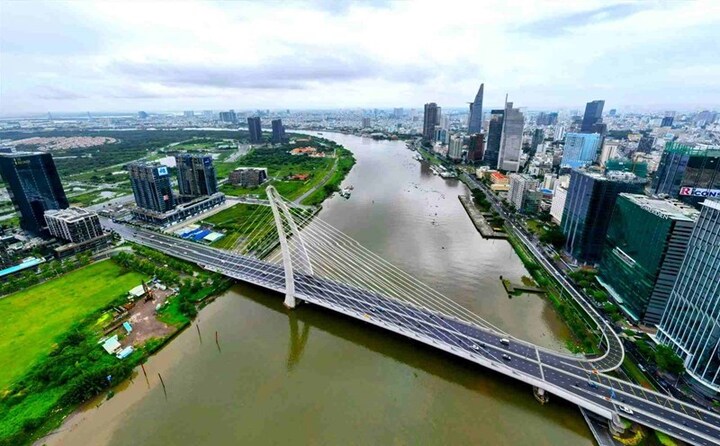
Ho Chi Minh City concludes 2025 with a series of multi-billion dollar projects and works being launched, such as the Can Gio-Ben Thanh Metro line, the Ben Thanh-Tham Luong Metro line, and the Rach Chiec National Sports Complex...
The meaningful "gift" that Ho Chi Minh City received in the final days of 2025 was the National Assembly's approval of the amended Resolution 98, which includes many mechanisms to create momentum for Ho Chi Minh City to accelerate its growth in a new form, paving the way for achieving double-digit growth targets starting this year.
A series of new economic and financial models also began to emerge, commensurate with the megacity.
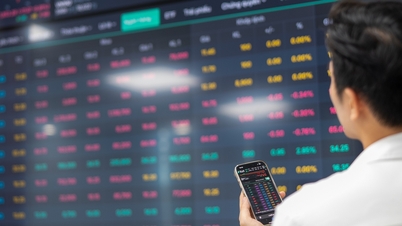
On December 21st, the Vietnam International Finance Center in Ho Chi Minh City commenced operations. This marks the birth of a modern financial ecosystem, focusing on capital markets, currency markets, fintech, and specialized exchanges. It also features a specialized service ecosystem encompassing legal services, auditing, and technology.
Based on the "new version" of Resolution 98, by 2026, Ho Chi Minh City will establish the Cai Mep Ha Free Trade Zone, covering nearly 3,800 hectares, connected to the Cai Mep - Thi Vai deep-water port. This is an important economic policy tool to promote international trade and investment.
According to Party Secretary Tran Luu Quang, the International Financial Center and the Free Trade Zone are new, challenging projects being implemented for the first time, but they will be new drivers of growth for Ho Chi Minh City.
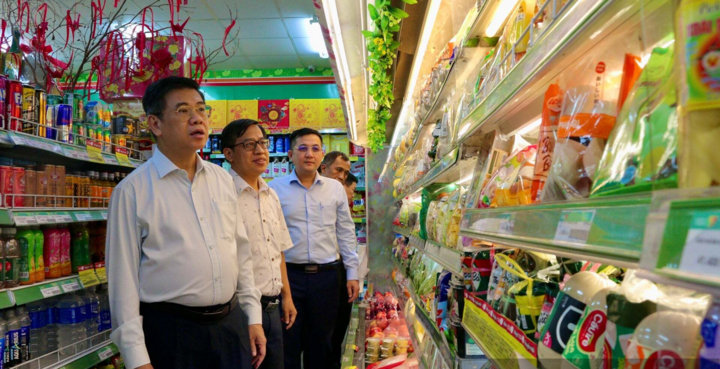
By 2026, Ho Chi Minh City aims to achieve an economic growth rate of over 10%.
In addition, through a series of mechanisms from Resolution 188, Resolution 57, etc., Ho Chi Minh City is applying investment in innovation centers, big data, inner-city railways, connecting the Southeast region, creating momentum for economic and infrastructure growth at the national and regional levels.
The impact of Resolution 188's special mechanisms is evident in a series of metro projects with shortened investment timelines. Notable examples include the Can Gio - Ben Thanh line, which went from concept to commencement in just 11 months; and the Ben Thanh - Tham Luong metro line, which commenced construction on January 15th, also pioneering the application of mechanisms under this Resolution.
Speaking to investors at the Autumn Economic Forum 2025, Party Secretary Tran Luu Quang affirmed that Ho Chi Minh City is ready to be a pioneering center, a place for discussing and piloting strategies, a place for starting new ideas and spreading success. Ho Chi Minh City is always expanding international cooperation, attracting global talent, and is ready to pilot new mechanisms, including unprecedented models.
This is also the belief of Prime Minister Pham Minh Chinh when placing the pioneering role of Ho Chi Minh City: The city must promote the spirit of daring to think and daring to act; be ready to play the role of a laboratory for green economic and financial models, smart cities, and an international financial center developing to the level of a megacity, making important contributions to the prosperous development of Vietnam and to peace, cooperation and sustainable development of the region and the world.
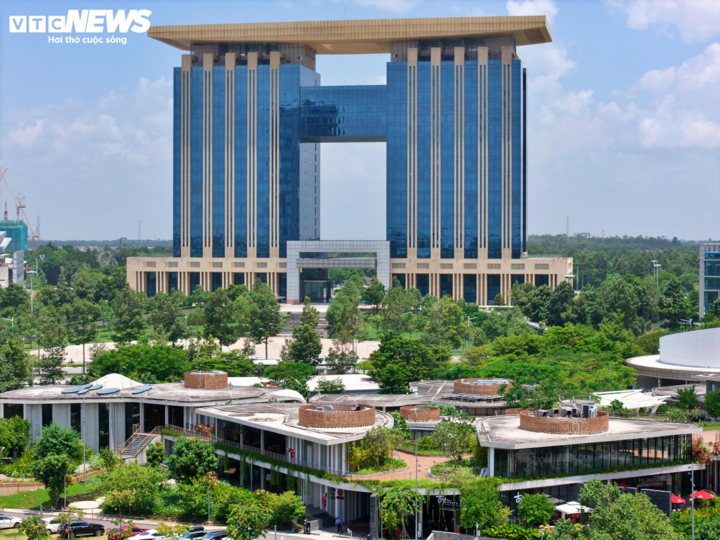
The establishment of the North Ho Chi Minh City Science and Technology City by the end of 2025 signifies a restructuring of the city's development space.
Paving the way to a future megacity.
With its existing potential, Ho Chi Minh City has the opportunity to become a global metropolis. Dr. Can Van Luc, a member of the Prime Minister's Policy Advisory Council, affirmed that the new environment and a series of specific policies give Ho Chi Minh City "everything," from its economic scale, its role as a trade gateway to the South, and its dynamic young workforce; to its concentration of experts, scientists, large enterprises, and its open, integrated culture.
“Nowhere is as advantageous as Ho Chi Minh City is today. The city has the sea, rivers, ports, modern technology, and synchronized infrastructure; its tourism and service sector is unparalleled. The city's economy is very diversified; if one source of income is not good, another will compensate,” Mr. Luc said.
Associate Professor Tran Hoang Ngan shared that he has been associated with Ho Chi Minh City since 1970, witnessing the city's transformation over more than half a century. He understands every aspect of the city, from small alleys to grand boulevards, from the hardships of the subsidy period to the aspirations for modernity today.
Now, Ho Chi Minh City has all the conditions for remarkable development; this favorable arrangement – a rare opportunity – makes it worthy of becoming a sustainable international megacity.
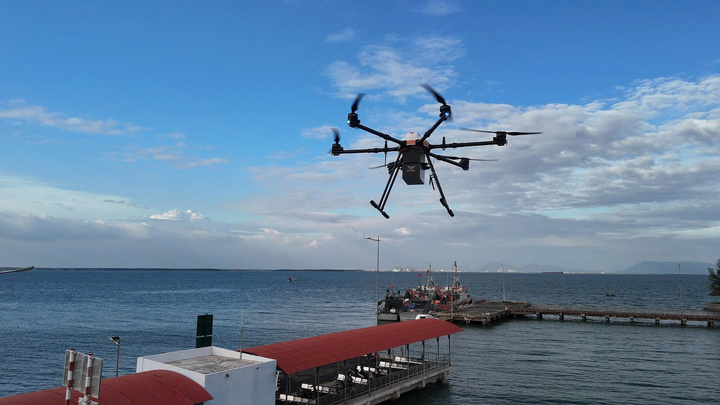
The low-level economic zone was officially activated when Ho Chi Minh City successfully tested a drone-assisted sea-crossing delivery flight.
Sharing the same aspiration, Mr. Nguyen Ngoc Hoa, Chairman of the Ho Chi Minh City Business Association, believes that the new city, with its outstanding development potential, has reached the stature of a multi-centered megacity, encompassing important economic pillars.
The business community in Ho Chi Minh City is once again being boosted by new macroeconomic policies. In particular, Resolution 68 and the amended Resolution 98 serve as a springboard to maximize potential, expand investment, and integrate into global value chains.
Chairman of the Ho Chi Minh City People's Committee, Nguyen Van Duoc, stated that in the new phase, Ho Chi Minh City will innovate its growth model, restructure its economy, and use science, technology, and innovation to solve the growth problem and escape the middle-income trap.
Many large technology corporations have now come to Ho Chi Minh City to do business. By 2025, Ho Chi Minh City is expected to receive nearly $9 billion in FDI; of which more than $2 billion will be invested in science and technology and innovation, a unique characteristic almost exclusive to Ho Chi Minh City.
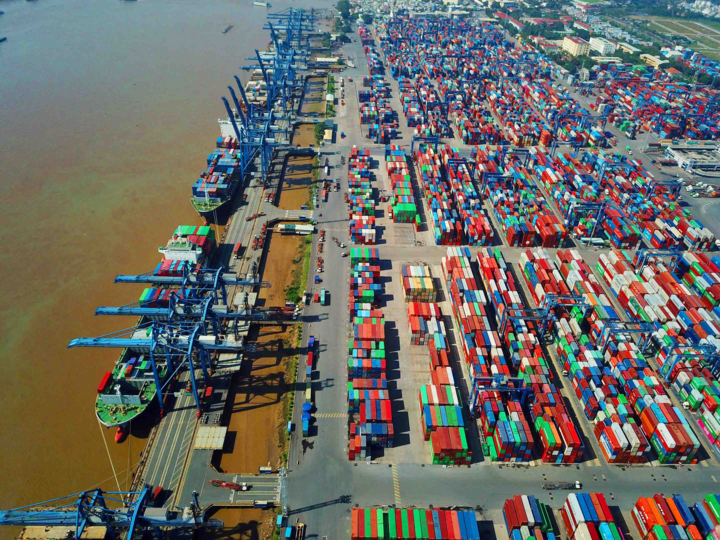
Many major ports are also being developed, such as the $2 billion Cai Mep Ha port and the Can Gio international transshipment port, making Ho Chi Minh City an important hub in the national and international logistics network.
Domestic private enterprises are the main force working hand-in-hand with Ho Chi Minh City to build the megacity. In key projects with billions of USD in capital, such as metro lines, new urban areas, bridges, gateway roads, expressways, etc., large enterprises such as Becamex, Thaco, Sungroup, Vingroup, Sovico… are sharing the responsibility.
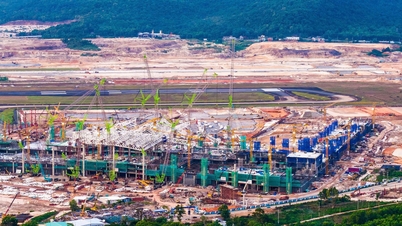
Mr. Được stated that in 2026, Ho Chi Minh City will be a massive construction site, with numerous infrastructure projects being implemented simultaneously. The city is determined to resolve traffic congestion, improve urban infrastructure, and enhance the quality of life for its 14 million residents by 2030.
Source: https://vtcnews.vn/buoc-ngoat-lich-su-cua-sieu-do-thi-tp-hcm-ar1003079.html




![[Photo] General Secretary and President To Lam and the President of the Philippines hold talks.](https://vphoto.vietnam.vn/thumb/1200x675/vietnam/resource/IMAGE/2026/06/01/1780283481955_vna-potal-tong-bi-thu-chu-tich-nuoc-to-lam-va-tong-thong-philippines-hoi-dam-8797519-1429-jpg.webp)




































































Comment (0)