

 |
The logo in front of Intel's headquarters in California (USA). Photo: Bloomberg . |
According to The Information , Intel and TSMC executives have reached a preliminary agreement to establish a joint venture to operate Intel's chip manufacturing plant in the United States.
TSMC is expected to hold a 20% stake in the joint venture, with the remainder belonging to Intel and other US chip manufacturers. The Taiwan-based chipmaker is also discussing sharing some manufacturing techniques with Intel. However, some Intel executives are concerned the deal will lead to layoffs and the phasing out of existing manufacturing technology.
Previously, White House and U.S. Commerce Department officials had encouraged Intel and TSMC to cooperate. This was aimed at resolving Intel's ongoing crisis, which had forced the company to cut thousands of jobs and scale back expansion plans.
In March, Reuters reported that TSMC had called on Nvidia, AMD, and Broadcom to contribute capital to a joint venture. Around the same time, Intel appointed CEO Lip-Bu Tan, hoping to revive the company after a period of lagging behind in the AI field, while its multi-billion dollar investment in chip factories had yet to yield results.
Intel's contract chip manufacturing operations face numerous challenges due to its inability to meet the diverse demands of customers like TSMC, leading to delays and failed test runs.
Following the announcement of the deal, Bloomberg reported that Intel shares rose 2% on April 3rd, reversing a 5% drop earlier in the session. Year-to-date, Intel shares have gradually recovered, gaining approximately 10%.
If the information is accurate, this would be Intel's first major move under CEO Lip-Bu Tan. At a conference in Las Vegas on March 31st, he stated that Intel would be splitting off assets that are not central to its development mission.
The agreement between TSMC and Intel was revealed a day after US President Donald Trump announced tariffs on several regions. US Commerce Secretary Howard Lutnick said the strategy is to boost domestic production, including moving semiconductor manufacturing operations out of Taiwan.
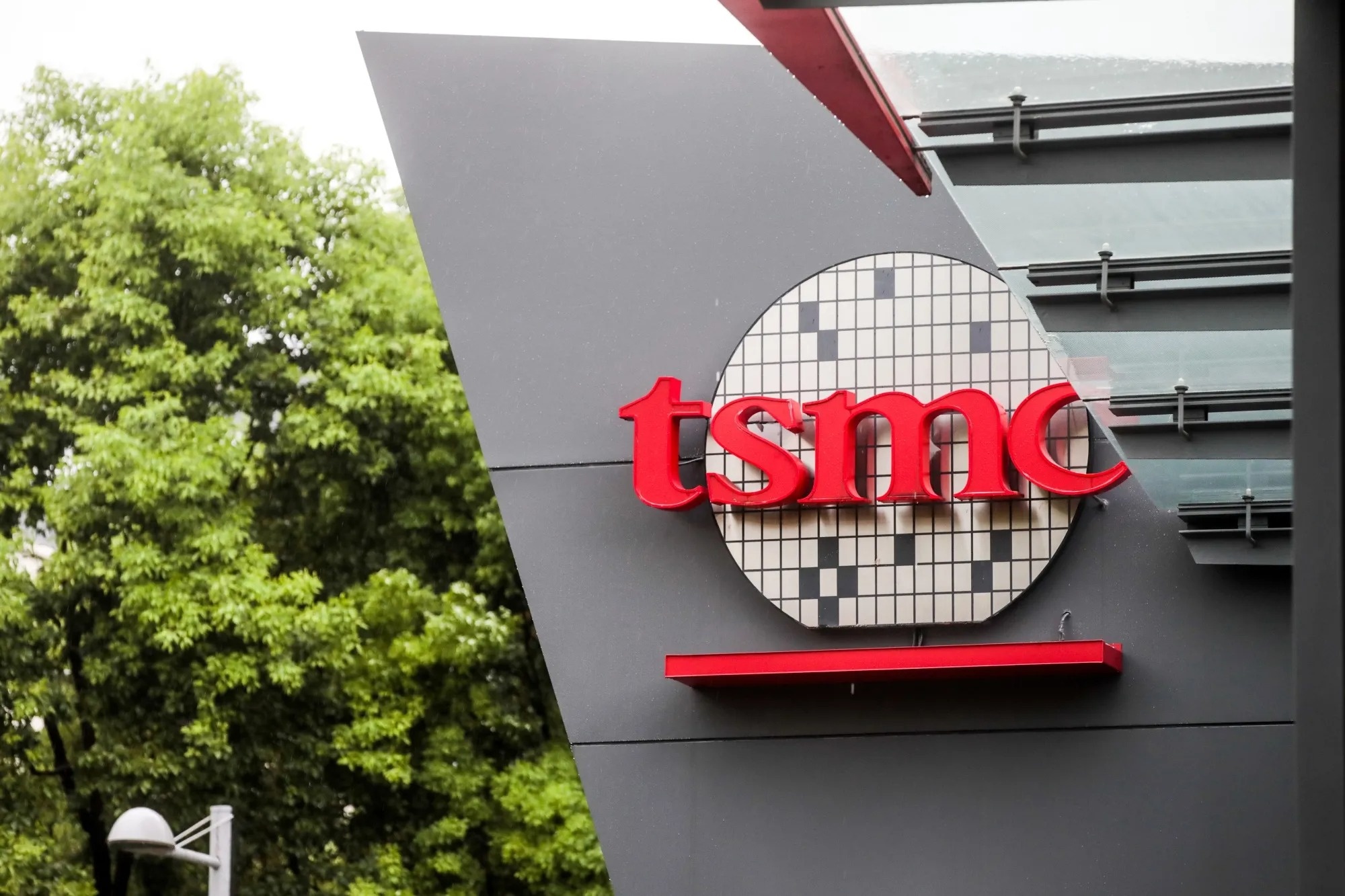 |
Logo in front of TSMC's headquarters in Taiwan. Photo: Bloomberg . |
Speaking to CNBC on April 3rd, Lutnick explained that semiconductor products are not subject to the minimum 10% tariff or reciprocal tariffs specific to each country, although this will be announced later.
"Donald Trump will study this issue in detail before making an announcement, aiming to move all semiconductor manufacturing out of Taiwan. The United States must be able to defend itself," Lutnick emphasized.
Speaking to reporters, a White House representative said that semiconductor products could be subject to tariffs under Section 232 of the Trade Expansion Act of 1962. This allows the president to impose tariffs if imports threaten national security. Previously, Trump invoked Section 232 to impose a 25% tariff on steel, aluminum, and automobiles.
“We plan to apply Section 232 to lumber and copper. The President is also considering similar policies for semiconductors, pharmaceuticals, and potentially critical minerals,” the official said.
Regarding technology and semiconductors, Lutnick cited Apple's plan to invest $500 billion in the US over the next four years, including building a factory in Texas, as an example.
Source: https://znews.vn/intel-duoc-giai-cuu-post1543162.html

















































































Comment (0)