

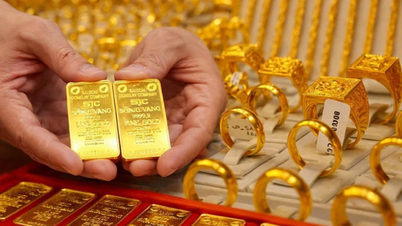
According to a newly released report by the World Gold Council (WGC), central banks made net purchases of a total of 19 tonnes of gold in February, amid rising inflationary pressures and risks from the Iran conflict.
The National Bank of Poland led the market by making net purchases of a total of 20 tonnes of gold in February, bringing its total holdings to 570 tonnes, equivalent to 31% of the country's total reserves.
According to Marissa Salim, Senior Research Director at the WGC, the bank is aiming to acquire 700 tonnes of gold, as previously announced by Governor Adam Glapiński.
Analysts are closely monitoring Poland's gold reserve strategy amid the central bank's suggestion of "monetizing" gold. Earlier last month, Governor Glapiński proposed a plan to raise approximately $13 billion by selling a portion of its gold reserves to finance defense spending. This plan also includes the goal of taking advantage of a favorable economic cycle to repurchase gold in the future.
In Central Asia, the Central Bank of Uzbekistan continued to increase its reserves by purchasing an additional 8 tons of gold in February – the second time since the beginning of the year. The country's total gold reserves reached 407 tons, accounting for 88% of its total foreign exchange reserves.
In Southeast Asia, the Central Bank of Malaysia also continued its net purchases for the second consecutive month, adding 2 tonnes of gold to the national reserves.
China and the Czech Republic maintain modest but steady gold purchases.
Conversely, Türkiye and Russia were the two largest net sellers of gold in February. Russia sold 6 tonnes of gold, while the Turkish Central Bank sold 8 tonnes during the same period.
The latest data shows that Türkiye's gold reserves plummeted by 58.4 tonnes in March. According to sources, some of the gold was sold directly, while the majority was used in swap transactions to enhance foreign currency and domestic currency liquidity.
The WGC stated that new players have emerged in the market. For example, the Central Bank of Uganda launched a domestic gold purchase program two years ago and continued it until March of this year. The institution's goal was to purchase a minimum of 100 kg of gold between March and June from domestic producers, thereby strengthening reserves and mitigating risks from international financial markets.
The Central Bank of Kenya is also signaling that it will implement a similar program in the near future.
Looking ahead, experts predict that demand for gold from central banks may slow down as countries prioritize macroeconomic stability, respond to supply chain disruptions, and address rising energy costs due to the conflict in Iran.
According to Ms. Salim, developments in February showed that central banks' gold purchases had recovered after a period of stagnation earlier in the year, while also confirming the strategic role of gold in reserve structures.
Central banks are likely to maintain a cautious approach, sensitive to price fluctuations during the accumulation phase.
The increasing participation of emerging economies, particularly in Southeast Asia and Africa, continues to be a key factor in the global gold market.
Global gold prices in February 2026 experienced significant fluctuations, surpassing the $5,000/ounce mark. Geopolitical tensions in the Middle East continued to be a major catalyst, driving demand for safe-haven assets. Lower US bond yields weakened the attractiveness of yield-generating assets, thereby supporting gold.
The depreciation of the US dollar in the latter half of the month also contributed to increased demand. Notably, steady net buying from central banks and capital inflows into ETFs provided crucial support, helping gold prices maintain a sustainable upward trend despite short-term corrections.
Source: https://vietnamnet.vn/ca-map-manh-tay-mua-19-tan-vang-2503246.html
![[Photo] General Secretary and President To Lam receives Amazon's Senior Vice President David Zapolsky](https://vphoto.vietnam.vn/thumb/1200x675/vietnam/resource/IMAGE/2026/05/22/1779466547770_a1-bnd-3513-6601-jpg.webp)























































































Comment (0)