How to choose fresh and delicious pork heart
A fresh heart is bright red, without any dark spots or dullness. Its surface is taut, shiny, and supple. The pericardium adheres tightly to the myocardium, without any looseness or separation.
When gently pressing on the heart, you can feel its good elasticity and it doesn't deform or sink inward; after releasing your hand, it retains its original shape.
When you press on a pig's heart, it will release a pinkish fluid. If this fluid has no foul or unusual odor, it indicates that the pig was recently slaughtered.
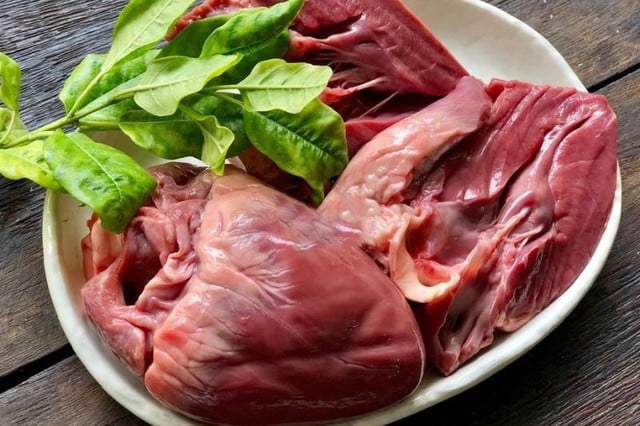
When choosing a heart, you should look for a fresh, bright red color, free from dark spots or dullness. The surface of the heart should be firm, shiny, and soft. The pericardium should adhere tightly to the myocardium, without being loose or detached.
When you cut a heart in half, observe if there isn't much bruising or blood clots inside; if so, you should buy it.
Prepare the ingredients thoroughly before cooking.
Before cooking, the heart should be thoroughly washed with diluted salt water, and squeezed well with lemon or vinegar to remove the fishy smell and blood residue inside. A knife can be used to cut lengthwise to clean out the chambers of the heart.
How to boil to preserve nutrients.
Pork heart often has a strong, fishy smell because it's the organ that contracts and transports blood in the pig. Therefore, to boil pork heart without it smelling fishy, you must thoroughly prepare it before cooking. The preparation steps are as follows:
Remove the outer membrane of the heart, then cut the heart in half lengthwise, remove any blood clots (if present), and rinse the heart with clean water.
Rub salt evenly over the entire surface of the heart, removing all clotted blood from the base of the heart. Rub firmly for the most effective cleaning. Rinse thoroughly with clean water several times.
Next, soak the heart in a mixture of vinegar and water, or slowly pour apple cider vinegar over it, gently squeeze, and then rinse with clean water.
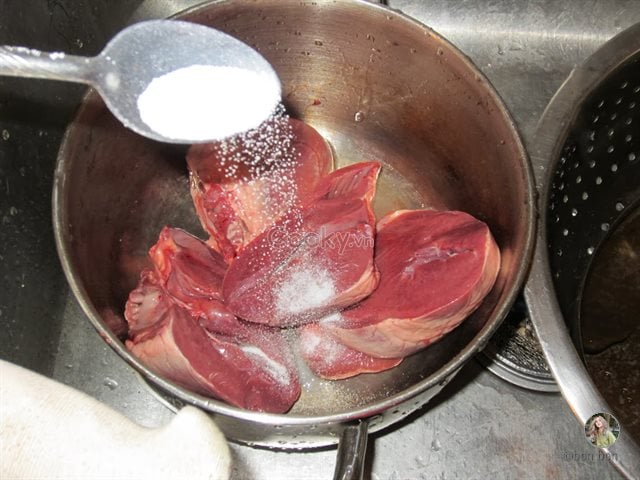
Rub salt evenly over the entire surface of the heart, removing all clotted blood from the base of the heart. Rub firmly for the most effective cleaning. Rinse thoroughly with clean water several times.
Finally, if you have white wine at home, pour it into a bowl, add the pig's heart, and gently squeeze it. Then rinse it briefly to retain the aroma of the wine; it will taste better when boiled.
Place a pot of water on the stove, adding just enough water to cover the pig's heart, avoiding excessive water as this will reduce the sweetness of the heart during cooking. Turn the heat up high until the water boils, then add a pinch of salt or a little white wine/cooking wine and a few slices of ginger to the pot.
Place the pig's heart in a pot of water and begin boiling over high heat. Cook for about 15 minutes, then gently pierce the heart with chopsticks. If red blood comes out, the heart is not yet cooked. Continue boiling for another 5 minutes and repeat the process.
Additionally, to ensure that boiled pig's heart is cooked thoroughly, you can use a food thermometer. To measure the temperature, simply insert the thermometer into the thickest part of the pig's heart.
Once the pig's heart is cooked through, turn off the heat and leave it in the pot until it cools down slightly, then cut it into thin slices.
Eat in moderation.
Healthy adults can eat pork heart about 1-2 times per week, no more than 100g each time. It should not be eaten too frequently to avoid the accumulation of cholesterol or purines.
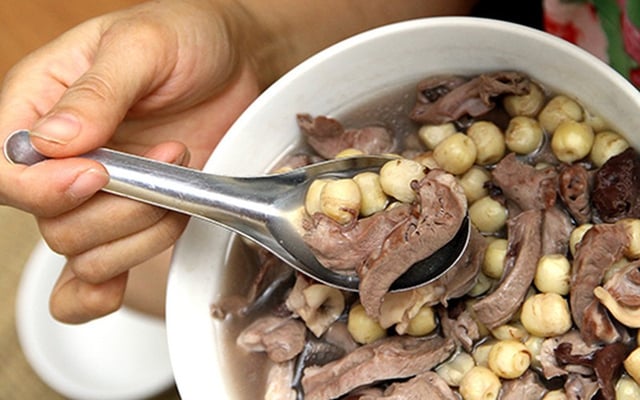
Healthy adults can eat pork heart about 1-2 times per week, with each serving not exceeding 100g.
Combine with a balanced diet.
To ensure good absorption and reduce metabolic stress, you should eat pork heart along with other food groups such as green vegetables, whole grains, and fresh fruits.
Eating pork heart properly not only maximizes its nutritional value but also helps prevent potential health risks, especially for those with underlying cardiovascular or kidney conditions.
Source: https://giadinh.suckhoedoisong.vn/cach-an-tim-lon-dung-cach-tranh-rui-ro-172260113151907844.htm






































































































Comment (0)