

When a neighbor is issued a land title certificate that overlaps with your land, it means your rights have been violated. According to the law, incorrectly issued land title certificates can be revoked. However, to protect your rights, you need to take specific and lawful actions.
Reasons for overlapping land title issuance
- Errors in the surveying and mapping process: This is the most common cause, due to technical inaccuracies or mistakes during implementation.
- Inaccurate state records and documents: This may be due to lax record management or incomplete information updates.
- Fraudulent declaration: In some cases, people may intentionally make false declarations in order to seize land belonging to others.
- Unclear procedures: Unclear legal regulations or improper implementation of procedures can also lead to this situation.
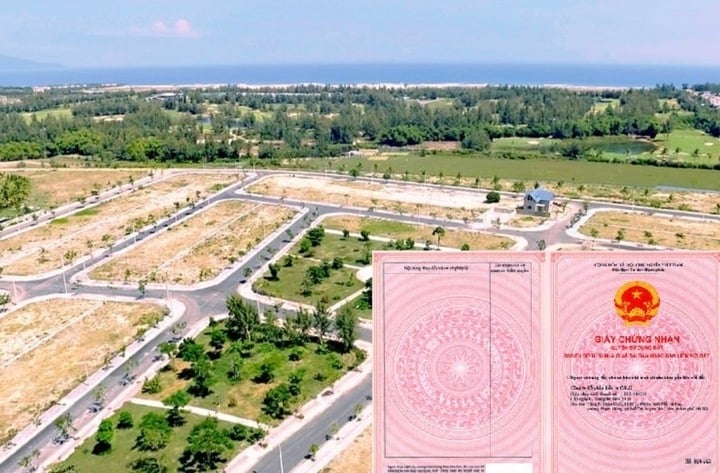
Illustration photo: Lao Dong Newspaper.
How to handle it
Step 1: Gather evidence
- Request cadastral maps from the authorities: You should request cadastral maps from different periods from the land management agency for comparison and verification.
- Check the land register and tax payment receipts: These documents will prove your land use rights.
- Working with neighboring households: Gathering information from residents living nearby to provide testimony.
Step 2: Request a re-measurement
- Submitting a request: You should submit a request to the district/county land management agency to have the land area remeasured.
- Participate in the surveying process: You should be present to monitor the surveying process and work with land surveying officials.
Step 3: File an administrative complaint
- Filing a complaint: If the measurement results do not match reality and the land management agency does not resolve the issue, you have the right to file a complaint with the District People's Committee.
- Appealing to a higher level: If your appeal to the district level is not resolved, you have the right to appeal to the Provincial People's Committee.
Step 4: File a lawsuit.
- Prepare the documents: You need to prepare all the necessary documents and evidence to file a lawsuit.
- Choose a lawyer: Having a lawyer advise you will help ensure your best interests are protected.
4. Important Note
- You need to be aware of the deadlines for filing complaints and lawsuits as stipulated by law.
- Costs: The dispute resolution process can be costly, including complaint fees and litigation fees.
- In addition, you can seek support from non- governmental organizations or law firms for legal advice and assistance.
Resolving land disputes can be complex and time-consuming. However, with thorough preparation and perseverance, you can absolutely protect your legitimate rights.
Note: The information in this document is for informational purposes only and does not replace professional legal advice. For more specific advice, you should contact a lawyer or competent authority.
Source
![[Photo] Prime Minister Pham Minh Chinh presides over a meeting on private sector economic development.](/_next/image?url=https%3A%2F%2Fvphoto.vietnam.vn%2Fthumb%2F1200x675%2Fvietnam%2Fresource%2FIMAGE%2F2025%2F12%2F20%2F1766237501876_thiet-ke-chua-co-ten-40-png.webp&w=3840&q=75)

![[Photo] Prime Minister Pham Minh Chinh presides over the conference announcing the establishment of the International Finance Centre in Vietnam.](/_next/image?url=https%3A%2F%2Fvphoto.vietnam.vn%2Fthumb%2F1200x675%2Fvietnam%2Fresource%2FIMAGE%2F2025%2F12%2F21%2F1766309817714_ndo_br_dsc-3400-jpg.webp&w=3840&q=75)































































































Comment (0)