

The year 2025 holds high expectations for breakthrough growth in the Vietnamese economy . However, given the limited room for monetary policy, fiscal policies have become the preferred solution to boost growth, capitalize on opportunities, and overcome major challenges facing the economy in 2025.
Combining forces to harness inner strength.
Over the years, the Vietnamese economy has faced significant pressure from unfavorable international market factors, affecting many sectors and negatively impacting production, business, and people's lives. However, overcoming these difficulties, Associate Professor Dr. Dinh Trong Thinh (Finance Academy) assesses that the Vietnamese economy has recorded many positive changes. Effective inflation control, maintaining exchange rate stability, and accelerating the disbursement of public investment capital have created important momentum for development.
Furthermore, Vietnam also has significant opportunities from the recovery of international trade. The loose monetary policy of the US Federal Reserve (Fed) and the trend of shifting supply chains are creating favorable conditions for Vietnamese goods, especially in major markets such as the US and Europe (EU). At the same time, new-generation free trade agreements such as EVFTA and CPTPP continue to provide competitive advantages in terms of tariffs, opening up significant export opportunities for businesses...
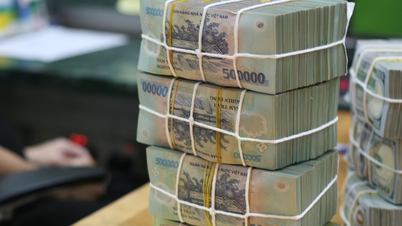
During the recent period, the Government has implemented many policies to stimulate market demand through fiscal measures. Mr. Cao Anh Tuan, Deputy Minister of Finance, stated that the Ministry has proactively researched, proposed, and submitted to competent authorities, as well as issued within its authority, solutions in the financial sector, especially solutions regarding the exemption, reduction, and extension of taxes, fees, charges, and land rent to support businesses, people, and the economy. The scale of support from these solutions is approximately 191,000 billion VND.
One of the fiscal policies that has attracted the most attention from citizens and businesses recently is tax exemptions, reductions, and deferrals. According to Mr. Dang Ngoc Minh, Deputy Director General of the General Department of Taxation, from 2020 to the present, tax support measures have accounted for an average of 10-15% of total state budget revenue each year. Specifically, during the 2022-2024 period, the National Assembly decided to reduce the value-added tax (VAT) rate by 2% for certain groups of goods and services currently subject to a 10% VAT rate (to 8%). In 2024, the Government continued to implement tax exemptions, reductions, and deferrals totaling 97,000 billion VND, benefiting over 100,000 beneficiaries. Of this, the VAT reduction alone is estimated at 67,000-70,000 billion VND.
The aforementioned tax support policies have directly impacted businesses' finances, contributing to maintaining production and business operations and boosting consumption, thereby creating momentum for economic recovery and development. Therefore, despite the application of tax reduction policies, revenue from some key sectors continues to grow.
"This shows the positive impact of stimulus policies in boosting growth and generating investment resources for economic development, and proves that tax policies not only help alleviate the burden on businesses but also create momentum to drive growth," Mr. Dang Ngoc Minh informed.
When monetary and fiscal policies merge and take effect, the most noticeable impact is seen from the perspective of the people and businesses. Mr. Nguyen Thanh Son, Director of Lam Son Co., Ltd., said that his company had faced many difficulties in production and business since the Covid-19 pandemic. However, from 2020 to the present, the company has continuously benefited from tax payment extensions, totaling over 20 billion VND, along with timely loan disbursements from trusted banks, which have helped the company continue pursuing the challenging path of manufacturing spare parts for automobiles and motorcycles…
 |
| People and businesses are united in creating opportunities for the economy to break through. |
Leveraging fiscal resources
Entering 2025, experts affirm that this is the final year of the 2021-2025 socio-economic development plan. At its 8th session, the National Assembly approved a Resolution on the socio-economic development plan for 2025, prioritizing the promotion of economic growth, support for production and business activities, while maintaining macroeconomic stability, controlling inflation, ensuring major economic balances, and striving for a higher growth rate of 6.5-7%, aiming for 7.5% (compared to the 6-6.5% target in 2024). Achieving these goals requires significant effort and coordinated, harmonious, and close cooperation between monetary policy, fiscal policy, and other macroeconomic policies to support economic growth, stabilize the macroeconomy, and control inflation.
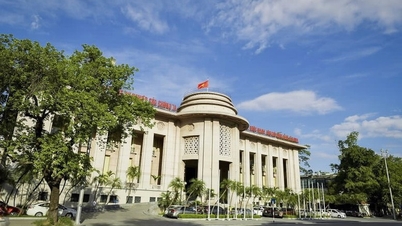
Regarding monetary policy, Mr. Dinh Duc Quang, Director of the Currency Trading Division (UOB Vietnam Bank), commented that the State Bank of Vietnam (SBV) has been harmoniously using various tools in the money market (issuing treasury bills, repurchase agreements of securities, intervention sales, etc.) to regulate VND liquidity and the fluctuating demand for foreign currency in each period. In addition, Vietnam is simultaneously implementing many solutions to promote growth without resorting to monetary easing, such as continuously focusing on expanding economic partnerships, expanding trade markets, implementing solutions to upgrade the stock market, promoting public investment, promoting foreign investment, and reforming institutions towards streamlining the state management apparatus. All these solutions contribute to attracting stronger investment flows, creating a basis for continued macroeconomic stability, increasing foreign exchange reserves, and thereby stabilizing interest rates and exchange rates. Therefore, it is predicted that the Government and the State Bank of Vietnam will continue to maintain current policy interest rates in a neutral monetary policy for the first few months of 2025.
International organizations such as the International Monetary Fund (IMF), the World Bank (WB), and the ASEAN+3 Macroeconomic Research Office (AMRO) believe that Vietnam currently has very limited room for monetary policy easing. Therefore, they recommend that Vietnam should utilize its remaining fiscal space to support economic growth.
The aforementioned solution is entirely justified, according to Ms. Nguyen Thanh Nga, Deputy Director of the Institute of Financial Strategy and Policy (Ministry of Finance). She believes that abundant fiscal resources, timely payment of due debts, and provision of payments to eligible entities are all feasible. The reduction and stabilization of public debt at a moderate level creates favorable conditions for continuing the expansionary fiscal policy, supporting business recovery, and accelerating economic growth, aiming to achieve the 2025 targets.
Sharing the same view, Dr. Nguyen Quoc Viet, Deputy Director of the Institute for Economic and Policy Research, University of Economics, Vietnam National University, Hanoi, believes that, given the abundant fiscal policy space due to significantly improved state budget revenue in 2024, fiscal support policies should be maintained in the coming period to further strengthen the internal capacity of businesses, create a foundation for sustainable growth by reducing taxes and fees to support domestic consumption, and continue to accelerate the disbursement of public investment.
However, Mr. Nguyen Minh Tan, Deputy Director of the State Budget Department, Ministry of Finance, believes that to determine whether to continue fiscal policies in 2025, it is necessary to study the "health" of businesses. If businesses are still weak, then continue to maintain support policies, including fiscal policies. If businesses are already stable, then the budget should be allocated to longer-term plans.
Sharing the same view, experts believe that ending expansionary fiscal policies is inevitable sooner or later, but it needs careful consideration and should be implemented realistically, not mechanically. Prolonged implementation will create a habit and fail to provide impetus for economic development. If support is stopped, the government and relevant ministries need to signal this so that businesses can prepare in advance to balance their capital for infrastructure investment and sustainable development.
Source: https://thoibaonganhang.vn/can-doi-khong-gian-chinh-sach-thuc-day-noi-luc-160058.html


![[Photo] Prime Minister Pham Minh Chinh attends the Conference on the Implementation of Tasks for 2026 of the Industry and Trade Sector](/_next/image?url=https%3A%2F%2Fvphoto.vietnam.vn%2Fthumb%2F1200x675%2Fvietnam%2Fresource%2FIMAGE%2F2025%2F12%2F19%2F1766159500458_ndo_br_shared31-jpg.webp&w=3840&q=75)





























































































Comment (0)