

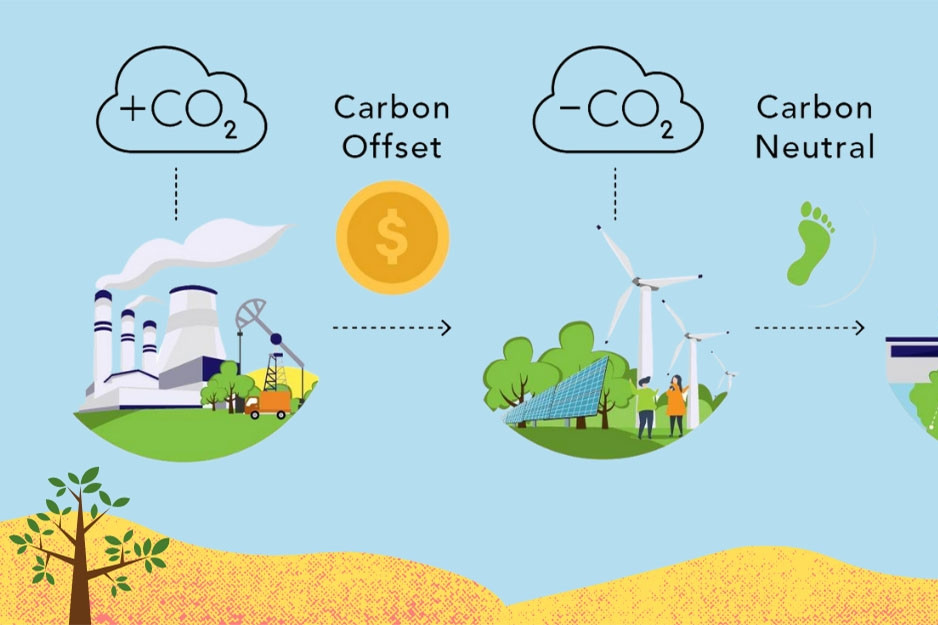
Unregulated investments in carbon credits can lead to "green laundering," where companies or countries claim to reduce emissions but in reality only shift responsibility for emissions elsewhere.
This is also known as the phenomenon of "carbon leakage," emphasized Bertrand Badré, former Chief Financial Officer of the World Bank, in his presentation at the International Conference on Climate, Finance and Sustainable Development (ISCFS-2024) at the University of Paris-Dauphine (France), with analyses of the crucial role of green finance in responding to climate change.
He also addressed the outcomes and challenges of COP29, placing them within a larger picture of the need for a systemic and values-based transformation.
Significant progress at COP29
COP29 was not just a climate conference, but also a forum for countries to consider new financial solutions to meet the urgent need for emission reduction and adaptation to climate change.
A highlight of this year's conference was the agreement on a legal framework for a global carbon market under Article 6 of the Paris Agreement. This mechanism allows countries to trade carbon credits, thereby mobilizing significant financial resources for green projects.
However, Bertrand Badré emphasized that without transparency and extensive cooperation, this mechanism is susceptible to abuse or exacerbates inequality among countries.
Furthermore, the establishment of a climate- health alliance, connecting the health and environmental sectors in responding to the impacts of climate change on public health, was another noteworthy initiative at COP29. This demonstrates that climate change is not just an environmental issue but a multifaceted crisis requiring interdisciplinary coordination.
However, disagreements among countries regarding financial responsibility and levels of commitment remain a major challenge, as evidenced by the fact that developed countries have not yet reached their commitment to provide $100 billion annually to developing countries.

Green finance: Tools and responsibilities
According to Bertrand Badré, finance is not just a tool but also a responsibility to humanity. Therefore, green finance needs to be placed within a system of ethics and sustainable values, rather than simply pursuing short-term profits.
Accounting standards and asset valuation mechanisms also need to be reviewed to accurately reflect environmental and social impacts. For example, investments in carbon credits, if not properly managed, can lead to "greenwashing," where companies or countries claim to reduce emissions but in reality only shift responsibility for emissions elsewhere.
This is also known as the "carbon leak" phenomenon - a concept that quantifies the increase in greenhouse gas emissions in one country as a result of emission reductions by another country with stricter climate change mitigation policies.
Therefore, Bertrand Badré called for a more transparent approach, in which financial instruments are not only optimized but also serve the common good of society.
The central message in Bertrand Badré's speech was that we cannot solve climate problems with piecemeal solutions. Climate change is a systemic issue, requiring a complete restructuring of the global financial and political system. He argued that governments and businesses cannot work independently but need to form sustainable alliances.
The results from COP29 show that mechanisms such as carbon markets or the Loss and Damage Fund cannot function effectively without global coordination, especially in sharing the financial burden to support less developed and developing countries.
However, he also cautioned that solidarity cannot exist only on paper. Countries need to demonstrate their commitment through concrete actions, such as increasing funding for the Loss and Damage Relief Fund or providing clean technology to poorer countries. The failure of developed countries to meet the expectations of developing countries not only undermines trust but also creates the risk of geopolitical instability.
According to the former Chief Financial Officer of the World Bank, sustainable development is not just about reducing emissions or protecting the environment, but also about ensuring that society can unite and that benefits are distributed equitably.
While delegates at COP29 highlighted the ethical aspects of negotiations, particularly regarding financial responsibility between nations, Bertrand Badré argued that further action is needed. Financial institutions require clear ethical commitments, and all investment decisions must consider long-term social and environmental impacts.
He urged countries, organizations, and individuals to start with the smallest changes to create a greater impact. Scientists, industrialists, and policymakers need to openly discuss and share the latest research on the role of technology in optimizing green finance in order to develop feasible, rapid, and effective action programs.
Looking back at the results of COP29 and the lessons shared by Bertrand Badré, it is clear that we need a comprehensive transformation, not only in financial tools but also in our mindset and values.
The world stands at a crossroads, where today's decisions will shape the planet's future. Green finance, when properly managed, can be the most powerful driver of building a more sustainable and equitable world. But that requires us all to transcend self-interest and act together for the common good. Time is running out, and the future depends on what we do now.
Dr. Nguyen Anh - Sustainable Urban Development Expert, SUDNet, AVSE Global
(This article combines the analysis of Dr. Nguyen Anh and the sharing of Mr. Bertrand Badré on green finance and lessons on sustainable transformation at the International Conference on Climate, Finance and Sustainable Development - ISCFS, Paris 2024).
Source: https://vietnamnet.vn/can-trong-voi-hien-tuong-ro-ri-carbon-va-rua-xanh-2345883.html





















































































Comment (0)