Two cases of pufferfish poisoning occurred in the families of Mr. TVT and Mr. NVG (both born in 1962, residing in Phung Hiep commune, Can Tho city ).
According to the patient's family, on March 25th, the family caught fish in the garden, brought them home, washed them, and cooked them into a sour fish soup without any further preparation. About an hour after the meal, two out of four family members experienced symptoms of numbness in the lips and fingertips, which gradually worsened. They were then taken to Nga Bay General Hospital for emergency treatment and initial care before being transferred to another hospital.

The patient recovered and shared their story of pufferfish poisoning.
Two days later, a neighbor of the two patients was also hospitalized with similar symptoms after eating pufferfish.
Upon admission, all three patients received intensive treatment in the Emergency and Intensive Care - Toxicology Department. By the morning of the same day, their health had stabilized and they were transferred to the Gastroenterology - Clinical Hematology Department for further monitoring.
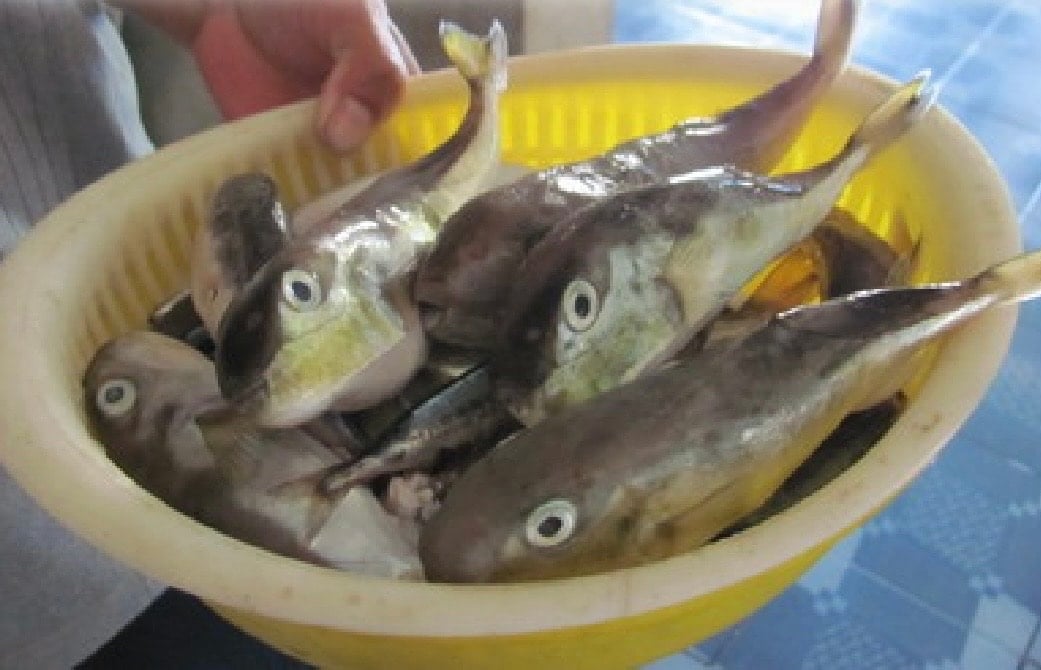
Pufferfish are small, have smooth skin, and are brown or dark green with spots.
During treatment, the patients' families reported that local people had eaten this type of fish many times before without experiencing any health problems. The fish, which is small in size, has smooth skin, is brown or dark green in color, and has spotted patterns; it is commonly known locally as "snakehead fish" and lives in ponds, ditches, and canals in the waterways of the Mekong Delta.
However, according to experts, this is a type of pufferfish – a species containing the extremely potent toxin Tetrodotoxin. This toxin directly affects the nervous system, causing muscle paralysis, especially in the respiratory muscles, and there is currently no specific antidote.
Vietnam has recorded over 70 species of pufferfish, many of which are highly toxic. Particularly during the breeding season (from December to March), toxins concentrate in the ovaries and liver, increasing the risk of severe poisoning.
According to Dr. Duong Thien Phuoc, Head of the Intensive Care and Toxicology Department at Can Tho Central General Hospital, pufferfish poisoning can have a very rapid onset, ranging from just 10 minutes to a few hours after consumption. The toxin tetrodotoxin directly affects the nervous and cardiovascular systems. Within minutes of eating, patients experience numbness, often around the lips, tongue, and face, followed by paralysis of the entire body, cardiac arrhythmias, hypotension, seizures, and coma. Death is largely due to respiratory muscle paralysis, respiratory arrest, and rapid death. Importantly, there is currently no specific antidote for tetrodotoxin. The only measure is prompt emergency respiratory and circulatory support.
Accordingly, people are advised to absolutely not eat pufferfish in any form, and to avoid using fish with similar shapes, including small ones, for food preparation. In particular, people in rural areas should be vigilant about the dangerous toxicity of pufferfish, and fishermen need to accurately identify them to avoid catching or trading them by mistake.
If you suspect someone has been poisoned after eating fish, you should quickly induce vomiting if the patient is still conscious, administer activated charcoal if available, and urgently take them to the nearest medical facility for prompt emergency treatment. Experts emphasize that you should absolutely not attempt self-treatment at home because tetrodotoxin can be fatal very quickly and there is currently no specific antidote.
Source: https://daibieunhandan.vn/canh-bao-ngo-doc-ca-noc-nuoc-ngot-10411430.html











































































































Comment (0)