

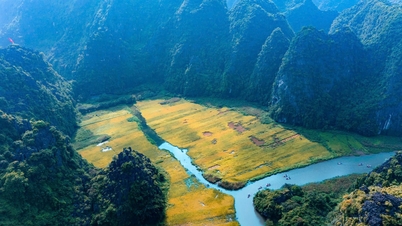
The entire province has over 35,000 hectares of rice cultivation area each year. Rice plays a crucial role in ensuring food security, contributing to the socio-economic development of the province, creating jobs, stabilizing income, and protecting the ecological environment.

However, climate change and extreme natural disasters have been negatively impacting agricultural production and people's lives. Traditional rice cultivation requires a large amount of water for irrigation and releases a large amount of methane (CH4) into the environment, exacerbating the problem of climate change.
According to research, rice plants consume 30-40% of irrigation water in agricultural production, contributing up to 48% of greenhouse gas emissions and 75% of methane (CH4) emissions in agriculture.
To improve rice cultivation efficiency, conserve water, reduce greenhouse gas emissions, and adapt to climate change, the Provincial People's Committee has issued Plan No. 59 to implement the strategy for crop development until 2030, with a vision to 2050, based on the principle of green, organic, circular, multi-value, low-emission crop production, in line with the strategy for sustainable agricultural and rural development.
To contribute to realizing the above vision, in the Spring of 2025, the Center for Organic Agriculture (Vietnam Academy of Agriculture) collaborated with the Provincial Agricultural Extension Center to implement a sustainable rice cultivation process using the alternating wet and dry irrigation method, on a scale of 1,000 hectares in 5 communes and towns in 2 districts of Vinh Tuong (Thuong Trung, Vu Di) and Yen Lac (Lien Chau, Yen Phuong and Tam Hong town).
Water-saving irrigation technologies such as alternating wet and dry irrigation (AWD) have been developed and applied in Vietnam since 2003 by the International Rice Research Institute (IRRI). This method is similar to the principle of irrigation - drying - exposing the crop to the elements.
According to AWD principles, rice should only be irrigated when the water level in the field drops to about -15 cm below ground level. In addition, a water layer of about 5 cm must be maintained from one week before to one week after heading to ensure rice yield.
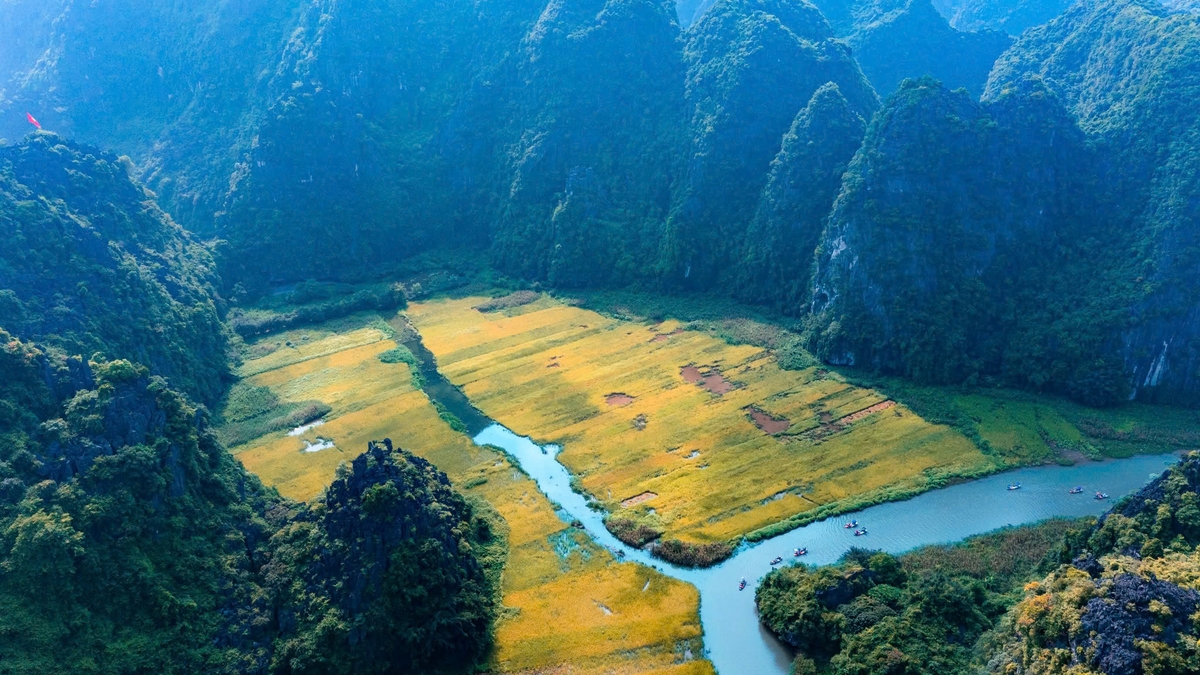
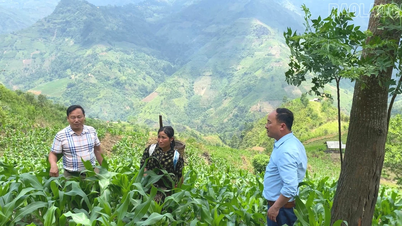
Visiting the Nhat Chieu rice field in Lien Chau commune (Yen Lac district), after more than a month of implementing a sustainable rice cultivation process with alternating wet and dry irrigation methods, we observed that the entire rice field was lush green, beginning to develop panicles and growing like young girls in their prime.

Walking through her family's rice fields, Mrs. Ngo Thi Minh excitedly shared: "This is the first season, and also the first time I've implemented the alternating wet and dry irrigation method for rice cultivation. I've noticed that the rice plants are growing and developing well, reducing the need for watering, producing many tillers, being strong, and having fewer pests and diseases, promising a bountiful spring harvest."
In the Spring of 2025, Lien Chau commune had 150 out of 200 hectares of its rice cultivation area implementing sustainable rice farming practices using alternating wet and dry irrigation technology, reducing emissions, and adapting to climate change. At this time, the rice plants are growing and developing well.
Ms. Bui Thi Tuyet, an agricultural and environmental officer in the commune, said: "Given the increasingly evident impact of climate change, applying alternating wet and dry irrigation methods will help rice plants adapt better to the weather."
The advantages of alternating wet and dry irrigation are that the rice plants still receive enough water and grow well, and the plants are stronger, making them more resistant to lodging. In particular, the rice is less susceptible to pests and diseases because the field is more well-ventilated, reducing irrigation water, labor, and costs, saving water resources, and thus contributing to a reduction in CH4 emissions.
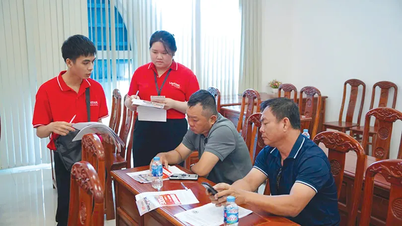
To ensure the effective implementation of the model and to help people understand and access the methods and processes of alternating wet and dry irrigation for rice cultivation, the Center for Organic Agriculture - Vietnam Academy of Agriculture, in coordination with the Provincial Agricultural Extension Center, organized training conferences for more than 1,000 officials and farmers from 16 communes and towns in Yen Lac district. The aim was to raise awareness and provide knowledge about the alternating wet and dry irrigation method, as well as its advantages and benefits.
Given the increasingly evident impacts of climate change, sustainable rice farming techniques that conserve water and reduce emissions are receiving more and more attention.
To contribute to increasing the income of rice farmers and to develop agricultural production towards a green, organic, circular, multi-value, low-emission direction, in the coming time, the agricultural sector will strengthen propaganda and mobilize people to apply new technical solutions in production, apply the alternating wet and dry irrigation rice cultivation process, gradually forming organic rice production areas, and reduce greenhouse gas emissions.
In addition, it is necessary to review, evaluate, and study the conversion of crop structures on inefficient rice-growing land to develop other crops and livestock with higher economic value…
Hong Tinh
Source: http://baovinhphuc.com.vn/Multimedia/Images/Id/126382/Canh-tac-lua-ben-vung-giam-phat-thai-khi-nha-kinh


![[Image] A brilliant symphony and explosive power in the skies of Da Nang.](https://vphoto.vietnam.vn/thumb/1200x675/vietnam/resource/IMAGE/2026/05/31/1780196945787_anh-man-hinh-2026-05-31-luc-10-08-51.png)






![[Video] Sunset at Lap An Lagoon – Where the sun sets over the fishing nets](https://vphoto.vietnam.vn/thumb/340x192/vietnam/resource/IMAGE/2026/05/31/1780192137701_beach-landscape-sea-water-nature-grass-745871-pxhere-com.jpeg)


























































Comment (0)