

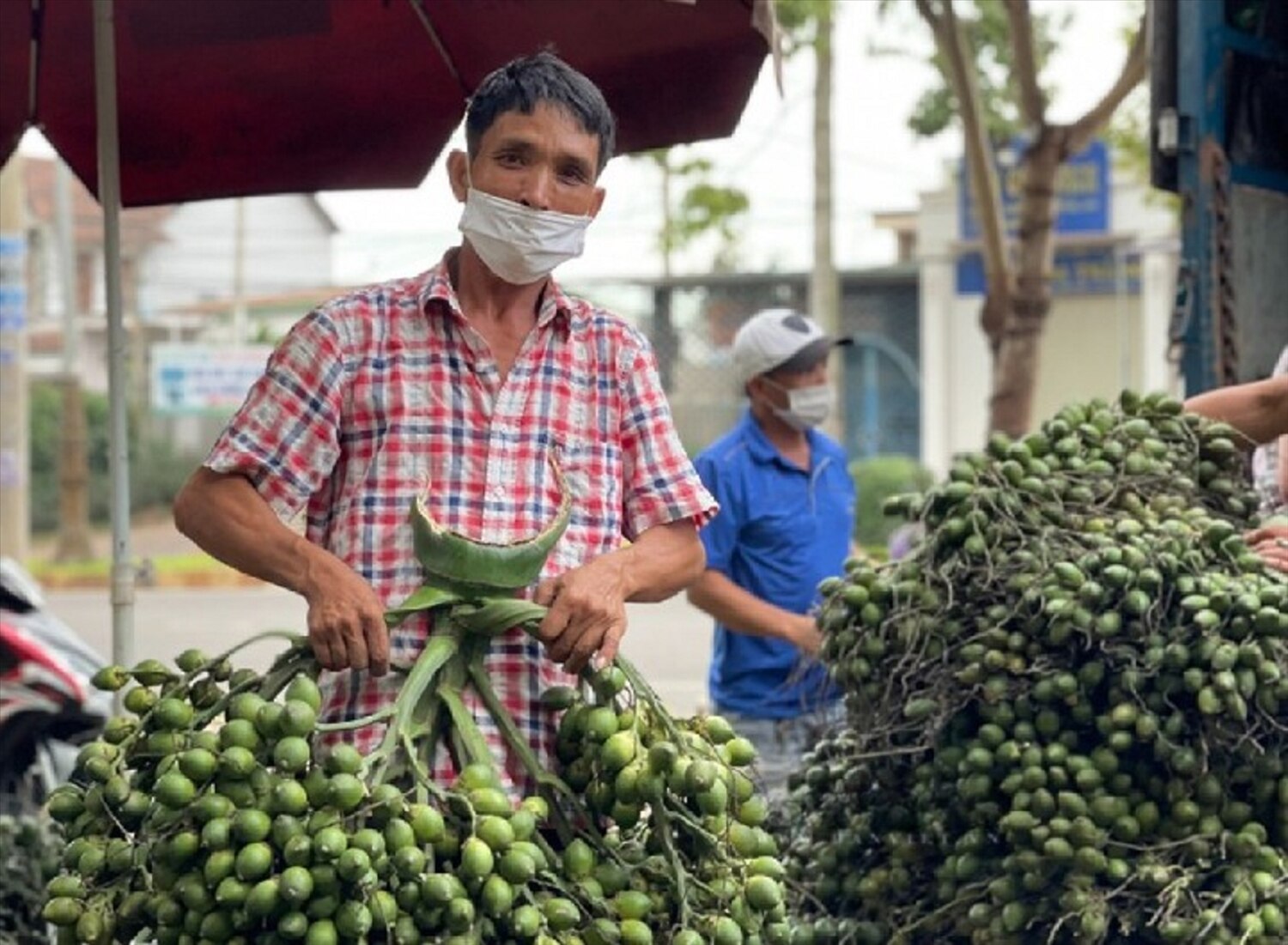
The price of betel nuts has increased, bringing in more income for the local people.
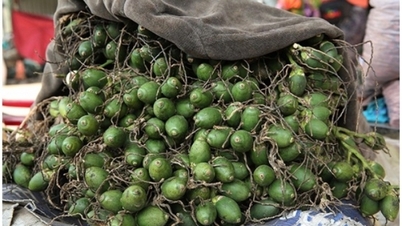
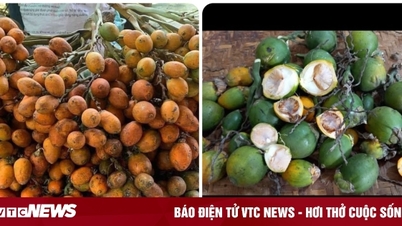
Quang Ngai province is known as the "land of thousands of betel nuts," with thousands of hectares of betel nut plantations concentrated mainly in Nghia Hanh and Son Tay districts. Many years ago, betel nut prices in Quang Ngai were volatile, sometimes dropping as low as 3,000-5,000 VND/kg. However, in the last three months, betel nut prices have surged to a record high of around 80,000-85,000 VND/kg, resulting in significant profits for many betel nut growers in Quang Ngai.
In the mountainous district of Son Tay, the locality with the largest betel nut growing area in Quang Ngai province, exceeding 1,000 hectares, the atmosphere has been bustling for the past few days as dozens of traders have been roaming through villages, scouring for betel nuts to buy. Given the characteristics of this poor mountainous district, where over 92% of the population are ethnic minorities (mainly the Ca Dong – a local subgroup of the Xo Dang ethnic group), the bumper betel nut harvest and high prices have brought joy to the ethnic minority people in Son Tay. Along with Son Tay, Nghia Hanh district also has nearly 750 hectares of betel nut plantations with a production of approximately 9,000 tons.
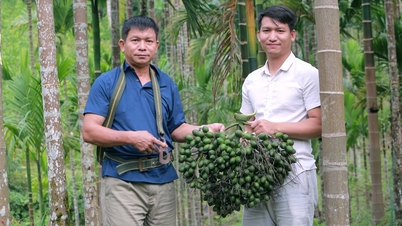
Owning nearly 2 hectares of betel nut trees, the family of Mr. Dinh Van Duong (Son Dung commune) earns a considerable income. His family has over 2,000 betel nut trees currently being harvested. "With the current betel nut prices, we earn nearly 100 million VND per month. This level of income is something my family wouldn't even dare dream of," Mr. Duong said.
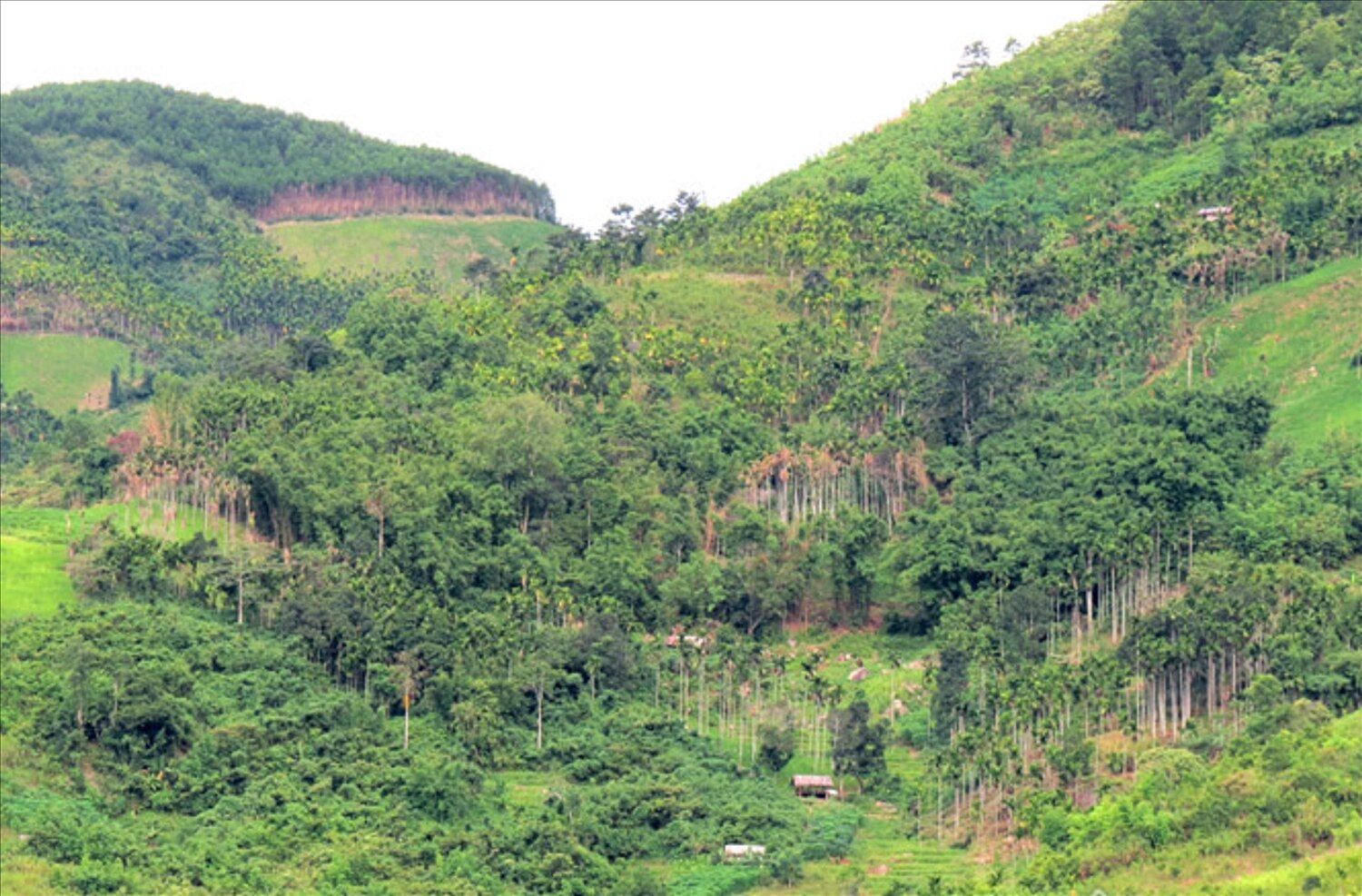
Similarly, the family of Mr. Dinh Van Nhoc (Son Dung commune) cultivates about 4 hectares of betel nut trees, with more than half of the area currently being harvested. On average, he harvests about 70 kg of fresh betel nuts per day. With the current price of betel nuts at around 80,000 VND/kg, Mr. Nhoc earns over 100 million VND per month after deducting all expenses. Many families have a comfortable income and have acquired all the necessary amenities thanks to the betel nut harvest. The lives of many Ca Dong ethnic minority families here have become quite prosperous.
According to experienced betel nut growers, betel nut trees can be harvested after about 5-6 years of planting, with the harvesting period from July to the end of the year, averaging 20-25 days per harvest. Compared to other fruit trees, betel nut trees still fetch a much higher price and require less care.
According to the owner of a betel nut warehouse in Son Tay district, the current high price of betel nuts, from the beginning to the middle of the harvest season, is unprecedented. In 2021, betel nut growers also had a successful harvest, but not as much as this year. Currently, one hundred kilograms of betel nuts can buy one tael of gold. Thanks to this, many ethnic minority households are earning tens of millions to hundreds of millions of dong from selling betel nuts.
According to many traders, the continuous increase in betel nut prices recently is mainly due to the Chinese and Indian markets. When demand from these markets increases, the price of betel nuts also rises. After purchasing from the orchards, traders transport the nuts to collection points, separate the fruits from the stems, and dry them. Typically, 7-8 kg of fresh fruit will yield one kg of dried betel nuts, which they then export to China, India, and other countries.
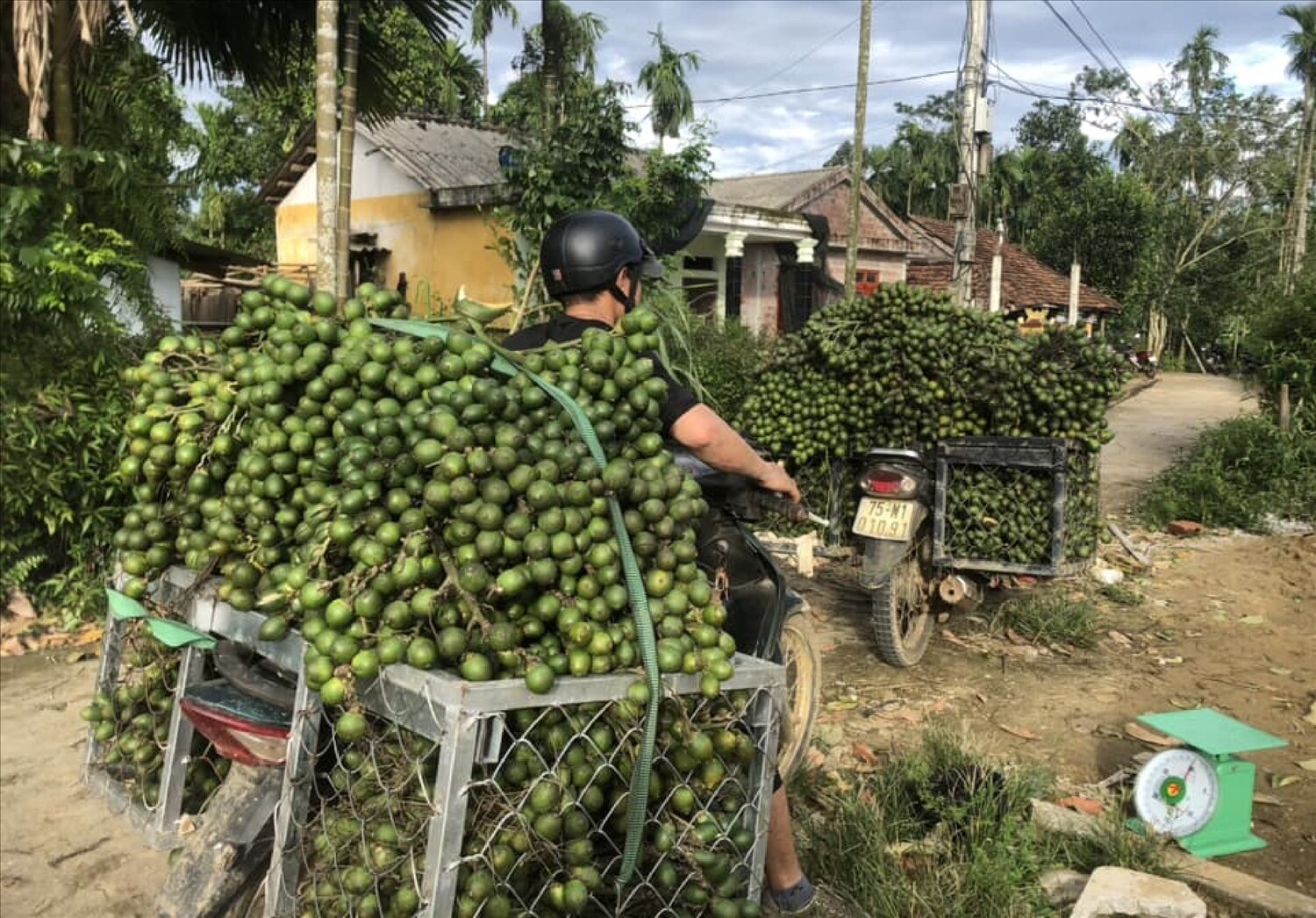
People should balance their crop structure.
Due to high profits, in recent years, many farmers in Nghia Hanh district have been abandoning fruit trees and switching to betel nut cultivation. In fact, betel nut prices have plummeted many times over the years, but despite the volatile prices compared to many other crops in Son Tay, betel nut cultivation still yields higher economic returns. Since 2018, Son Tay district has included betel nut in its list of key crops to contribute to poverty reduction and to develop a project to establish a specialized betel nut cultivation area. The goal is to establish a concentrated betel nut cultivation area of approximately 2,000 hectares across 9 communes by 2025, with the largest areas in Son Dung, Son Long, and Son Mua communes.
To implement the project, the local government provided betel nut seedlings and appropriate fertilizers depending on the needs of the households. To date, this mountainous district has about 600 households planting 1,000 or more betel nut trees. From 2019 to the present, Son Tay mountainous district has planted about 900 hectares of betel nut trees. Each year, the district plants about 166 hectares of betel nut trees, replacing old, low-yielding crops. This farming method helps the Ca Dong people maintain their family orchards, stabilize their income, and increase the productivity of betel nut orchards and specialized cultivation areas in the mountainous region.
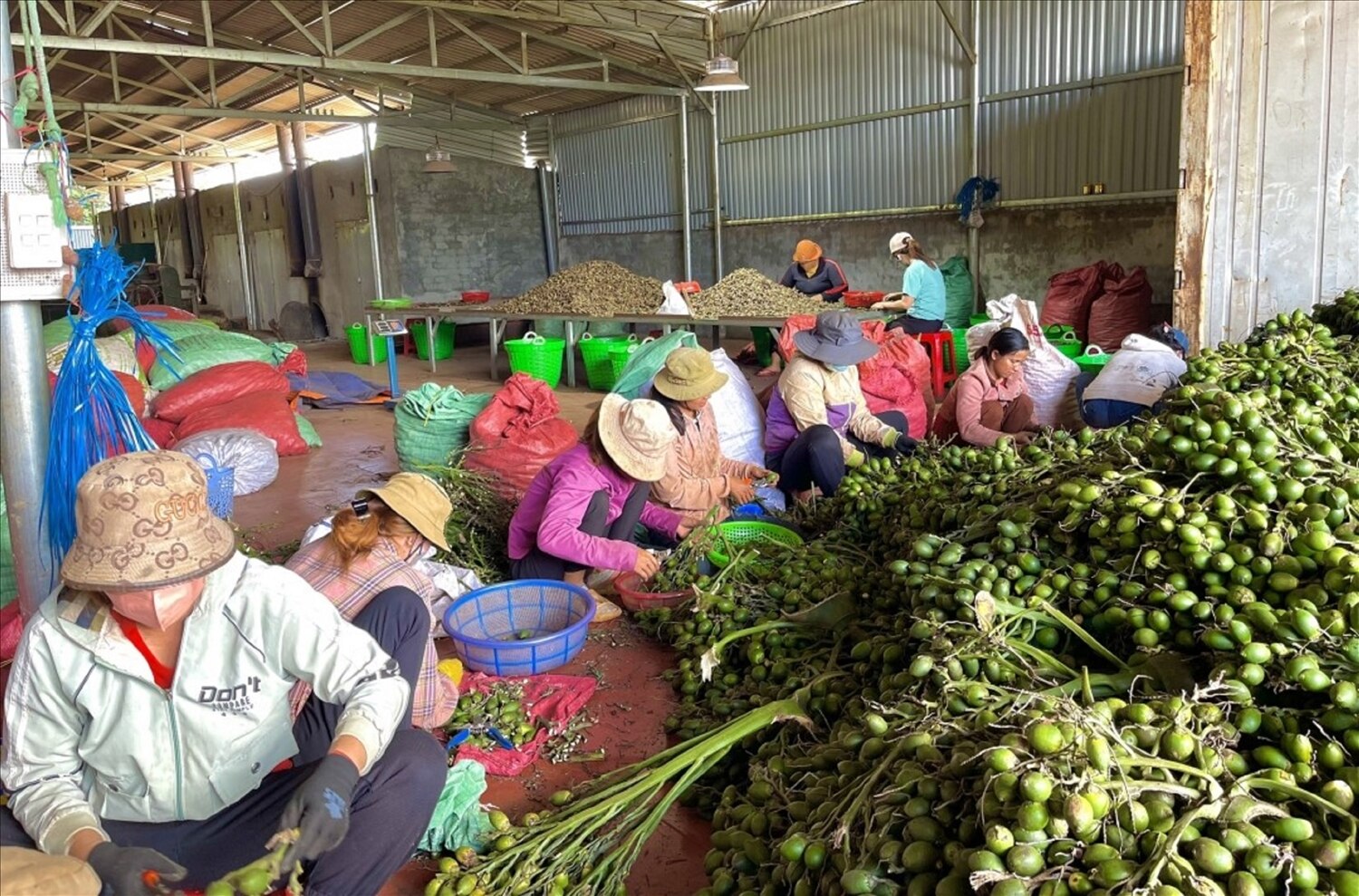
Areca nuts from Son Tay are famous for being grown using clean methods, without the use of chemical fertilizers or pesticides, making them highly sought after by foreign partners. The processing technology of countries importing areca nuts from Vietnam is also very advanced, creating a wide variety of products from the fruit.
Son Tay district currently has 16 betel nut purchasing and processing facilities with a capacity of approximately 8,000 tons per season. The supply of fresh betel nuts meets about 65% of the capacity, and is exported to many countries such as China, India, South Korea, etc., depending on market demand.
Along with supporting the Ca Dong people in planting new betel nut trees and replacing old ones to expand the export raw material area, the agricultural sector in Quang Ngai is also developing planting area codes and product brands, and actively encouraging businesses to invest in the in-depth processing of betel nut products.
Given the surge in betel nut cultivation driven by rising prices, authorities at all levels in Quang Ngai province are advising people against disrupting the existing crop structure to pursue betel nut cultivation. Mr. Pham Hong Khuyen, Head of the Agriculture and Rural Development Department of Son Tay district, stated that this is only the first year of rising betel nut prices, so local authorities need to closely monitor the situation to provide recommendations to farmers and discourage a massive increase in betel nut cultivation area.
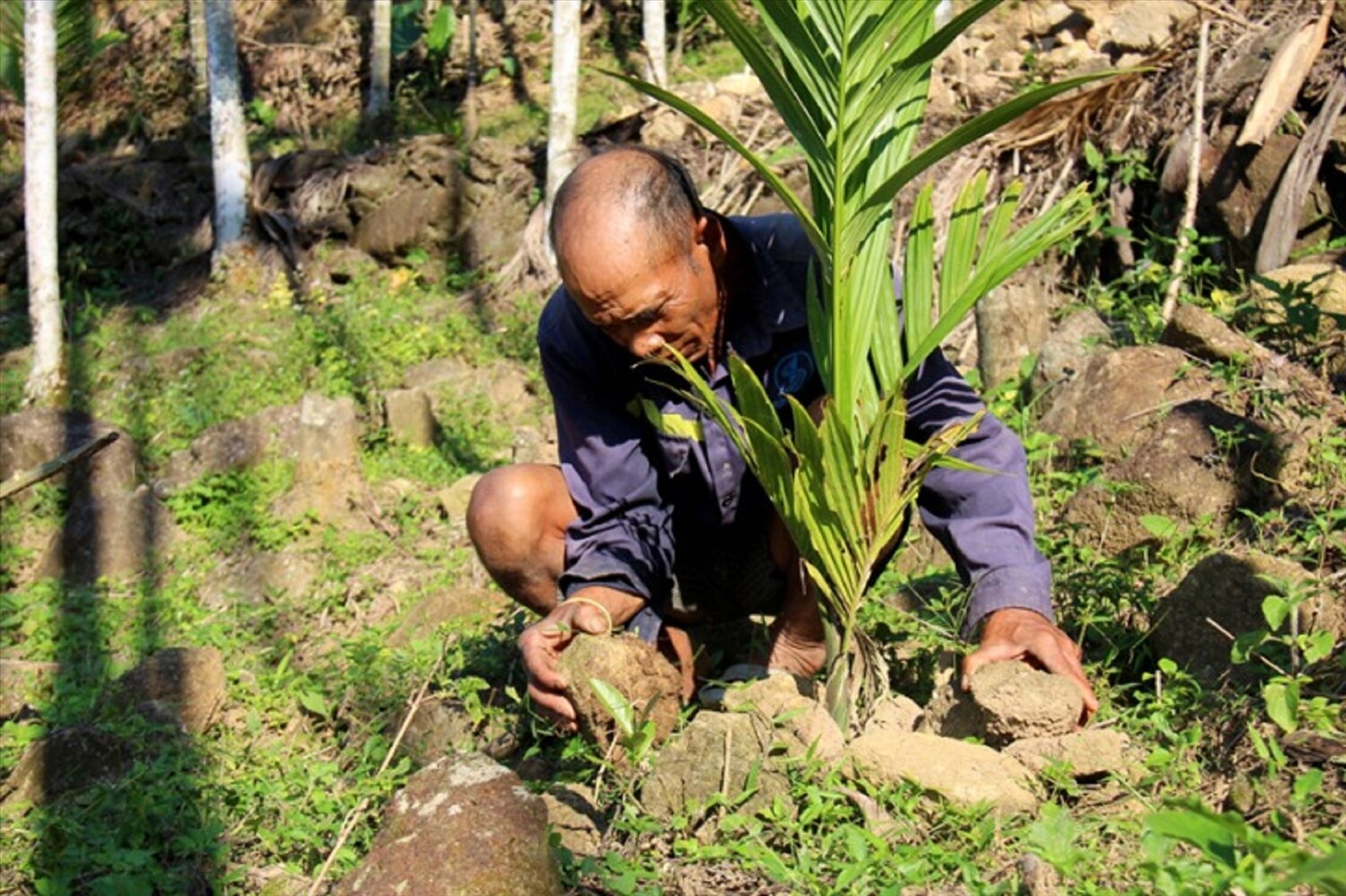
Currently, the betel nut market is heavily dependent on China, resulting in volatile prices that fluctuate from year to year. To generate income for farmers during years when betel nut prices fall, Tay Son district encourages them to cultivate other crops under the betel nut trees, such as Dutch onions, Queen guava, pineapples, and lemongrass, to balance the local crop supply.
In Tien Phuoc district, Quang Nam province, the betel nut growing area also has over 1,000 hectares, of which more than 500 hectares are already bearing fruit with a production of over 2,600 tons of fresh fruit per year. The income from betel nuts and by-products is estimated at 100-150 billion VND per year. Tien Phuoc currently has 18 betel nut drying kilns, all made of sheet metal. Each kiln has a drying capacity of 20-30 tons per day.


![[Photo] Prime Minister Pham Minh Chinh presides over the conference announcing the establishment of the International Finance Centre in Vietnam.](/_next/image?url=https%3A%2F%2Fvphoto.vietnam.vn%2Fthumb%2F1200x675%2Fvietnam%2Fresource%2FIMAGE%2F2025%2F12%2F21%2F1766309817714_ndo_br_dsc-3400-jpg.webp&w=3840&q=75)
![[Photo] Prime Minister Pham Minh Chinh presides over a meeting on private sector economic development.](/_next/image?url=https%3A%2F%2Fvphoto.vietnam.vn%2Fthumb%2F1200x675%2Fvietnam%2Fresource%2FIMAGE%2F2025%2F12%2F20%2F1766237501876_thiet-ke-chua-co-ten-40-png.webp&w=3840&q=75)
























































































Comment (0)