

Thanks to playing for the Vietnamese national team in major continental tournaments, Vietnamese players have had early access to VAR, as the World Football Federation (FIFA) and the Asian Football Confederation (AFC) have introduced this very modern technology into many important tournaments.
GETTING ACQUAINTED WITH VAR OUTSIDE VIETNAM
Phase 2 of the 2023 V-League season marked a historic milestone with the first-ever application of VAR in Vietnam. However, for the members of the Vietnamese national team, VAR had been a familiar "partner" long before that. The Vietnamese national team's first encounter with VAR was at the 2019 Asian Cup – also the first tournament in Asia to feature VAR. The system was implemented from the quarter-finals, and the match between Vietnam and Japan was the first encounter in the history of the Asian Cup (and Asian football in general) to see VAR in use.
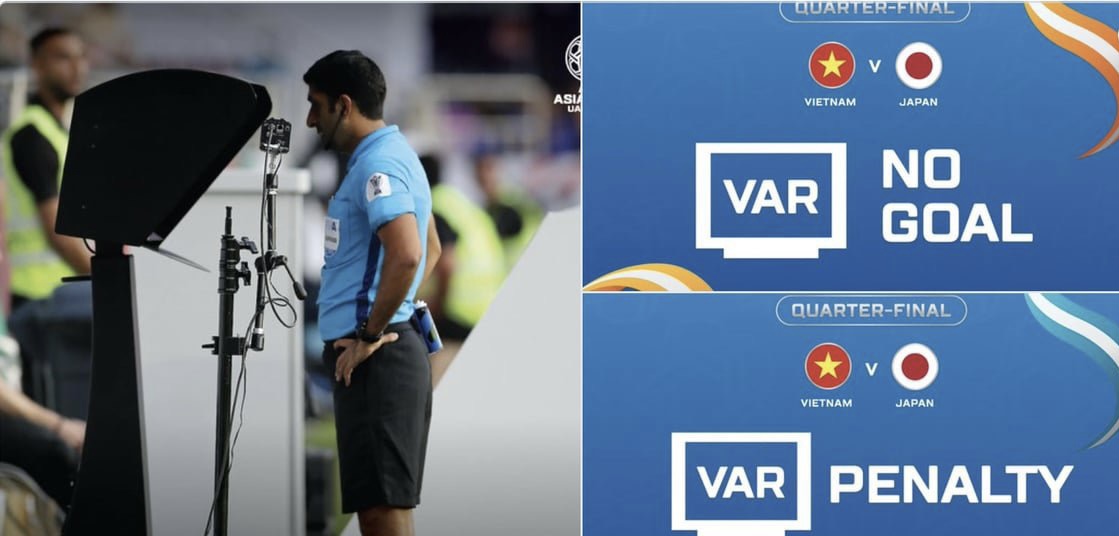

Referee consults VAR in the match between Vietnam and Japan at the 2019 Asian Cup.
This was a match where VAR left the Vietnamese team with mixed emotions. Thanks to the VAR referees' advice, Coach Park Hang-seo's players avoided conceding a goal after Maya Yoshida handled the ball into the net. But also because of VAR, referee Mohammed Abdulla Hassan decided to award a penalty after Bui Tien Dung fouled the Japanese striker. From the penalty spot, Ritsu Doan scored the only goal, sending Japan into the semi-finals.
Becoming the first team in Asia to benefit from, and then be penalized by, VAR, Vietnam's fate has been intertwined with VAR in many subsequent tournaments. A prime example is the 2022 World Cup third round qualifiers, where all 10 matches of the Vietnamese national team used VAR. Some of these were played at home, prompting FIFA and AFC to introduce VAR to Vietnam, installing it at My Dinh Stadium.
VAR detects all the dirty tricks.
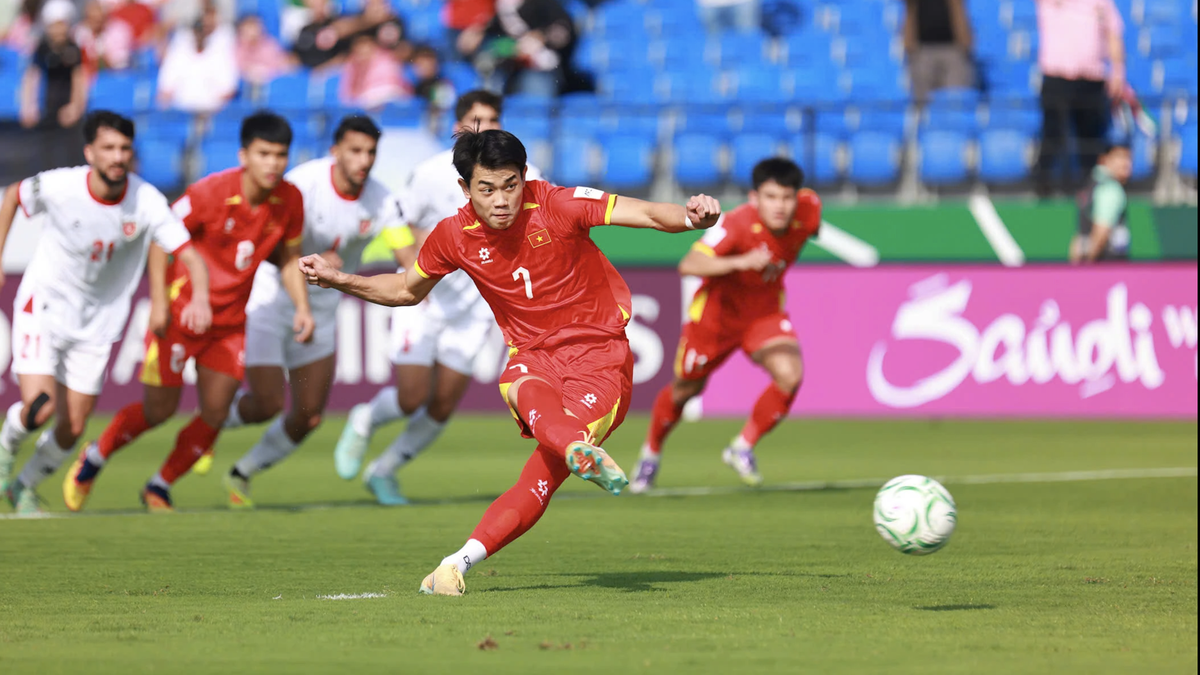
In their opening match of the third round of World Cup qualifiers against Saudi Arabia, the visiting Vietnamese team played exceptionally well in the first half, leading 1-0. However, at the beginning of the second half, center-back Do Duy Manh handled the ball inside the penalty area. After consulting VAR, referee Tantashev Ilgiz reviewed the replay and decided to award a penalty to Saudi Arabia and show Duy Manh a red card. This turning point led to Vietnam's 1-3 defeat.
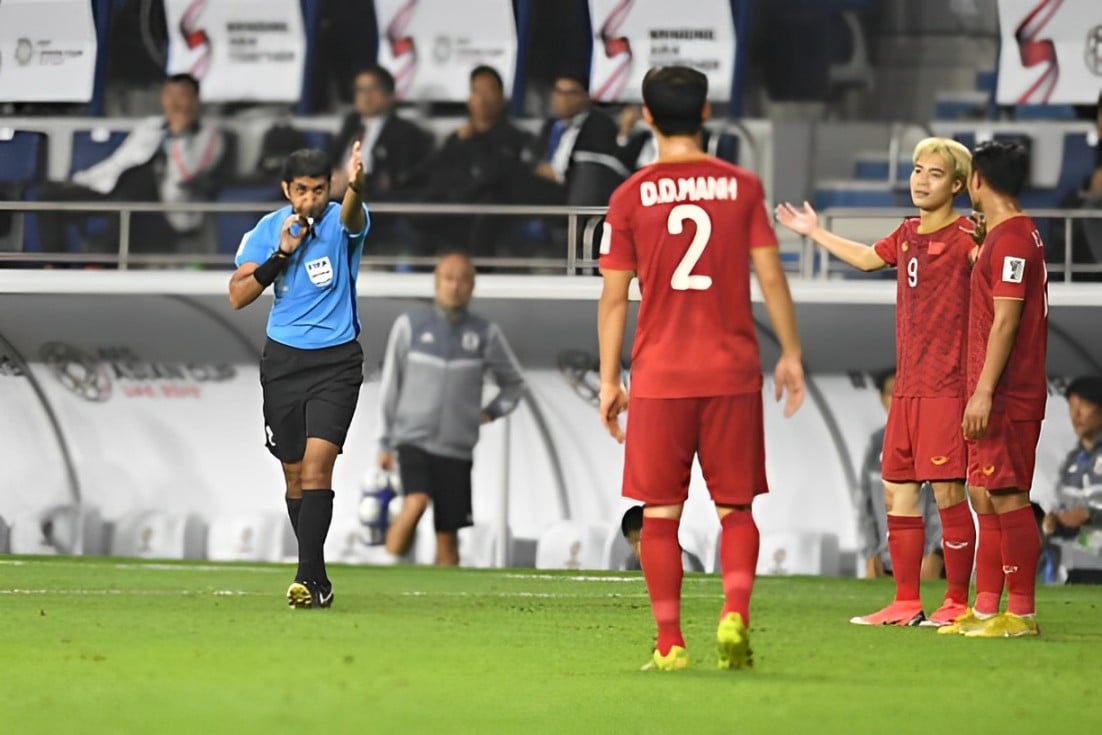
Duy Mạnh and unforgettable memories
Five days later, the Vietnamese team faced Australia in the second match. Coach Park's players started well with a tight defensive formation before launching a dangerous attack down the left wing. Nguyen Phong Hong Duy's shot hit defender Rhyan Grant's hand inside the penalty area in the 29th minute, but after reviewing the replay with VAR consultation, referee Al Jassim (Qatar) did not award a penalty to the home team. Tragically for the Vietnamese team, Grant later scored the only goal, giving Australia a narrow 1-0 victory.
In the match between Vietnam and Oman (round 4), a Vietnamese player committed a foul in the penalty area. Although the foul wasn't clearly visible, the VAR system, with its dozens of camera angles, allowed the referee to award Oman two penalties after careful review (Oman scored one goal and missed one).
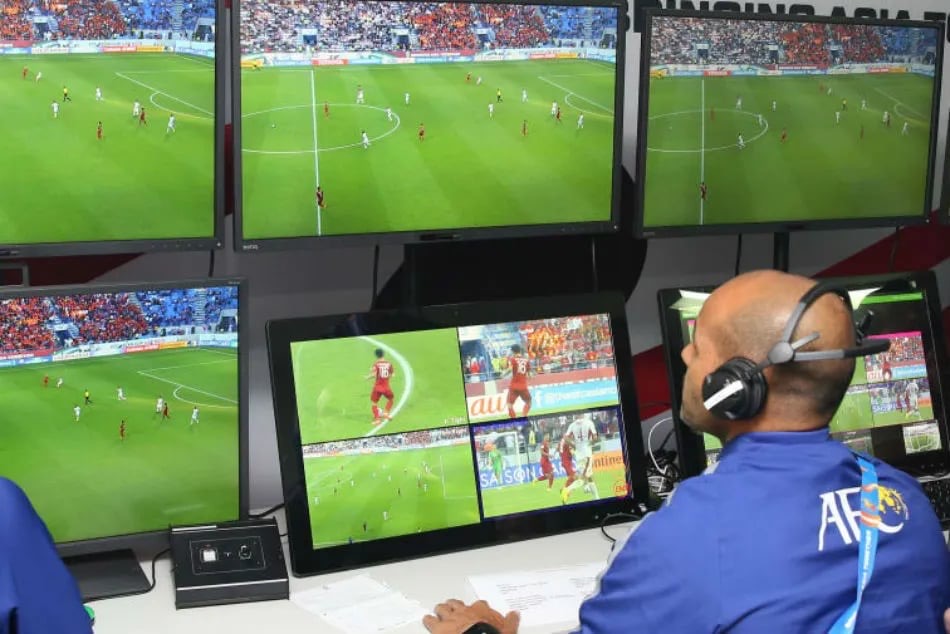
The VAR referee carefully reviewed the situation.
These are just small details in the overall picture. Statistically, due to errors, the Vietnamese national team conceded 7 penalties in 14 matches with VAR in the 2019 and 2023 Asian Cups and the 2022 World Cup qualifiers. That means for every 2 matches with VAR, Vietnamese players were penalized once. The Vietnamese team lost all the matches where penalties were awarded. The win rate of the Vietnamese team in matches with VAR is also very low, only 7.1%. Coach Park Hang-seo once stated: "It's difficult to say exactly why we often concede penalties. Perhaps it's due to defensive habits from when the players were young. Besides habits, another reason is that the Vietnamese team is put under great pressure by opponents. When defending under pressure, the Vietnamese team lowers its formation and is easily penalized."
Another point worth mentioning here is that the referee's decisions after reviewing VAR (or receiving advice from the VAR team) were all correct. In some situations, Vietnamese players might have fooled the referee with subtle fouls or handballs in the penalty area, but they couldn't "deceive" VAR. (to be continued)
IF THE REFEREE DOESN'T MAKE A COMMENT, VAR WILL.
During his tenure, coach Park Hang-Seo repeatedly reminded his players to play calmly and composedly, controlling their emotions, especially in matches with VAR. He demanded that the Vietnamese national team thoroughly understand the VAR regulations to avoid receiving cards. However, when facing strong teams in the third round of the 2022 World Cup qualifiers, his players seemed to have disregarded his teachings, committing regrettable fouls that were detected by VAR.
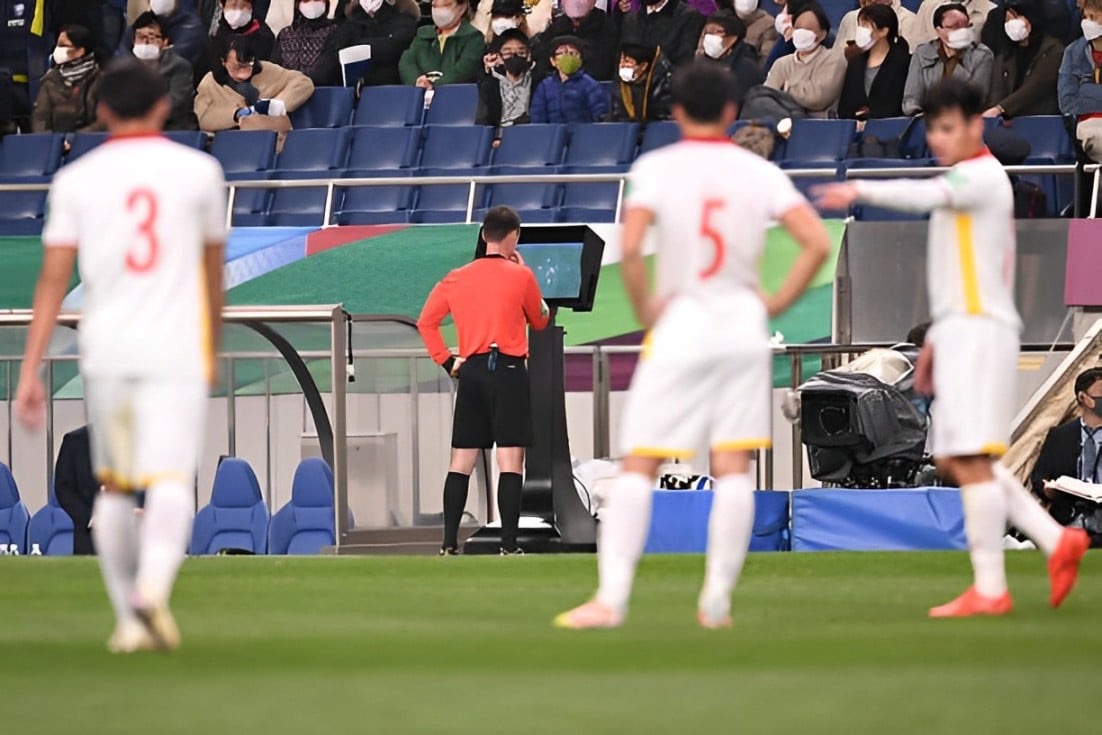
A match with VAR that the Vietnamese national team participated in.
The Vietnamese national team made so many mistakes that the Head of the VFF Disciplinary Committee, Vu Xuan Thanh, even used it as an example at the 2021 season summary conference: "In the third round of the 2022 World Cup qualifiers, we saw even more clearly that in situations where our players committed fouls, if the referee didn't call it, VAR would. You can't fool VAR. So clubs must train their players to avoid fouls. If a foul is committed, VAR will handle it immediately."
Trung Ninh
Source link









































































Comment (0)