


Truong Tien Bridge is a favorite photo spot for tourists visiting Hue.
The Hue City Smart City Monitoring and Management Center announced that the repair work focuses on treating and repainting steel components that have rusted and deteriorated due to severe natural disasters, in order to maintain their operational capacity. The total cost of repairing the bridge is approximately 9 billion VND, to be completed in 150 days, starting today (June 1st). During construction, all vehicles and pedestrians will be prohibited from crossing the bridge at night (from 9 PM to 5 AM the following day) to allow the contractor to focus on the main construction items. During the day (from 5 AM to 9 PM), vehicles will circulate normally on the road. However, authorities will prohibit pedestrian traffic on one side of the road to allow for the assembly of machinery and equipment, while pedestrians will use the other side.
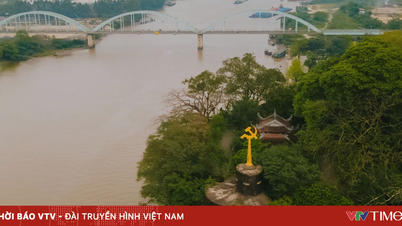
According to authorities, the construction work is being carried out at night to minimize the impact on traffic in the central area of Hue City, especially during peak tourist season and when many cultural activities take place on the pedestrian streets along the Perfume River. The construction unit will deploy signage and traffic control personnel to reduce congestion in the area. People needing to travel during these hours will be directed to use nearby bridges such as Phu Xuan Bridge, Da Vien Bridge, Nguyen Hoang Bridge, or Cho Dinh Bridge.
Specifically, during this renovation, the investor will repaint the bridge with a silver metallic color, as it was during the Nguyen Dynasty, following a proposal from the Hue City Department of Culture and Sports .
According to historical records, the Truong Tien Bridge was built in 1897 during the reign of King Thanh Thai. The Commissioner of Central Vietnam commissioned the Eiffel Company (France) to construct it. Completed in 1899, the bridge is 401 meters long and 6.2 meters wide, consisting of six semicircular steel girder spans, named after the king. The northern end of the bridge is located in Phu Xuan ward, and the southern end in Thuan Hoa ward, Hue City today. Initially, the bridge was named Thanh Thai, later changed to Clémenceau and then Nguyen Hoang, but it is popularly known as Truong Tien Bridge because the left bank of the Perfume River once housed a mint of the Nguyen Dynasty. This was the first steel bridge spanning the Perfume River, connecting the vital transportation artery of the capital city of Hue at that time.
In 1937, during the reign of Emperor Bảo Đại, Trường Tiền Bridge was expanded with sidewalks on both sides for bicycles and pedestrians, and viewing balconies were added. Along with Long Biên Bridge in Hanoi, Trường Tiền Bridge is one of the first steel bridges in Vietnam and Indochina built using Western technology in the late 19th century.
Having survived 127 years, collapsing three times due to natural disasters and war, and undergoing numerous name changes, the bridge, built by order of King Thành Thái, has become a symbol of Huế City. Beyond its transportation and architectural value, Trường Tiền Bridge is also deeply intertwined with the cultural life of Huế's people, serving as an inspiration in poetry, music, and painting. Currently, eight sturdy bridges connect the north and south banks of the Hương River. Restoring the bridge's silver-colored gilded finish will not only extend the structure's lifespan but also enhance the heritage landscape, bringing this symbol of Huế back to its original historical value.
According to Nhandan.vn
Source: https://baoangiang.com.vn/cau-truong-tien-se-ve-mau-cu-a487580.html


![[Photo] General Secretary and President To Lam presides over a meeting on preparations for the review of one year of operation of the three-tiered government system.](https://vphoto.vietnam.vn/thumb/1200x675/vietnam/resource/IMAGE/2026/06/02/1780391821195_a1-bnd-4595-9717-jpg.webp)















































































Comment (0)