

Agriculture has been severely affected.
Tan Siang Hee, CEO of the agricultural organization CropLife Asia, said that if the heatwave continues, the world 's corn yields could fall by nearly a quarter by the end of this century. Because corn is a widely consumed and used grain, food affordability will also become a challenge.
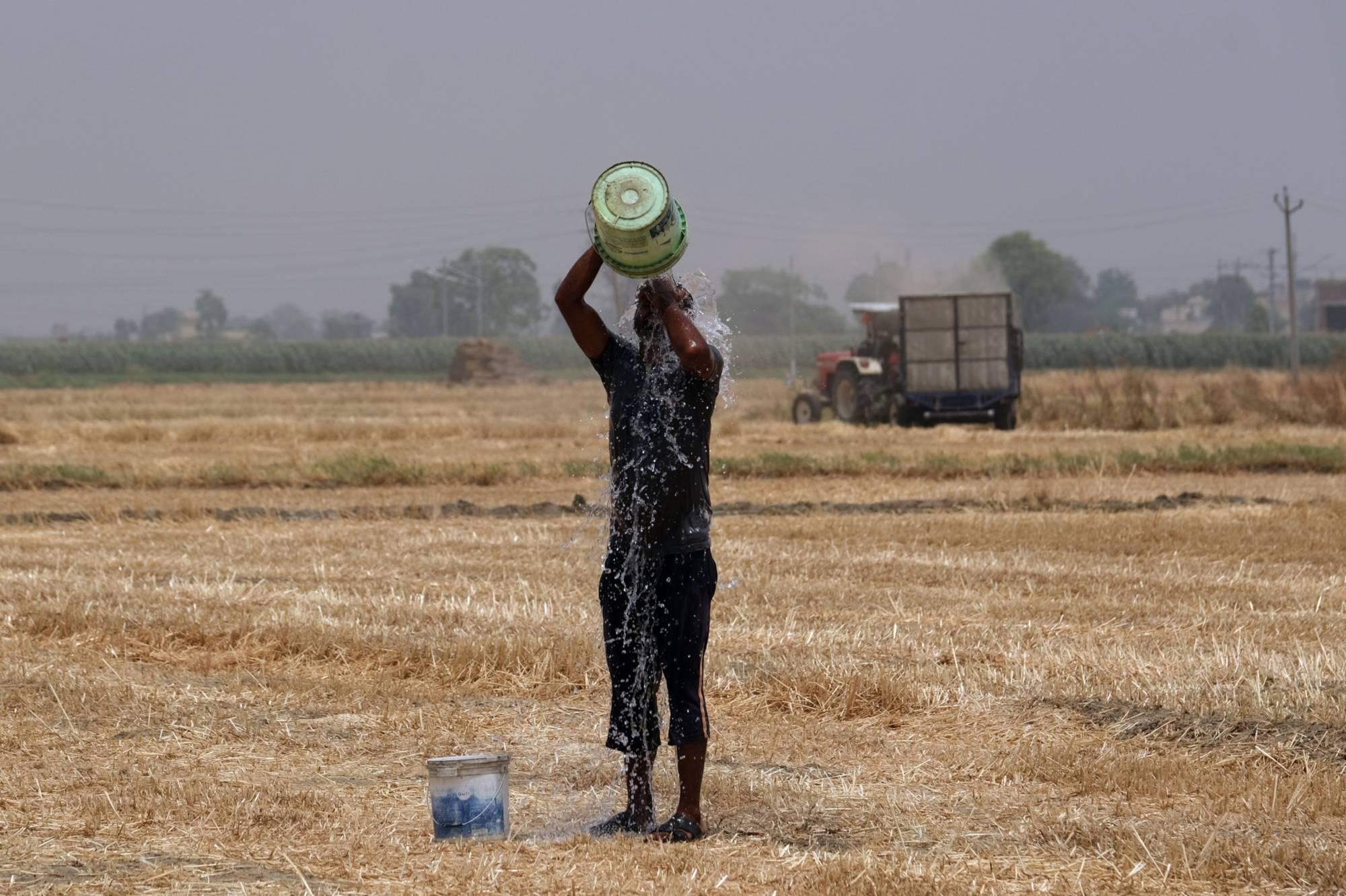
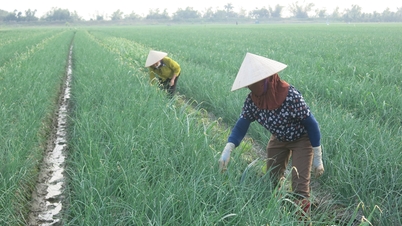
A farmer pours water over his head to cool down while working in the fields in May in Punjab state, India. Photo: Japan Times
"Corn is not only a food source for humans but also used as animal feed, as a raw material for ethanol production, and for various industrial purposes," said Tan Siang Hee.
According to Tan, about 60% of the world's corn is used for animal feed. If production volume is affected and corn prices rise, meat prices will rise as well. For example, chicken requires about 2.5 kg of grain for every kg of meat. "A 10-cent increase in your grain input will increase it 2.5 times – even at the farm level – per kg of meat," Tan said.
Just like plants and animals, extreme temperatures can be fatal to farmers. According to research in the US, farmers are 35 times more likely to die from heatstroke than in most other occupations.
It's an even more serious problem in countries with aging populations like South Korea. As young people move away from agriculture, nearly half of the country's farm workers are now 65 years old or older. And this age group is particularly vulnerable to heat stress.
With soaring temperatures this summer, at least 27 people in South Korea have died as of early August, many of them elderly farmers.
Cho Chae-woon, a village chief in Deokpyeong-ri, Gyeonggi Province, South Korea, said: “Even when their bodies are stressed, they have no choice but to do the work. Agriculture is facing a labor shortage.”
But with temperatures in his village exceeding 38 degrees Celsius during the recent heatwave, he will activate the public address system four times a day to warn residents about heat-related illnesses.
To escape the heat, the village hall was converted into a shelter, equipped with government -funded air conditioning to maintain the temperature at 25 degrees Celsius.
“Elderly people don’t turn on air conditioners because they’re afraid of high electricity bills. So, by… having the elderly come (to the temporary shelter), we turn on two units here instead of one in each household,” Cho said. “Looking at the bigger picture and our country as a whole, it’s more beneficial and it also reduces energy consumption.”
Cities are also struggling.
Away from the farms, this is also a tiring summer for some workers in urban centers.
Hong Sung-wan, a South Korean worker, has to work several hours each day in the scorching sun installing network cables for LG HelloVision. He told CNA: "When I have to stand next to a power pole for one or two and a half hours, sometimes I get dizzy."
It could be heat exhaustion, which happens when the body overheats. At worst, it can lead to heatstroke, a potentially fatal condition. But Hong has to try his best. “Whenever it happens, I think of my family and try to get through it,” the 51-year-old said.
According to Nicolas Maitre, author of the International Labour Organization (ILO) report on the impact of heat stress on productivity, at temperatures of 33 to 34 degrees Celsius, work performance can be halved for those performing physically demanding jobs.
In Seoul, the government implemented policy changes following the record-breaking heatwave of 2018 that killed 48 people nationwide – at least for workplaces publicly managed by the city.
Hwang Sung-won of Seoul's Disaster Prevention and Safety Agency gave the example of workers who have to work eight hours a day to receive a daily wage of 150,000 won (approximately $110). He said, "If they have to take a break from 2 p.m. to 5 p.m. due to the heat exceeding 35 degrees Celsius, those three hours will be considered working hours. They will still be paid."
In Hong Kong (China), which recently experienced a record-breaking hot summer, authorities have issued guidelines to combat heatstroke this year based on a three-tiered warning system.
For example, when an amber warning is in effect, workers with moderate physical workloads should take a 15-minute break every hour. There are also red and black warnings, which indicate “very high” and “extremely high” levels of heat stress, respectively.
That's for those who have to go out to work. But staying indoors doesn't always bring much relief. In the cramped housing complexes where poor Hong Kong residents often live, ventilation is very poor.
In the Sham Shui Po area, Wong Kwai Hoi lives in an apartment measuring approximately 6 square meters, roughly half the size of a standard parking space in Hong Kong. It doesn't even have windows.
“It’s not just affecting my mood, it’s making life miserable. It’s unbearable,” said the 65-year-old retired man. “Sometimes I feel so hot that I get dizzy and have to take medicine.”
Dense housing is a hallmark of Hong Kong, and these concrete jungles exacerbate heat buildup through the so-called "urban heat island effect." In extreme cases, cities can be 10 to 15 degrees Celsius hotter than surrounding rural areas.
Environmental historian Fiona Williamson at Singapore Management University notes: “Any extreme weather issue will always affect the most vulnerable in society. They don’t have access to air conditioning or some of the things that wealthier people can use to mitigate the impact of temperature.”
A 2-square-meter air-conditioned room and other solutions.
Record-breaking heat has led to a surge in demand for air conditioning. In China, energy demand for cooling spaces has increased by an average of 13% annually since 2000, compared to around 4% globally.
In Southeast Asia, the number of air conditioners is projected to increase from approximately 50 million in 2020 to 300 million in 2040.
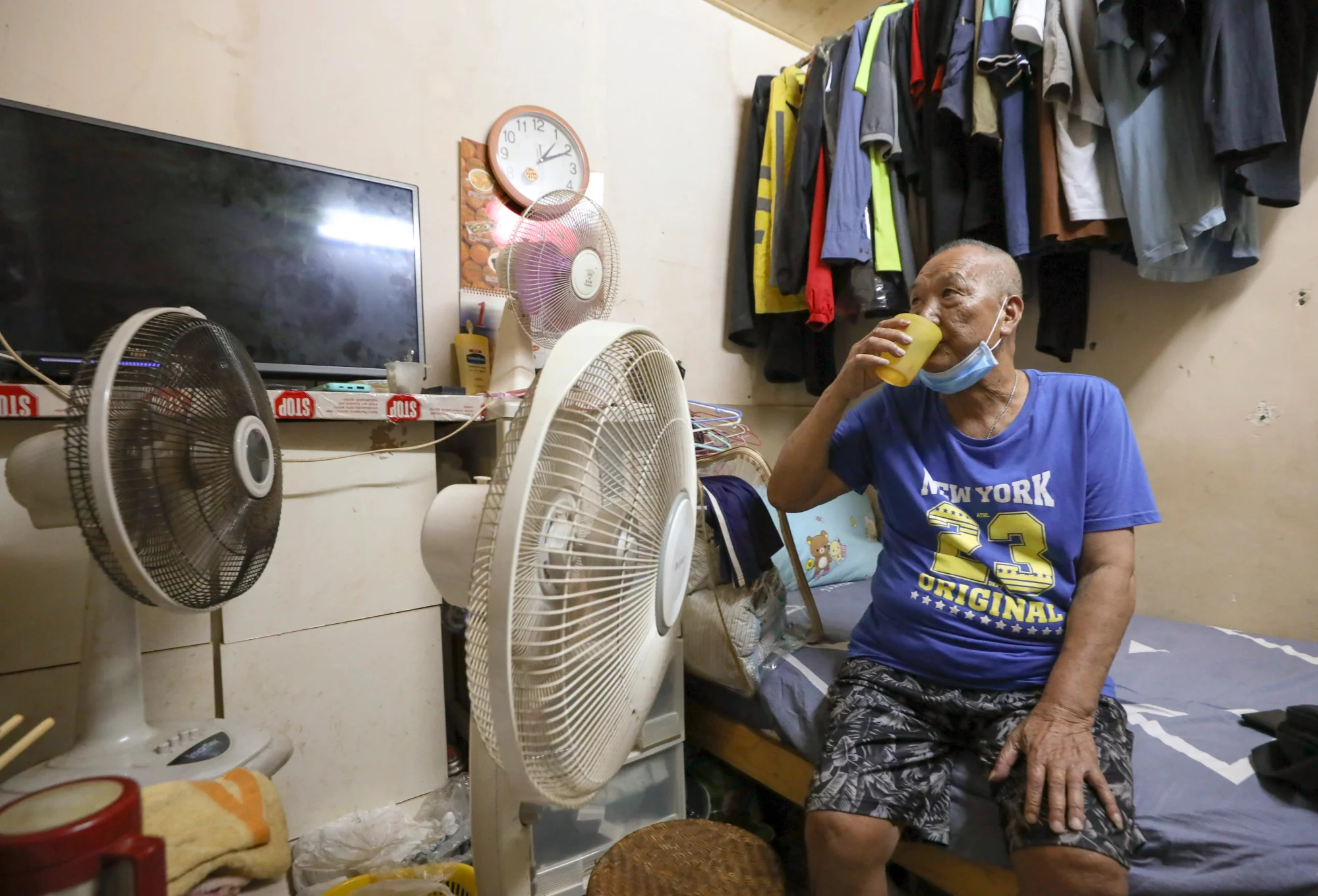
An elderly woman in Sham Shui Po, Hong Kong (China), sits in her cramped and hot apartment due to the lack of air conditioning. Photo: SCMP
In South Korea, some of the growing demand will be subsidized by the government, after the ruling People Power Party agreed in June to expand its energy bill subsidy program to approximately 1.135 million low-income households, up from the previous 837,000.
To further help low-income residents cope with the heat, the Seoul city government announced it will subsidize the installation of air conditioners in one-room homes – small houses of about 2 square meters – known as “jjokbangs.”
But energy costs are exacerbating the heat problem. Electricity demand in South Korea surged in August to a record high. Like many places in Asia, the country's electricity is still primarily generated from fossil fuels.
Benjamin Horton, director of the Singapore Earth Observatory, said: “Therefore, we need to think about different measures to reduce temperatures in cities.”
In their search for alternative solutions, architects and engineers want to build self-cooling buildings, such as Gaia – Asia's largest wooden building – at Singapore's Nanyang Technological University. While both are building materials, wood doesn't retain heat like concrete.
The building's air conditioning system saves energy through passive cooling: pushing cold water through coils to cool the surrounding air, instead of using mechanical ventilation. Designed with natural airflow and solar panels on the roof, Gaia is an energy-efficient building.
Environmental historian Fiona Williamson at Singapore Management University said: “We haven’t had to deal with the kinds of heat… that we are facing now. Perhaps we’re only used to dealing with things like floods and droughts.”
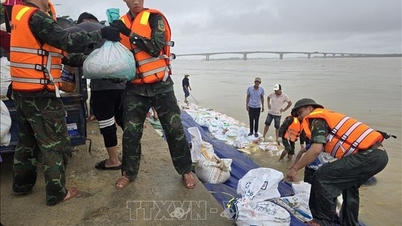
But even now, flooding continues to wreak havoc. The arrival of Typhoon Doksuri in late July brought the heaviest rains to the Beijing area (China) since records began 140 years ago.
“Decades ago, scientists warned that if we continued to increase greenhouse gas emissions, temperatures would break records, heatwaves, wildfires, storms… would cause immense devastation. And that has become a reality,” said Benjamin Horton, Director of the Earth Observatory of Singapore.
He added: "Climate scientists are not surprised by the current extreme weather events. What is surprising is our lack of preparation… We are not resilient enough to what Mother Nature will do to us."
Quang Anh
Source

































































Comment (0)