

Former NATO Deputy Secretary General Mircea Geoana stated that the slow learning of lessons over the past four years, coupled with a shortage of military equipment and technology, has created gaps that urgently need addressing, both at the national and alliance levels.
The article emphasizes that incidents involving UAVs in countries on NATO's eastern flank have become almost a daily occurrence.
Since the beginning of 2022, Romania alone has recorded 47 incidents, while Poland, after detecting more than a dozen UAVs crossing its border, activated consultations with allies under Article 4 of NATO.
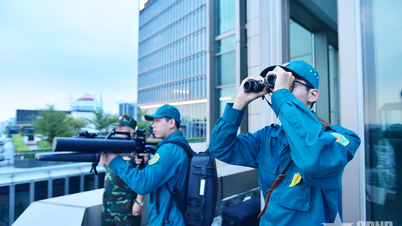
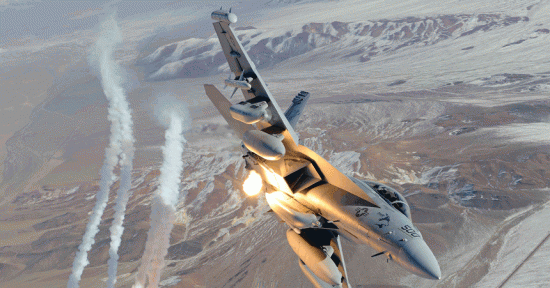
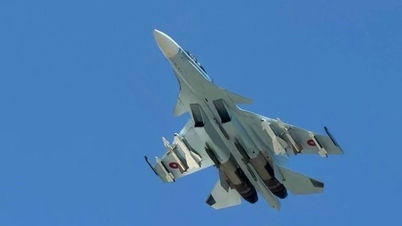
Low-flying UAVs can evade traditional radar systems, while using fighter jets or anti-aircraft missiles to counter them is costly and not always effective.
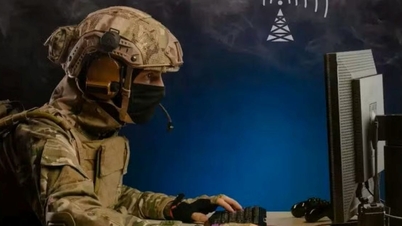
Against this backdrop, countries in the region are accelerating the procurement of anti-UAV measures, including radar, detection systems, interceptor UAVs, and specialized electronic warfare systems.
Previously, on May 28, Politico reported that it would take the European Union many years to build its own UAV industry.
One proposed solution is cooperation with Ukraine, whereby EU countries could manufacture UAVs on Ukrainian territory using funding from the €150 billion Militarization Fund (SAFE).
Source: https://giaoducthoidai.vn/chau-au-doi-mat-lo-hong-phong-thu-truc-moi-de-doa-uav-post779889.html




![[Video] Sunset at Lap An Lagoon – Where the sun sets over the fishing nets](https://vphoto.vietnam.vn/thumb/1200x675/vietnam/resource/IMAGE/2026/05/31/1780192137701_beach-landscape-sea-water-nature-grass-745871-pxhere-com.jpeg)












![[Video] Sunset at Lap An Lagoon – Where the sun sets over the fishing nets](https://vphoto.vietnam.vn/thumb/800x450/vietnam/resource/IMAGE/2026/05/31/1780192137701_beach-landscape-sea-water-nature-grass-745871-pxhere-com.jpeg)







































![[Video] Sunset at Lap An Lagoon – Where the sun sets over the fishing nets](https://vphoto.vietnam.vn/thumb/402x226/vietnam/resource/IMAGE/2026/05/31/1780192137701_beach-landscape-sea-water-nature-grass-745871-pxhere-com.jpeg)






























Comment (0)