

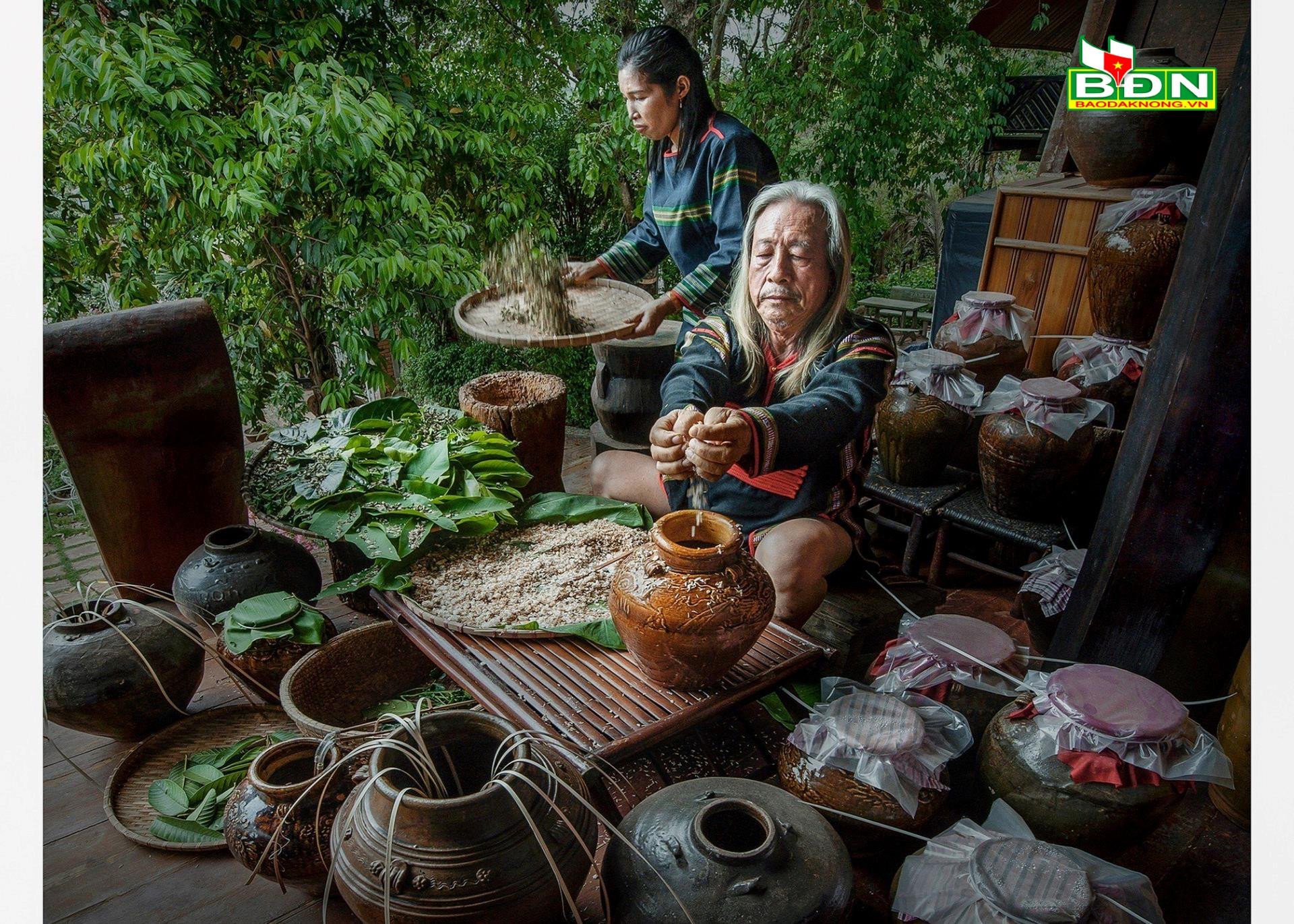
Clay jars (Ché) typically have a round, bulbous mouth, a large, bulging body that tapers towards the base. They are made from clay, fired at high temperatures, and either glazed or left unglazed. The M'nong people call them Yăng, the Ede people call them Chéh, and the Ma people call them Đrắp and Jăng. For the M'nong, Ede, and Ma people, there are many types of jars, each with its own name. The names of the jars may be based on their color, patterns, shape, or the animals decorated on their bodies. Valuable jars may even be named after their owner, a family lineage, or a related event.
Like other ethnic groups in the Central Highlands, the jars of the Ede people also hold different meanings. They are sacred objects, so when they first bring a jar home, the people usually perform a ritual offering. The family of Mr. Y'Bin ÊBan in Nui hamlet, Tam Thang commune, Cu Jut district, is praised by the villagers as the wealthiest and most powerful in the hamlet. This is because only his family still preserves ancient jars hundreds of years old. His family uses these jars to brew rice wine for use in the annual rituals of the Ede people. They are precious assets, cherished, preserved, and carefully maintained by his family.
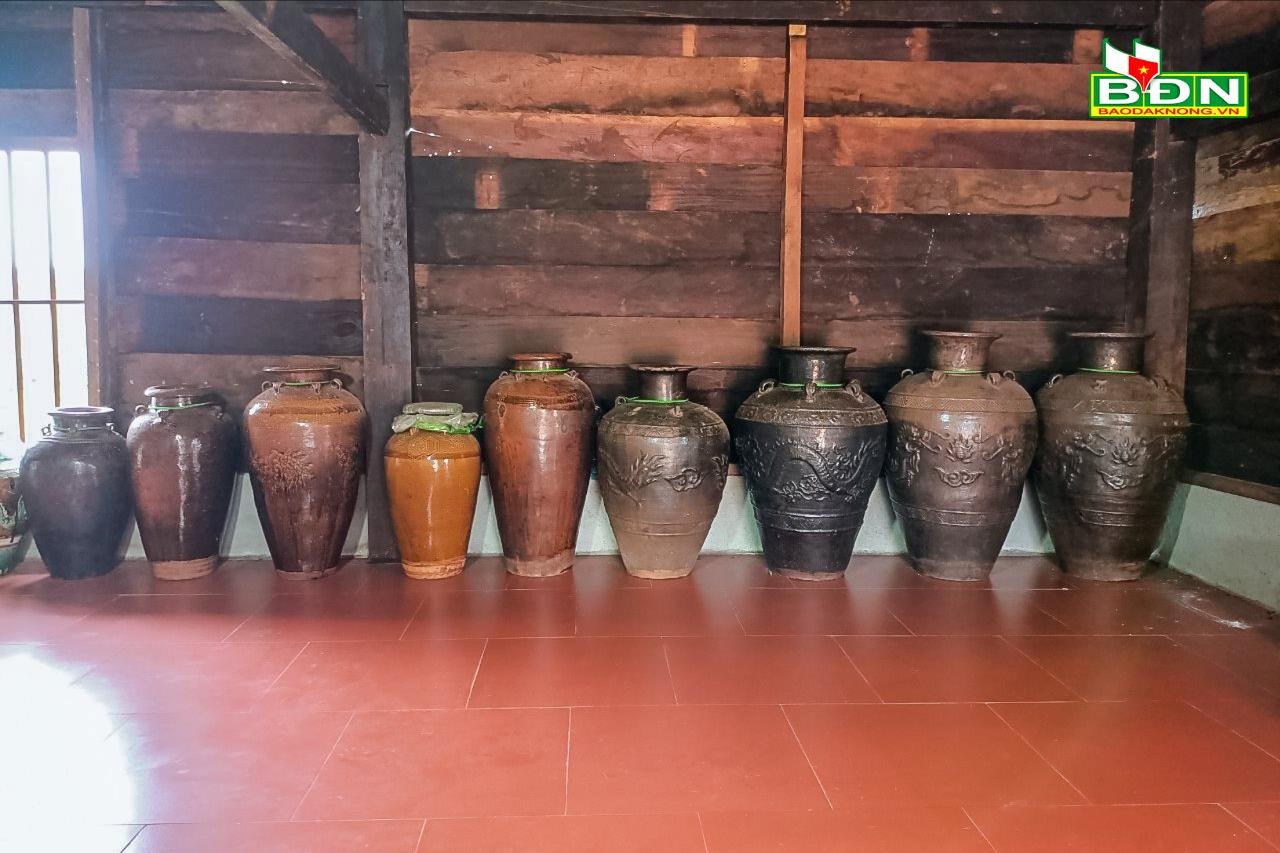
Mr. Y'Bin ÊBan said: "The Ê Đê people don't make their own jars. These jars were bought by our family in Laos; we don't have them in Vietnam. These are antique jars, not new ones like the ones sold in the market now. In the old days, our grandparents and parents traded buffaloes to acquire them. These jars are very valuable and precious. Families with many gongs and jars are considered wealthy. Very few families in the village still preserve these jars; life is modern now, so not many families still brew rice wine and keep many jars anymore."
For the Ede people, the entire life cycle, from birth and adulthood to death, is inextricably linked to the earthenware jar. While alive, the jar is intimately connected to people through festivals, rituals, and offerings to deities; it is a family heirloom, a valuable asset used as a dowry for sons when they marry, and for daughters when they "find" a husband. When the owner dies, the jar is also "shared" with them to the eternal realm.
Therefore, the value of the jar is not determined solely by its exchange rate in terms of high-value goods, such as buffaloes or other precious assets, but rather by its sacredness. The Ede people regard the jar as a member of the family, sharing in their joys and sorrows, and witnessing important events in the lives of individuals, families, and the entire community. Furthermore, it is considered a dwelling place for spirits, a sacred object, and an offering to the gods. The elders, the heads of families, are always proud when telling their children and grandchildren about this sacred object. They also constantly remind their descendants to cherish and preserve this treasure left by their ancestors.
The ethnic groups in the Central Highlands in general, and the M'nong people in particular, have their entire lives intertwined with rice wine. Rice may be scarce, but the supply of rice wine never stops. They use the finest jars of wine for community and family rituals. Therefore, these jars are always present in every ceremony of the M'nong people.
In Bu P'Râng hamlet, Đắk ND'rung commune, Đắk Song district, the distinctive cultural features of the M'nông people are still preserved. The people in the hamlet still practice traditional crafts, maintain customs, traditions, folk festivals, gong culture, and culinary culture…
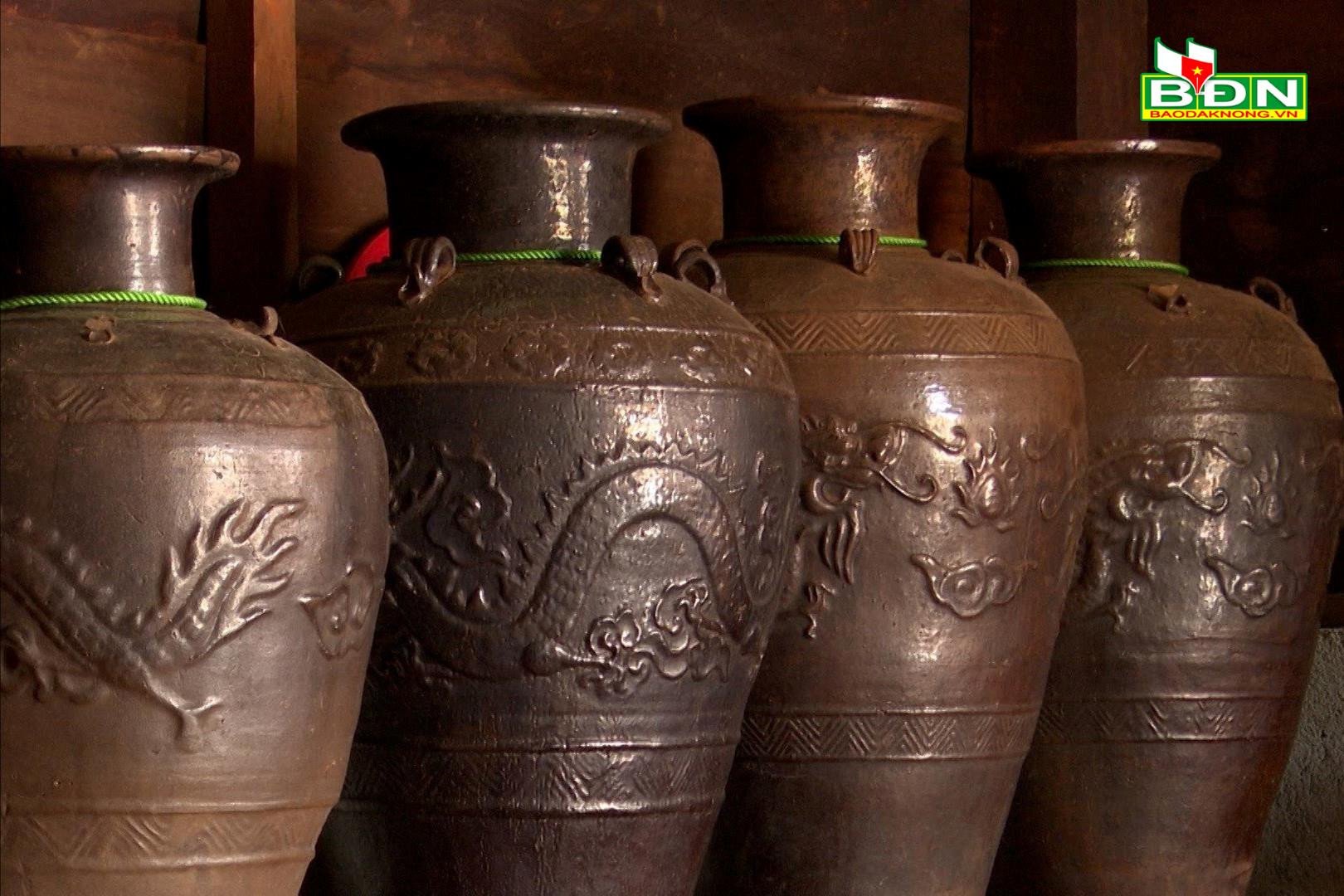
In her home, Ms. Thi Mai dedicates the most prominent place to displaying and storing the precious jars passed down from her ancestors. The jars in Ms. Thi Mai's house come in many colors, patterns, and styles, with animals decorated on their surfaces, making them very beautiful. For the M'nong people, there are many types of jars, and each has its own name.
Ms. Thi Mai said: "The M'nong people have many types of jars. The oldest jars date back dozens of generations. Some precious jars include the Rlung jar, the Gri bok but jar, the Bo jar, the Suh ntang keh jar, and the Yang brah hueng jar... In the old days, our ancestors had to trade many buffaloes and cows to get them."
Some common patterns include dragons, symbolizing the dream of soaring like a dragon, and a life of increasing prosperity and abundance; patterns of plants and trees symbolizing the life of the M'nong people connected to their fields, mountains, and forests; and some patterns that have no meaning, serving only as decoration.
Ms. Thi Mai recounted that when her parents were alive, they often gifted their children and grandchildren precious earthenware jars and regularly filled them with rice wine so that her parents always had wine to drink. These valuable jars were passed down from generation to generation, becoming sacred objects, closely associated with each clan and family. Therefore, these objects are like the spiritual children of M'nong families; admiring and cleaning them every day is a source of happiness for them.
The longer a jar is kept, the more valuable it becomes. Its value lies not in money or material possessions, but in its spiritual value, in the meaningful things it brings to the family and the community. Therefore, families who still possess antique jars are highly respected and admired by their neighbors. When the village has an important event, people often borrow these antique and valuable jars to perform important rituals.
Today, jars are no longer used as a means of exchange as they once were. Ancient jars are becoming increasingly rare; even those who want to buy them are unable to do so. Modern life has permeated the villages, but jars still hold an important place in the families and communities of the indigenous ethnic groups in Dak Nong. No festival of the indigenous people is complete without jars of rice wine. Especially at tourist destinations, and even in modern homes, ancient jars are considered valuable decorative items. For this reason, jars have contributed to preserving, conserving, and promoting the distinctive traditional cultural values of Dak Nong in particular, and the Central Highlands in general.
At the exhibition house in Bon N'Jrieng, a Ma ethnic village in Dak Nia commune, Gia Nghia city, artifacts of the Ma ethnic group in Dak Nong are displayed. Various types of jars used by the Ma people are also exhibited here to introduce visitors from near and far to a unique aspect of their culture.
Ms. H' Giang, from N'Jriêng hamlet, Đắk Nia commune, is a member of the Mạ ethnic group living here. From birth until now, she has heard many stories from her grandparents and parents about the jars of her people, including the sacred jar mentioned in the Mạ epic. As she grew older, she understood more and more the meaning and role of jars in the lives of the Mạ people when she saw them present in wedding ceremonies and the harvest festival. Now, there are not many ancient jars left, so the elders here often teach their children and grandchildren about the beauty of their culture and the value of these jars.
Ms. H'Giang said: "These jars were bought by people in the villages of Dak Nia commune a long time ago. In the past, our ancestors traded them for buffaloes, cows, pigs, and rice, not for money. Now, any family that still has them brings them here to display so that more people can learn about them and so that our children and grandchildren can see them. From there, we can learn to preserve our traditional culture."
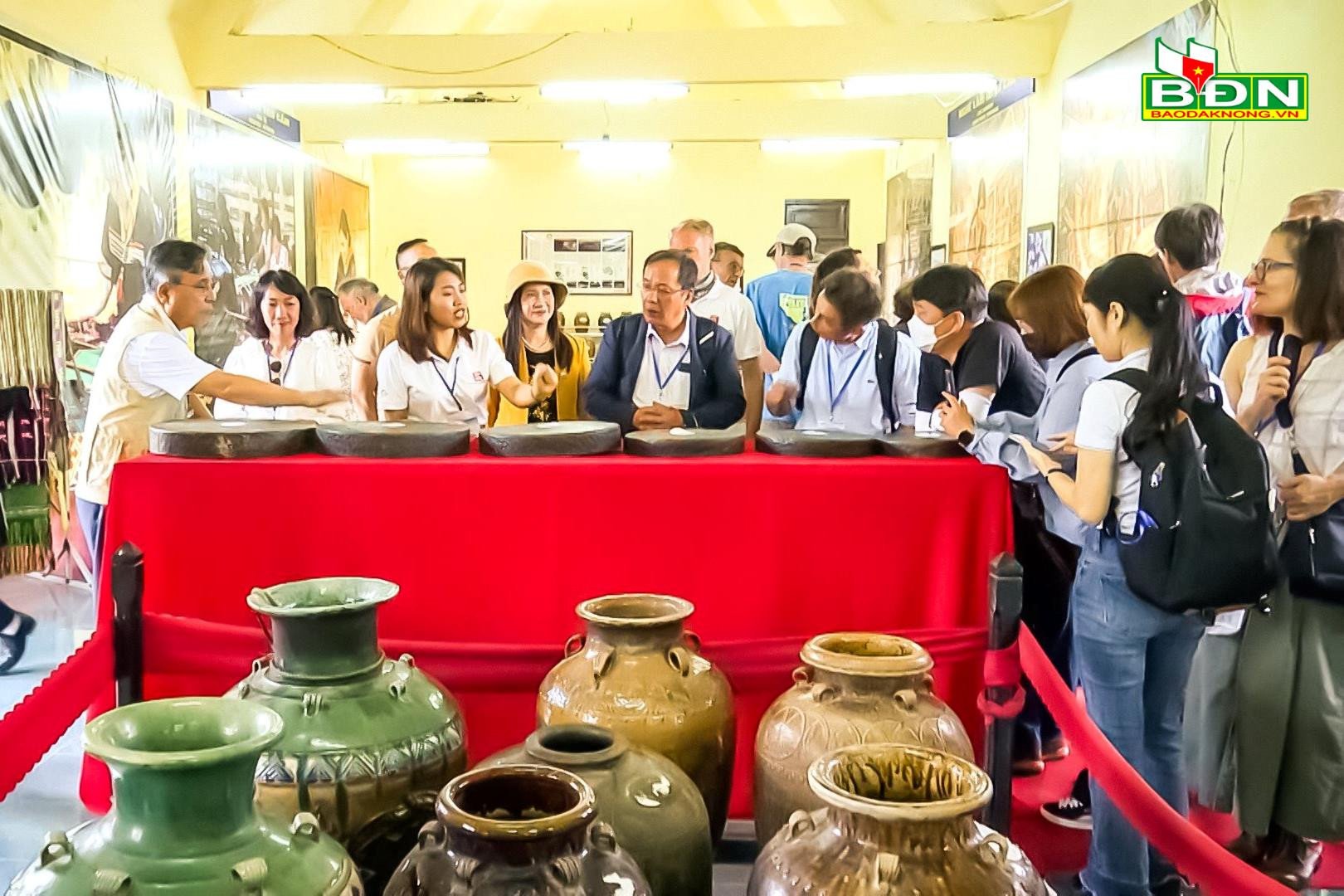
In the mindset of the Ma people, anything that is essential and valuable must be contained in a sacred and precious vessel. In terms of style and form, Ma jars share many similarities with those of the Ede and M'nong people. There are many types, each with its own name. Each jar holds its own significance, reflecting the folk culture and beliefs of the people.
Jars are indispensable items in important rituals of the Ma people, so they are carefully preserved. Even in modern times, nothing can replace jars in the lives of the Ma people. The elders only hope that future generations of Ma people will learn to cherish these treasures of their ethnic group.
Through rituals, with the presence of jars, the Ede, M'nong, and Ma people express their gratitude and aspirations for the protection and blessings of the gods. In agricultural rituals, they pray for good health, favorable weather, abundant water resources, bountiful harvests, and plenty of rice, corn, buffalo, cattle, pigs, and chickens. In life cycle rituals, the jars convey wishes for a healthy, peaceful life, free from poverty and disease. This is the source of strength that allows them to be optimistic, confident in themselves, and believe in the future. These wishes, entrusted to the jars, also help connect the community, fostering collective efforts in production, preserving community resources, and taking responsibility for protecting the ecological environment, water resources, and land.
Source









































































Comment (0)