

In a world marked by geopolitical upheaval and strategic competition, reforming the growth model is no longer an option but a pressing requirement for Vietnam to realize its development aspirations.
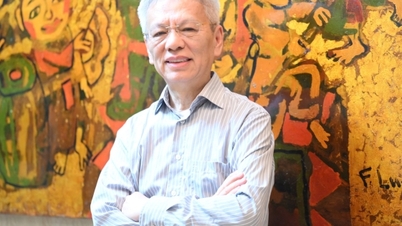
To gain a better understanding of the roadmap and key pillars in this phase, a VNA reporter interviewed Dr. Ho Sy Ngoc from the Institute of Economics , Society and Environment, Ho Chi Minh National Academy of Politics, on establishing a model for Vietnam's economic growth in the new era.
- Sir, why is establishing a new growth model set as a central and urgent task in the Party's 14th Congress documents?
Dr. Ho Sy Ngoc: In the "matrix" of growth factors, establishing a new model is necessary to reshape the trajectory of resource contributions to the Vietnamese economy. We are facing increasing global challenges, requiring a faster and more sustainable development platform to realize the nation's aspiration for progress.
The 14th National Congress of the Party also clearly identified this as a key task to create a foundation for rapid and sustainable development, realizing the nation's aspiration to rise to greater heights.
In fact, both theory and international experience show that the inevitable trend is a shift from growth based on capital and labor to growth based on technological progress, total factor productivity (TFP), and endogenous factors. Without this change, we will find it difficult to achieve breakthroughs in the new era.
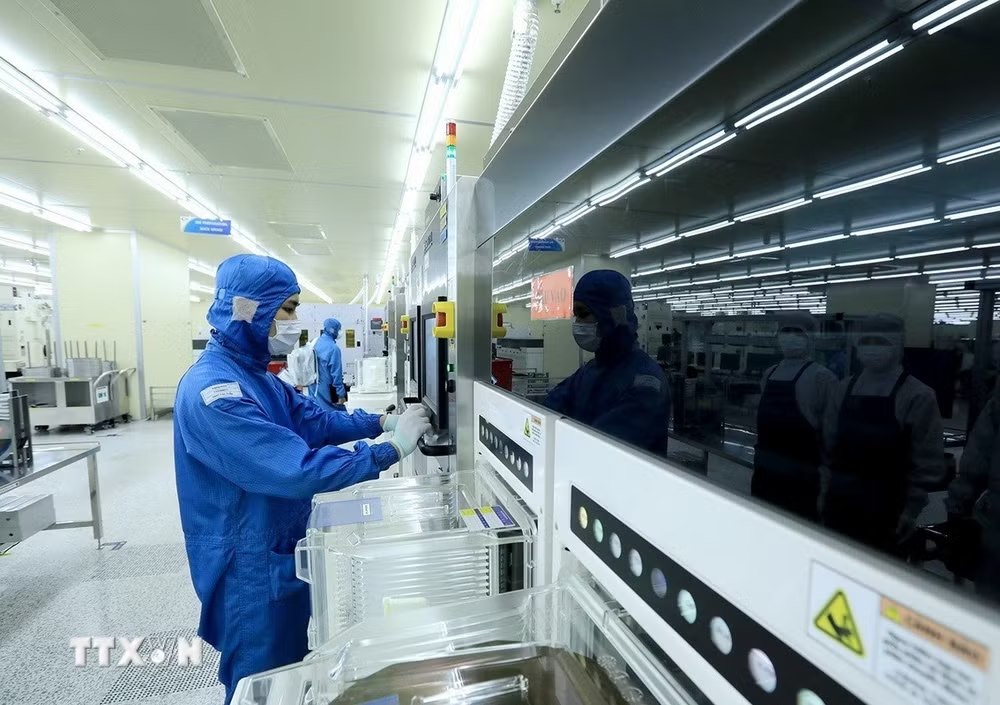
Looking back at the period after the Doi Moi (Renovation) reforms, how do you assess the limitations that the old growth model is currently facing?
Dr. Ho Sy Ngoc: The growth model after the Doi Moi (Renovation) period (1986) was primarily extensive growth, heavily reliant on inputs such as capital, labor, and resources. The limitations are clearly evident in the very low efficiency of capital utilization. The ICOR (coupon ratio) in the 2006-2010 period was 6.1, and most recently, in the 2020-2025 period, this figure has approached 6.5 times – the highest level in the past 15 years. This shows that the old model has revealed "saturation" and wasted investment resources. When land and resource reserves are no longer an advantage, change is absolutely necessary.
So, in your opinion, what core pillars should Vietnam's new growth model be built upon?
Dr. Ho Sy Ngoc: In my opinion, Vietnam's new growth model must be composed of four guiding pillars:
First and foremost, the growth model is based on breakthrough institutional development: This is considered a "breakthrough of breakthroughs." The goal is to remove barriers and bottlenecks to unleash resources in terms of land, labor, and capital. The focus is on reforms towards transparency, simplification of business procedures, and effective law enforcement.
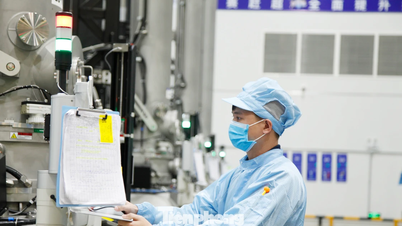
Secondly, the growth model must be based on science, technology, and innovation: In the new model, this is no longer an external factor but an endogenous variable that determines the nature of growth. The application of artificial intelligence (AI), biotechnology, and automation will create exponential changes in investment efficiency and new surplus value.
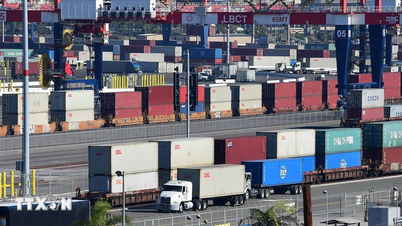
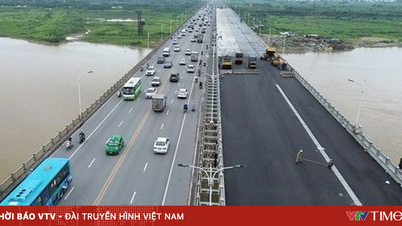
Thirdly, the new growth model features a synchronized and modern infrastructure: The motto is "infrastructure leads the way" to remove bottlenecks, reduce logistics costs, and enhance inter-regional connectivity. This includes not only transportation infrastructure (highways, seaports) but also the modernization of the power grid and digital infrastructure.
Ultimately, the model needs to leverage the human factor: the central element, the subject, and the driving force of development. Investing in high-quality human resources, fostering patriotism, and cultivating a desire for development are key to optimizing productivity in the digital age.
According to him, what institutional bottlenecks need to be prioritized for removal right now?
Dr. Ho Sy Ngoc : Removing institutional bottlenecks is identified as a "breakthrough of breakthroughs," playing a key role in unleashing all social resources. In my opinion, the institutional bottlenecks that need to be prioritized for removal currently include: First and foremost, removing barriers to unlock input resources such as land, capital, and labor.
Next, it is necessary to improve the effectiveness of law enforcement, ensuring transparency and stability in the investment and business environment. Along with this, it is crucial to accelerate administrative procedure reforms and reduce compliance costs for businesses. In particular, it is essential to perfect the institutional framework so that the private sector truly becomes a vital driving force of the economy; simultaneously, creating mechanisms to promote science and technology, innovation, and deeper international integration.
Furthermore, it is necessary to leverage the leading role of public investment as a "seed capital" to attract more social resources.
I believe that resolving these bottlenecks will not only remove existing barriers but also create a synchronized and inclusive institutional system, laying the foundation for Vietnam's rapid and sustainable development in the new era.
Finally, what are his expectations for this overall transformation of the economy?
Dr. Ho Sy Ngoc : The synchronized combination of institutional reform, technological breakthroughs, and the development of human resources will create a new growth ecosystem. This is not just about GDP figures, but the foundation for Vietnam to realize its aspiration to rise and build a modern, sustainable nation in the new era.
However, in my opinion, the role of human beings is crucial in realizing this comprehensive transformation. Humans are the agents operating modern means of production. When patriotism and the aspiration for development are awakened, they become practical driving forces for accumulating human capital.
Thank you, sir!
Source: https://www.vietnamplus.vn/chia-khoa-hien-thuc-hoa-khat-vong-vuon-minh-post1114420.vnp

![[Image] Shipbuilders exposed to steel and record-breaking heat.](https://vphoto.vietnam.vn/thumb/1200x675/vietnam/resource/IMAGE/2026/06/04/1780545781745_ndo_br_img-5402-4683-jpg.webp)









































![[Video] Sunset at Lap An Lagoon – Where the sun sets over the fishing nets](https://vphoto.vietnam.vn/thumb/1200x675/vietnam/resource/IMAGE/2026/05/31/1780192137701_beach-landscape-sea-water-nature-grass-745871-pxhere-com.jpeg)
























Comment (0)