

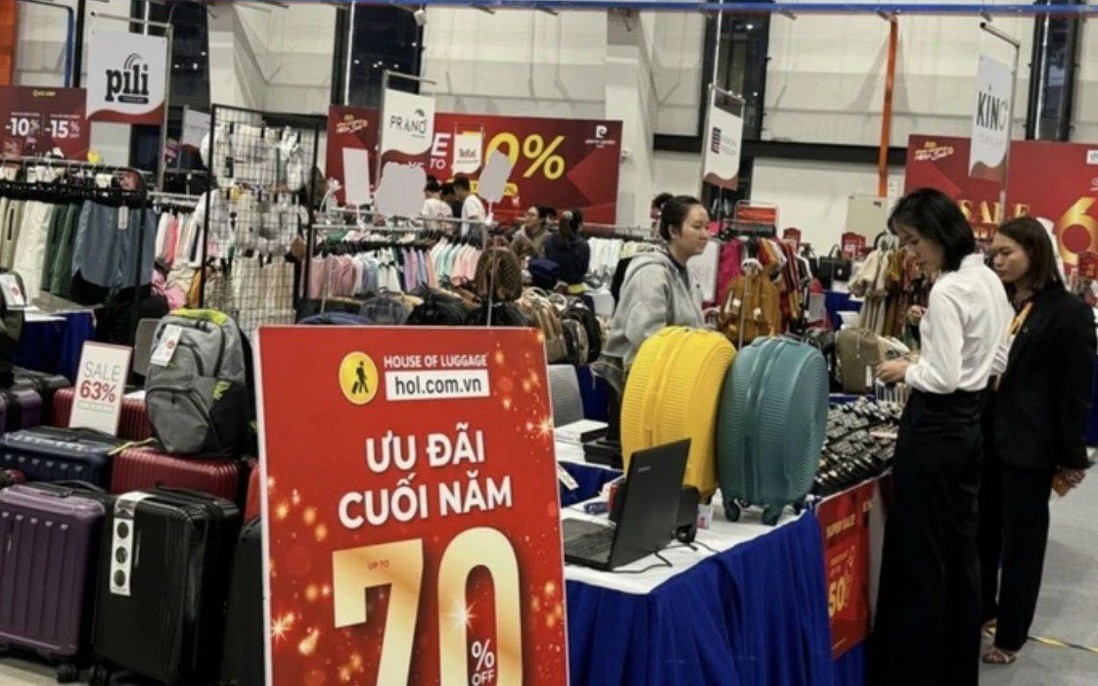
The tricks are becoming increasingly sophisticated.
Ms. Minh Anh ( Hanoi ) said that she once bought a washing machine model advertised with a discount of over 60% during a year-end sale. However, when using a price history tracking tool, she discovered that the product's price in the weeks prior fluctuated around 6-7 million VND, much lower than the "original price" listed by the store. "Because I saw the countdown timer was only a few minutes away, I rushed and didn't check carefully. Only later did I realize that the deep discount wasn't as advertised," she said.
The FOMO (Fear of Missing Out) mentality is exploited to the fullest through a series of deceptive "fake discounts": automatically refreshing countdown timers, labels like "only 1 left," "500 people viewing," notifications like "just bought," or timed flash sales creating a sense of urgency. All of these are designed to prevent consumers from comparing or verifying information.
Many people who impulsively buy products end up disappointed. Mr. Le Thanh Hai (Cau Giay, Hanoi) once bought a camera advertised as "deeply discounted," but upon receiving it, the product had low resolution and was far different from the description. The seller refused to exchange it, citing the reason that "sale items are not eligible for exchange." Although he received a refund after filing a complaint, he admitted he had been misled by the misleading announcements that stimulated FOMO (fear of missing out).
It's not just Ms. Minh Anh or Mr. Thanh Hai; on shopping groups, numerous consumers are sharing similar experiences. The common thread is the pressure to make a decision immediately, such as "buy in the last 5 minutes to secure the best price," placing orders before midnight to "lock the deal," or adding items to the cart as soon as they see a notification that "23 people are currently viewing this product."
E-commerce platforms are becoming increasingly sophisticated in their interface design and algorithms to optimize the psychology of FOMO (fear of missing out). Constant vibrating notifications, "98% sold" progress bars, flashing red and yellow banners… all create a "shopping stimulus" effect.
According to Vu Do Quyen, a digital marketing expert, the more competitive the market becomes, the more psychological factors are exploited. Some people don't buy because it's cheap, but because they're afraid someone else will buy it first. This often causes the "year-end sale hunt" to deviate from its original purpose, turning genuine needs into a race for inflated sales figures.
3 common "fake discount" tricks in the market.
Following a series of reports about price gouging and information manipulation tactics, the National Competition Commission ( Ministry of Industry and Trade ) issued a warning, clearly identifying three groups of price fraud behaviors that are common in the market at the end of the year.
The first group involves inflating the original price and then offering a deep discount. This is a common tactic on online sales events like December 12th, January 1st, Black Friday, or during the Lunar New Year. Some vendors significantly increase prices a few days before the event, then label it as a "50%-70% discount." However, the actual price after the discount is the same as, or even higher than, the regular price. Competition authorities consider this behavior to be fraudulent and a violation of consumers' right to truthful information.
The second group involves creating artificial scarcity to trigger FOMO (Fear of Missing Out). Announcements such as "only 1 product left," "over 500 views," "just placed an order," etc., appear frequently but largely do not reflect real data. According to the National Competition Commission, this is a misleading tactic that directly impacts purchasing decisions and can distort the competitive environment.
The third category involves discounted but low-quality goods that don't match the description. Many leftover, defective, or low-quality products are pushed into "flash sale" programs to attract buyers. Consumers only discover the discrepancies when they open the box, while returns or exchanges are often difficult or restricted.
The National Competition Commission predicts that towards the end of the year and the beginning of the new year, forms of "virtual discounts" may become more sophisticated, especially as some sellers use technology and algorithms to manipulate displays, edit reviews, or distort user interest levels.
Tips to avoid falling into the trap of "fake discounts"
To avoid falling into the trap of "fake discounts," consumers need to check price history using tracking tools; compare prices between different vendors before buying; carefully read user reviews, especially those with real photos; prioritize choosing official vendors or reputable sellers; and save invoices, receipts, and unboxing videos for easier complaint handling if issues arise.
Source: https://baolaocai.vn/chieu-tro-giam-gia-mua-sale-cuoi-nam-post890197.html





































































































Comment (0)