US President Donald Trump recently announced import tariffs on more than 180 economies , with Vietnam facing a 46% tariff, the second highest among countries exporting to the US market.
What impact will the new tax policy have?
Dr. Chau Dinh Linh, a lecturer at the Ho Chi Minh City University of Banking, commented that in light of the recently announced 46% tax rate, it is necessary to accept the current situation and study flexible adaptation measures to this policy. According to him, a clear assessment of the specific impact of the tax rate on the economy is needed.
Mr. Linh stated that Vietnam had anticipated the imposition of new tariffs and had prepared contingency plans. This was demonstrated through diplomatic activities, policies, and economic agreements aimed at balancing the trade deficit between Vietnam and the United States.
"The 46% figure is surprising, and we couldn't have foreseen such a high tax rate. In the near future, this policy will have certain impacts on Vietnam," he said.
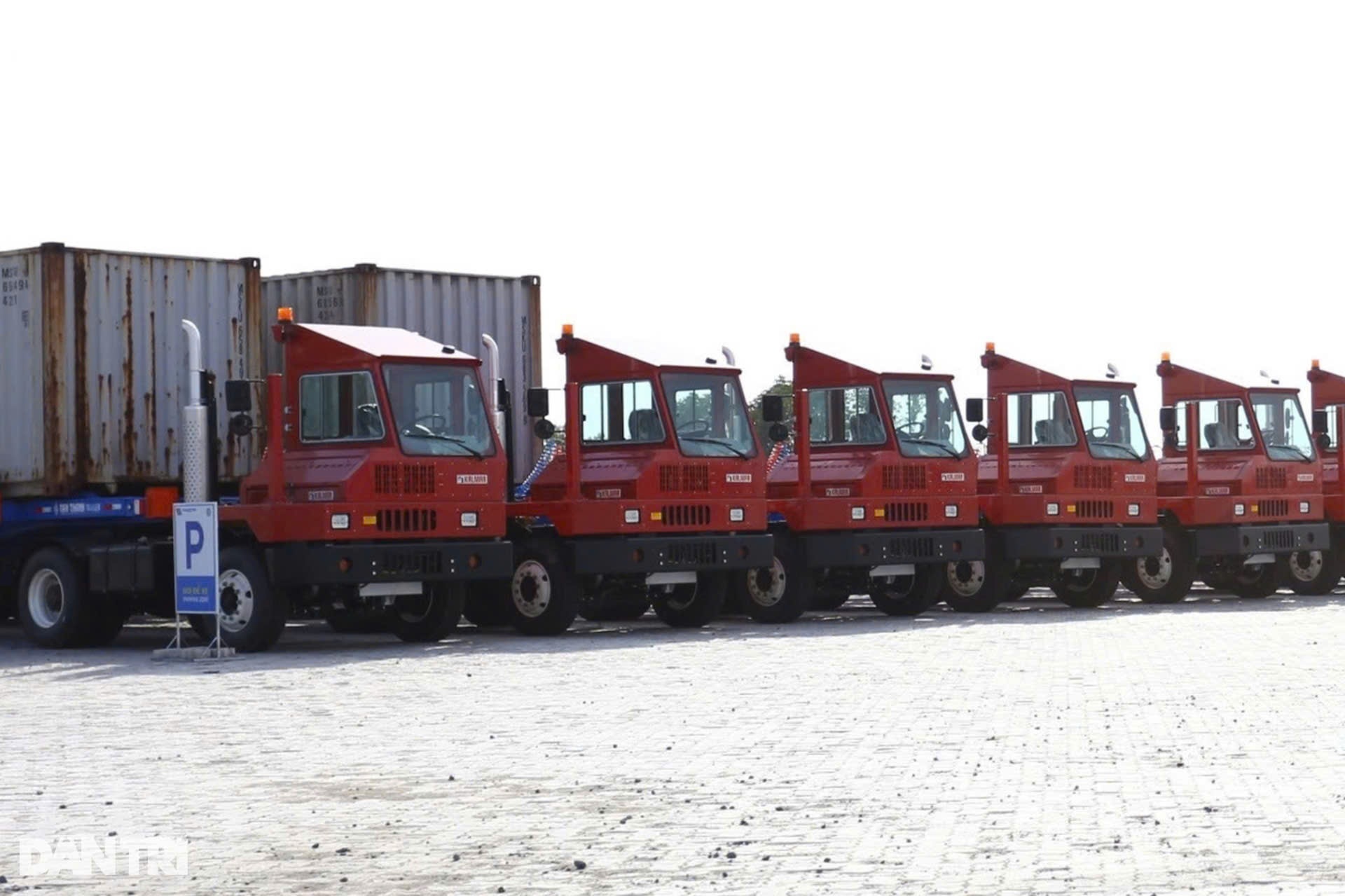
Cars parked at the seaport (Photo: Phuoc Tuan).
According to Associate Professor Dr. Nguyen Huu Huan, the current 46% tariff may not be the final figure. It is highly likely that the Trump administration will adjust it down to a lower level, but still around 20%, instead of bringing it to 0% as previously planned.
Mr. Nguyen Quang Huy, CEO of the Finance and Banking Faculty at Nguyen Trai University, commented that the US imposition of a 46% tariff on Vietnamese goods poses numerous challenges, especially for key export sectors such as textiles, footwear, wood products, and electronic components.
According to him, the tax increase makes Vietnamese goods less competitive in the US market, leading to the risk of declining orders and profits for businesses. In particular, export sectors such as textiles, footwear, furniture, and electronics are likely to be most severely affected...
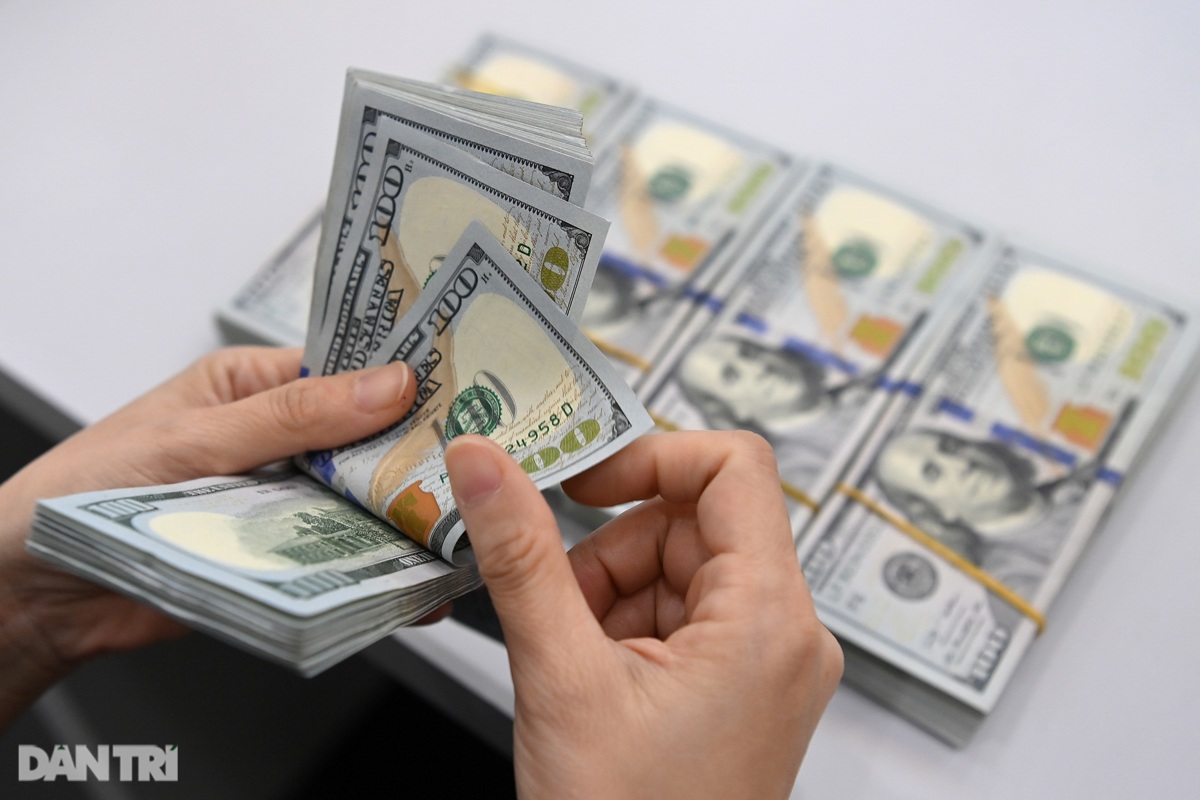
The inflow of US dollars into Vietnam may decrease, putting pressure on the exchange rate (Photo: Tien Tuan).
Mr. Pham Luu Hung, Chief Economist and Director of SSI Research, and Head of Training and Development at SSI, stated that detailed information regarding the timing of the application of the 10% basic tariff and retaliatory tariffs is still unclear, but further updates are expected in the next one to two weeks. The list of items subject to the tariff has also not been specifically announced, but this tariff will only apply to products deemed to "threaten" the economic security of the United States.
Although the market was not surprised by the list of countries subject to tariffs, as the US had already released its trade assessment report, the high tariffs applied to Vietnam, according to Mr. Hung, still came as a surprise.
Mr. Hung believes the impact on the economy could be significant. Initial estimates suggest that this tax could reduce GDP growth, potentially even pushing it below 7%. A greater concern is the ripple effect, as the new tax policy could lead to a global economic recession.
However, a positive aspect is that the majority of revenue for listed companies on the Vietnamese stock market still comes from domestic sources, accounting for approximately 80%, while revenue from overseas sources only accounts for about 20%. If the government continues to promote domestic demand stimulation policies, public investment, and boost domestic growth, the impact on the stock market may be limited to around 20% of the revenue of listed companies.
Mr. Hung believes that the 46% tariff could be the ceiling, creating room for negotiation for Vietnam to negotiate with the US to reduce tariffs. In fact, Vietnam has taken many positive steps to adjust bilateral trade relations, such as reducing tariffs on 14 items, amending intellectual property protection policies, and opening up more to US agricultural products...
He expects that despite the negative impact in the short term, the situation will gradually stabilize in the long term as negotiations progress and tariffs can be reduced to 10%.
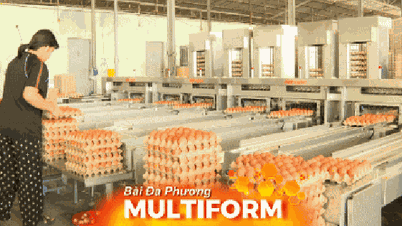
Regarding the impact on industries, Mr. Hung assessed that businesses with strong exports to the US will be most severely affected, especially the seafood industry - where the high tariffs almost become a form of anti-dumping duties.
Conversely, businesses whose revenue comes primarily from the domestic market will be less affected. In this context, if the government continues to boost demand and public investment, the driving force for economic growth this year could come from within the country.
Opportunities for Vietnam to expand its market.
Mr. Nguyen Quang Huy believes that although the US is an important market, Vietnam can still leverage free trade agreements (EVFTA, CPTPP, RCEP) to boost exports to the EU, China, India, the Middle East, and Africa. This is an opportunity for Vietnam to expand its market, reduce its dependence on the US, and diversify its customer base.
"More importantly, businesses need to change their strategies, not just focusing on outsourcing, but also upgrading the value chain, investing in branding and high technology to increase competitiveness," this person stated.
One concern raised is that FDI flows could be disrupted if foreign businesses become apprehensive about rising production costs in Vietnam.
However, according to Mr. Huy, the shift in FDI will not be too significant, because Vietnam still has advantages in terms of low labor costs, favorable geographical location, and an attractive investment environment.
Even large corporations like Apple, Samsung, LG, and Intel could choose to optimize their supply chains instead of leaving Vietnam. FDI businesses would restructure production, optimize costs, and expand into markets outside the US. More importantly, if they leave Vietnam, they cannot return to China because the tariffs there are even higher.
However, according to him, challenges always present opportunities, and this is the time for Vietnamese businesses to restructure and enhance their competitiveness.
Despite the current challenging context, some sectors still have opportunities for breakthroughs during this period. The technology sector, especially artificial intelligence (AI) and semiconductor chip manufacturing, has strong growth potential if Vietnam focuses on investing in research and development (R&D). Expanding exports to new markets will also lead to increased transportation demand, creating favorable conditions for logistics and port businesses to benefit from the restructuring of trade.
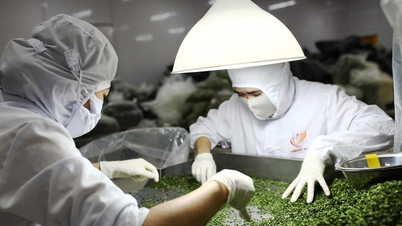
Furthermore, the processed agricultural and seafood industries can increase product value by shifting from exporting raw materials to deep processing, thereby expanding markets beyond the US. Industrial real estate is also expected to continue developing in the long term, as Vietnam remains an attractive destination for global supply chains, even though foreign direct investment (FDI) may slow down in the short term.
Furthermore, the finance and banking sector also has many opportunities as Vietnam promotes the development of a regional financial center. If it effectively utilizes investment capital and international financial activities, this sector can become a crucial driver for more sustainable economic growth in the future.
According to Mr. Huy, Vietnam not only needs to solve immediate problems but also must seize the opportunity to enhance its competitiveness. This is the time for Vietnamese businesses to break through and rise on the global trade map, instead of merely playing the role of a "processing factory" for international corporations.
By leveraging trade agreements, enhancing product value, and proactively expanding markets, Vietnam can absolutely transform challenges into opportunities for more sustainable development in the future.
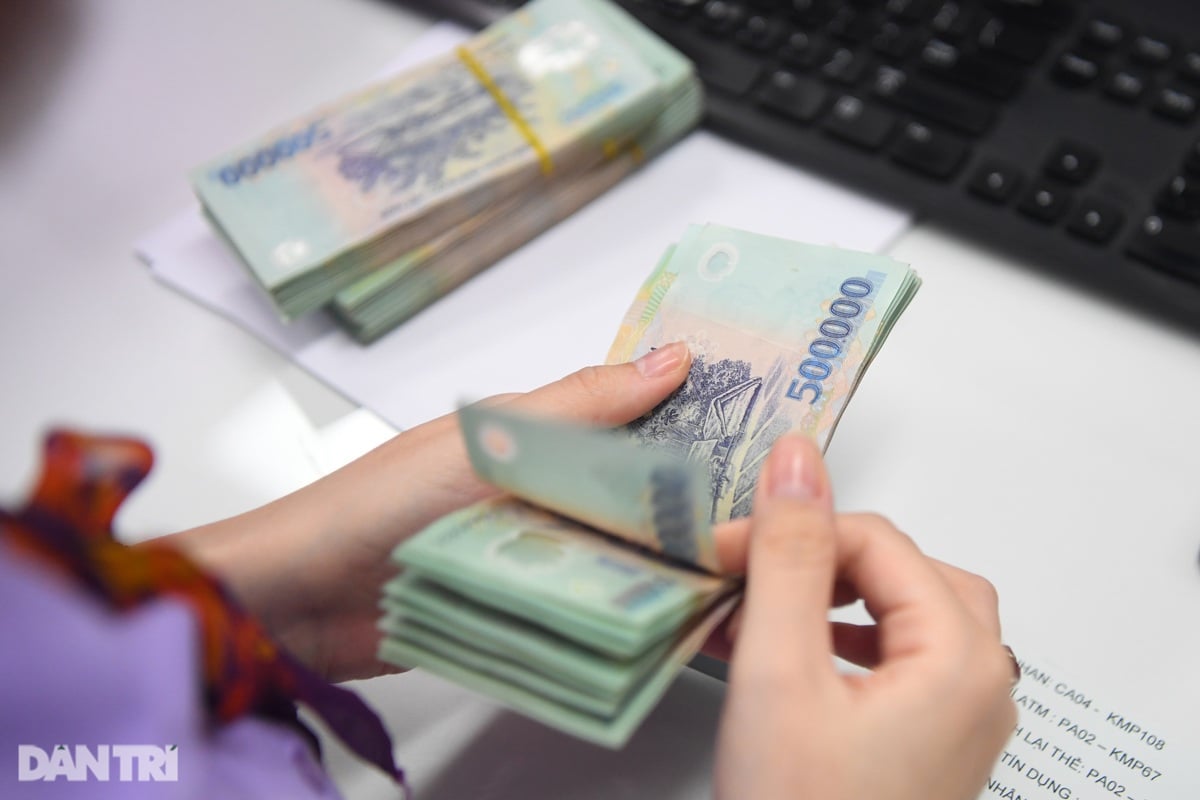
Vietnam can absolutely turn challenges into opportunities for more sustainable development in the future (Photo: Manh Quan).
Mr. Chau Dinh Linh believes that the negotiation process should be actively pursued. He suggests that adjustments may be made during the upcoming negotiations, including reconsidering export taxes to the US. "When the trade deficit is reduced, the tax rate will be more favorable. The important thing is to re-establish a trade balance between the two countries," he stated.
Next, it's necessary to diversify export markets. In fact, the US imposes tariffs on many countries, not just Vietnam. This presents an opportunity to see that the markets of other countries are equally attractive for diversifying export markets.
"This is the time to gain a deeper understanding of domestic economic strength, shift the focus to the private sector, increase research and development (R&D) centers, enhance the technological content, intellectual capital, and technical expertise in products… and encourage people to consume domestic goods," Mr. Chau Dinh Linh emphasized.
"We need more detailed and specific policies to encourage the development of the private sector. In the upcoming challenging economic context, fiscal and monetary policies must be flexibly combined to achieve balance and harmony in order to reach the ultimate goal of 8% GDP growth this year," the expert said.
Source: https://dantri.com.vn/kinh-doanh/chinh-sach-thue-quan-moi-di-tim-co-hoi-trong-thach-thuc-20250403124247344.htm




![[Photo] General Secretary and President To Lam presides over a meeting on preparations for the review of one year of operation of the three-tiered government system.](https://vphoto.vietnam.vn/thumb/1200x675/vietnam/resource/IMAGE/2026/06/02/1780391821195_a1-bnd-4595-9717-jpg.webp)









































































Comment (0)