

This morning (November 27th), at the 6th session of the 15th National Assembly , the amended Housing Law was officially passed and will take effect from January 1st, 2025. Notably, the amended law does not stipulate a duration of ownership, only a duration of use for apartment buildings, based on the provisions of the current Housing Law.
Regulations on the lifespan of apartment buildings
Regarding regulations on the lifespan of apartment buildings (Article 58), the recently passed Housing Law stipulates that the lifespan of an apartment building is determined according to the design documents and the actual usage time of the apartment building as concluded by the competent authority's inspection. The lifespan of the apartment building as stated in the design documents must be clearly indicated in the appraisal document of the competent authority in accordance with the law on construction.
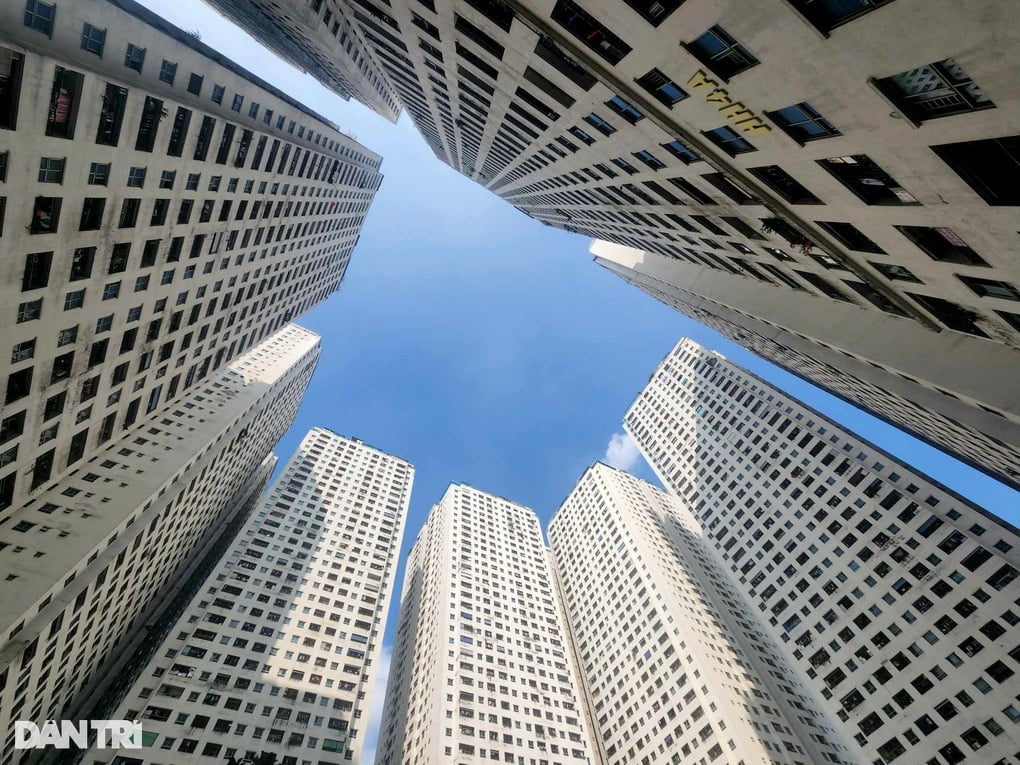
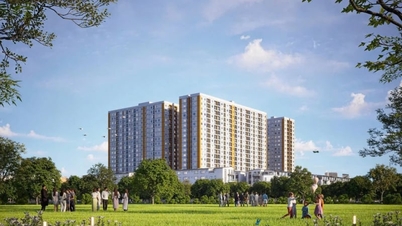
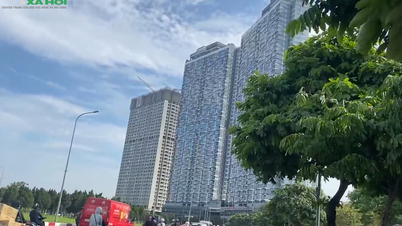
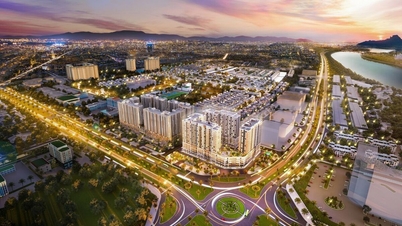
The amended Housing Law does not specify a duration of ownership, only a duration of use for apartment buildings (Illustrative image: Tran Khang).
The lifespan of an apartment building is calculated from the date of acceptance and commissioning, as stipulated by construction laws.
When an apartment building's service life expires according to the design documents as stipulated in Clause 1 of this Article, or when it has not yet expired but is damaged, at risk of collapse, and does not ensure safety for the owners and users of the apartment building, the provincial People's Committee must direct the inspection and assessment of the quality of the apartment building in accordance with Article 61 of this Law.
The announcement of apartment buildings reaching the end of their service life is carried out in accordance with the provisions of this Law and the laws on construction.
This applies to apartment buildings that are subject to demolition.
According to Article 59 of the amended Housing Law, apartment buildings subject to demolition as stipulated in Clause 2 of this Article include:
The apartment building has reached the end of its service life as stipulated in Article 58 of this Law and falls under the category requiring demolition;
Apartment buildings that have not yet reached the end of their service life as stipulated in Article 58 of this Law but fall under the category requiring demolition.
In addition, cases for demolishing apartment buildings include: Apartment buildings damaged by fire or explosion that no longer meet safety standards for continued use;
Apartment buildings damaged by natural disasters or wartime events no longer meet safety standards for continued use;
Apartment buildings with main load-bearing structures exhibiting overall structural danger, at risk of collapse, and no longer meeting the conditions for continued use, require the urgent relocation of owners and occupants.
Apartment buildings that are severely damaged, exhibiting localized structural hazards, and possessing one or more of the following elements—such as: fire prevention and fighting infrastructure; water supply, drainage, and wastewater treatment; electricity supply; and internal transportation systems—do not meet current technical regulations and standards, or pose a safety risk during operation, exploitation, and use, must be demolished to ensure the safety of apartment owners and users, and to meet urban renovation and beautification requirements;
Apartment buildings with damage to one of the following main structural elements: foundation, columns, walls, beams, or rafters, failing to meet normal usage requirements, and not yet falling under the cases requiring demolition as stipulated in points c and d of this clause, but located in an area where renovation and construction must be carried out concurrently with apartment buildings subject to demolition as stipulated in this clause, according to the approved construction plan.
Source










































![[Video] Sunset at Lap An Lagoon – Where the sun sets over the fishing nets](https://vphoto.vietnam.vn/thumb/1200x675/vietnam/resource/IMAGE/2026/05/31/1780192137701_beach-landscape-sea-water-nature-grass-745871-pxhere-com.jpeg)































Comment (0)