

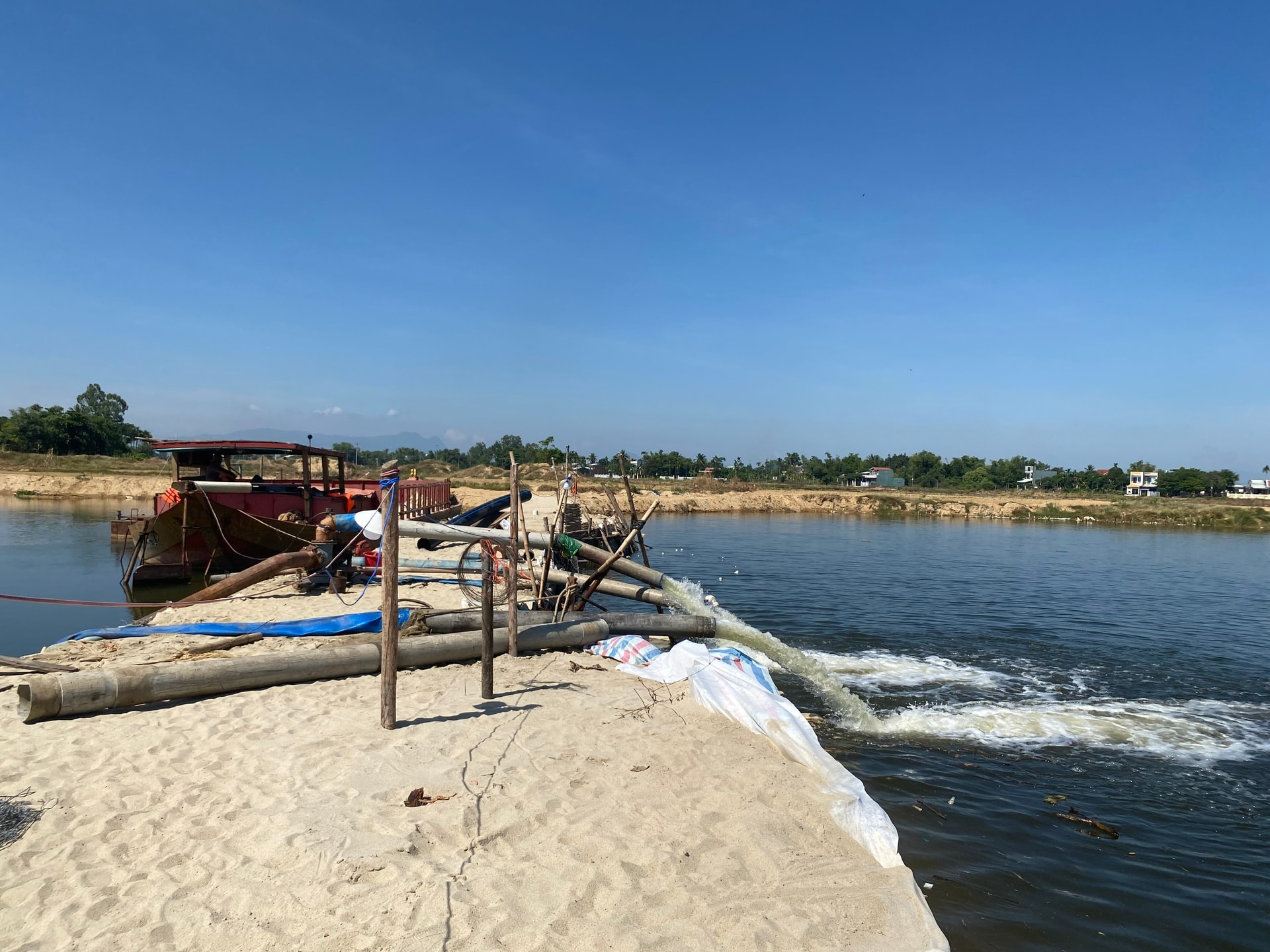
Given the complex and unpredictable weather patterns, localities and the agricultural and environmental sectors are urgently implementing various solutions to ensure timely water supply for agricultural production.
Urgent measures to prevent saltwater intrusion.
For nearly a week now, Dien Ban Dong ward has deployed three high-capacity pumps operating continuously 24/7 at the Tu Cau saltwater barrier dam to pump saltwater from the Vinh Dien river out, aiming to reduce the salt content to the lowest possible level.
Mr. Nguyen Van Minh, Head of the Economic , Infrastructure and Urban Planning Department of Dien Ban Dong Ward, said that according to regulations, the salt content must be below 0.8/1,000 for planting. However, the salinity of the Vinh Dien River has reached 1.1/1,000, penetrating more than 2km inland and affecting a large agricultural area of the ward. "We have to pump out some of the saline water so that water from upstream can neutralize it and reduce the salt content before we can use it for irrigation," Mr. Minh said.
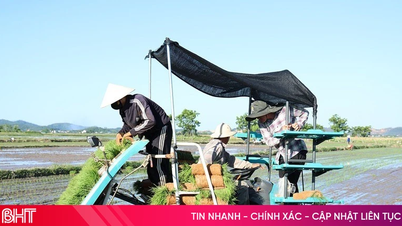
Dien Ban Dong ward has 770 hectares of rice land. According to the plan, planting should be completed by June 5, 2026, but due to salinity and drought, this deadline is difficult to achieve. To ensure timely planting, in addition to encouraging staggered sowing and prioritizing areas with sufficient water, the local authorities require farmers to use short-day varieties (under 95 days) that are salt-tolerant. Even so, it is estimated that only about 50% of the ward's planted area has been achieved, with some fields left fallow due to water shortages.
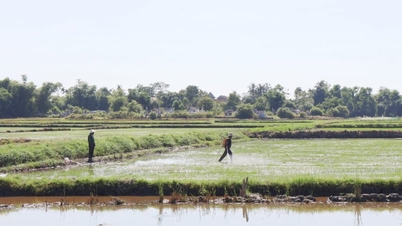
This situation is occurring in many places. In Hoa Tien commune, sowing is basically complete, but the worry of water shortage remains constant due to the prolonged heatwave. This season, Hoa Tien commune sowed over 825 hectares of rice, but more than 470 hectares in the former Hoa Tien commune area are affected by salinity from the Mieu Bong River.

According to Mr. Le Dinh Ca, Vice Chairman of the Hoa Tien Commune People's Committee, the locality has intensified dredging and clearing of waterways, reinforced canals, and especially operated the An Trach pumping station at full capacity when salinity decreased to ensure water for good rice growth in the early stages.
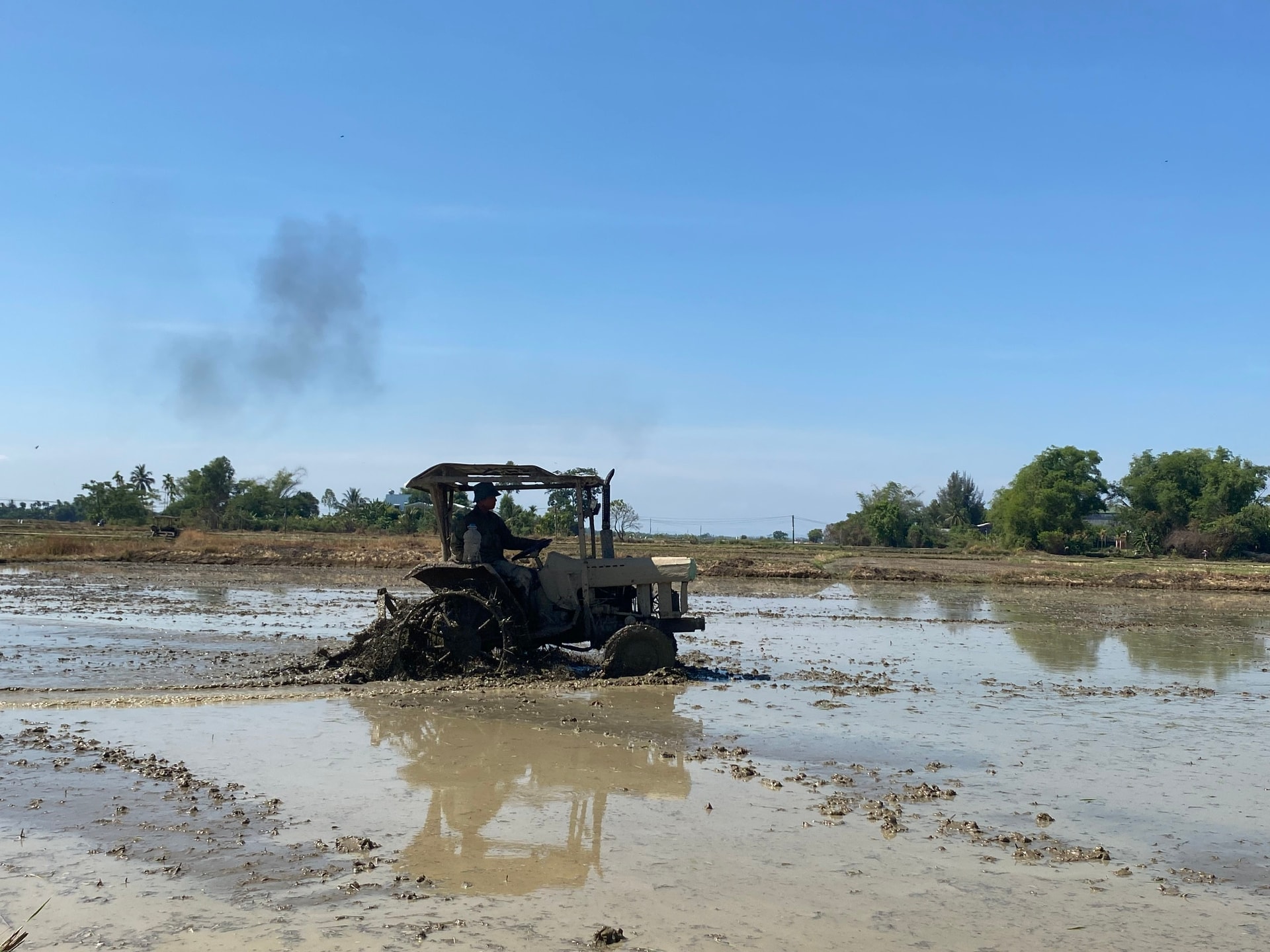
Adapting to climate change
The entire city will sow approximately 2,000 hectares of summer-autumn rice in 2026, mostly medium and short-day varieties. Localities with large rice-growing areas such as An Thang, Duy Xuyen, Thang Binh, Dai Loc… are all implementing drought response measures.
In Duy Xuyen commune, despite possessing 3 reservoirs, 13 diversion dams, 13 pumping stations, and over 158km of canals, the hot weather, low rainfall, and falling water levels pose a potential risk of water shortage, especially in the downstream areas of Vinh Trinh and Phu Loc reservoirs. Mr. Nguyen Chi Cong, Vice Chairman of the Duy Xuyen Commune People's Committee, reported that this season, the total sown area in the commune reaches 900 hectares, requiring a very large amount of water. Besides Vinh Trinh reservoir irrigating 180 hectares and Phu Loc reservoir irrigating 160 hectares, the remaining water supply depends on the temporary dams and pumping stations along the river.
To ensure water supply, the locality established a Steering Committee for drought prevention and control to monitor and promptly implement measures. At the same time, it directed cooperatives and irrigation units to balance water resources for scientific and economical irrigation; allocate land and crop varieties suitable for each region; reduce rice cultivation in water-scarce areas and switch to other crops; and advise farmers to cultivate medium and short-day varieties to shorten the growing season.
Similarly, in the communes of Thang Binh, Dai Loc, and An Thang ward, irrigation work in the fields was implemented early with the participation of the government, cooperatives, and people. The canals that had been silted up were cleared and repaired to bring water to the fields. According to Mr. Tran Canh Nhat Tan, Head of the Economic, Infrastructure and Urban Planning Department of An Thang ward, although planting has not yet begun, the water supply for 958 hectares of rice in the area is basically stable.

Mr. Truong Xuan Ty, Deputy Director of the Da Nang City Department of Agriculture and Environment, informed that the department has directed units to monitor reservoir water levels and regulate them appropriately. Initially, they will monitor hydropower plant operations to ensure water supply, calculate water levels in irrigation reservoirs for water-saving irrigation, and require irrigation service providers to work with local authorities to receive water appropriately, avoiding excessive water distribution. The department also advises people to use medium and short-day rice varieties and encourages them to switch to dryland crops in water-scarce areas.
“Da Nang city currently has 93 large reservoirs, and so far, the water supply for irrigation is basically ensured. However, the situation may change in the near future, especially during the peak season around July. Therefore, water resource management is being closely monitored by the agriculture and environment sector, focusing on early and proactive drought prevention solutions to ensure sufficient water for agricultural production and daily life, minimizing damage caused by extreme weather,” Mr. Ty said.
Source: https://baodanang.vn/chu-dong-nguon-nuoc-vu-lua-he-thu-3339369.html














































![[Video] Sunset at Lap An Lagoon – Where the sun sets over the fishing nets](https://vphoto.vietnam.vn/thumb/1200x675/vietnam/resource/IMAGE/2026/05/31/1780192137701_beach-landscape-sea-water-nature-grass-745871-pxhere-com.jpeg)




























Comment (0)