

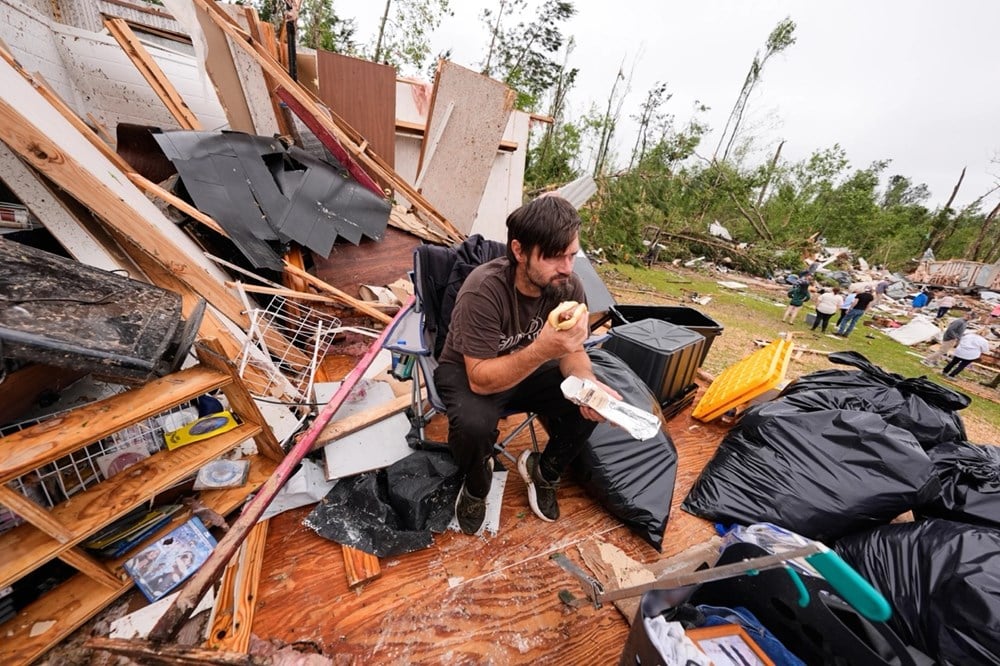
Increased anxiety due to extreme weather.
According to mental health professionals who have supported people who have experienced disasters, there are many ways to reduce this psychological stress. And one of the most important is to have a response plan ready.
Ruben Juarez, a health economist at the University of Hawaii and lead researcher on the health and social impacts of the deadly 2023 Maui wildfires, emphasized that preparation is always one of the most effective tools I can think of, not only for safety but also for mental health.
Experts also recommend that after a disaster, people should try to restore a sense of normalcy to their lives by seeking support from others, returning to daily routines, and helping the surrounding community.
Meanwhile, Kevin Westmoreland, co-owner of The Corner Kitchen restaurant in Asheville, also said he has learned meditation techniques and breathing exercises to cope with the pressures commonly faced in the restaurant industry.
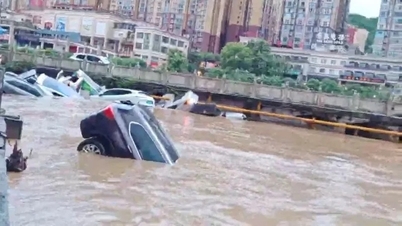
When the aftermath of Hurricane Helene brought torrential rains to North Carolina two years ago, floodwaters and mud inundated the restaurant, tossing everything inside the building around like it was in a blender.
"The only way to overcome it is to keep moving forward one step at a time," he said, recalling what he had experienced at that time.
Prepare thoroughly.

One way to reduce anxiety is to prepare as thoroughly as possible in advance, including developing a disaster response plan.
According to Melissa Brymer, a psychologist and director of terrorism and disaster programs at the UCLA–Duke National Center for Childhood Trauma, evacuation planning and having emergency kits ready can give people a sense of initiative and control.
She recommended that families develop step-by-step plans to respond to disasters. She also noted the need for separate preparedness plans for people with disabilities, those with special needs, new mothers, and pregnant women.
In addition, pets should also be included in disaster response plans to ensure the safety of all family members when an emergency occurs.
Staying well-informed can also help people feel more proactive when facing extreme weather. Experts recommend focusing on factual information by monitoring reliable sources and regularly checking for the latest weather warnings and advisories.
People should share their fears and anxieties with friends, family, mental health professionals, or other people who can provide emotional support.
In addition, parents should talk to their children calmly and realistically, explaining that storms are a normal natural phenomenon. While many children may be frightened by storms, many others are curious and want to learn more about them.
Melissa Brymer believes that acknowledging this is a stressful period is perfectly appropriate. However, adults should refrain from discussing certain distressing issues in front of children to avoid causing them excessive anxiety.
"Children can often sense adults' panic, and they will also become frightened if they see us starting to lose our composure," she added.
Source: https://baovanhoa.vn/doi-song/thoi-tiet-cuc-doan-lam-gia-tang-lo-au-233753.html



![[Photo] General Secretary and President To Lam presides over a meeting with the Central Organizing Committee.](https://vphoto.vietnam.vn/thumb/1200x675/vietnam/resource/IMAGE/2026/06/03/1780482764658_a1-bnd-4741-3342-jpg.webp)
![[Photo] Secretary of the National Assembly Party Committee, Chairman of the National Assembly presides over the meeting of the Standing Committee and Executive Committee of the National Assembly Party Committee.](https://vphoto.vietnam.vn/thumb/1200x675/vietnam/resource/IMAGE/2026/06/03/1780480353201_ndo_br_bnd-2585-jpg.webp)



















![[Photo] General Secretary and President To Lam attends the 14th Congress of the Vietnam Trade Union](https://vphoto.vietnam.vn/thumb/1200x675/vietnam/resource/IMAGE/2026/06/04/1780543339765_anh-man-hinh-2026-06-04-luc-10-22-07.png)





















![[Video] Sunset at Lap An Lagoon – Where the sun sets over the fishing nets](https://vphoto.vietnam.vn/thumb/1200x675/vietnam/resource/IMAGE/2026/05/31/1780192137701_beach-landscape-sea-water-nature-grass-745871-pxhere-com.jpeg)




![[Photo] General Secretary and President To Lam attends the 14th Congress of the Vietnam Trade Union](https://vphoto.vietnam.vn/thumb/402x226/vietnam/resource/IMAGE/2026/06/04/1780543339765_anh-man-hinh-2026-06-04-luc-10-22-07.png)


























Comment (0)