

With the reduction of nearly 50% of provincial-level administrative units and 60-70% of commune-level administrative units, the names of these reorganized units are a matter of great concern. This is because names are not simply geographical names of administrative units, but also have many implications for the lives of the people.
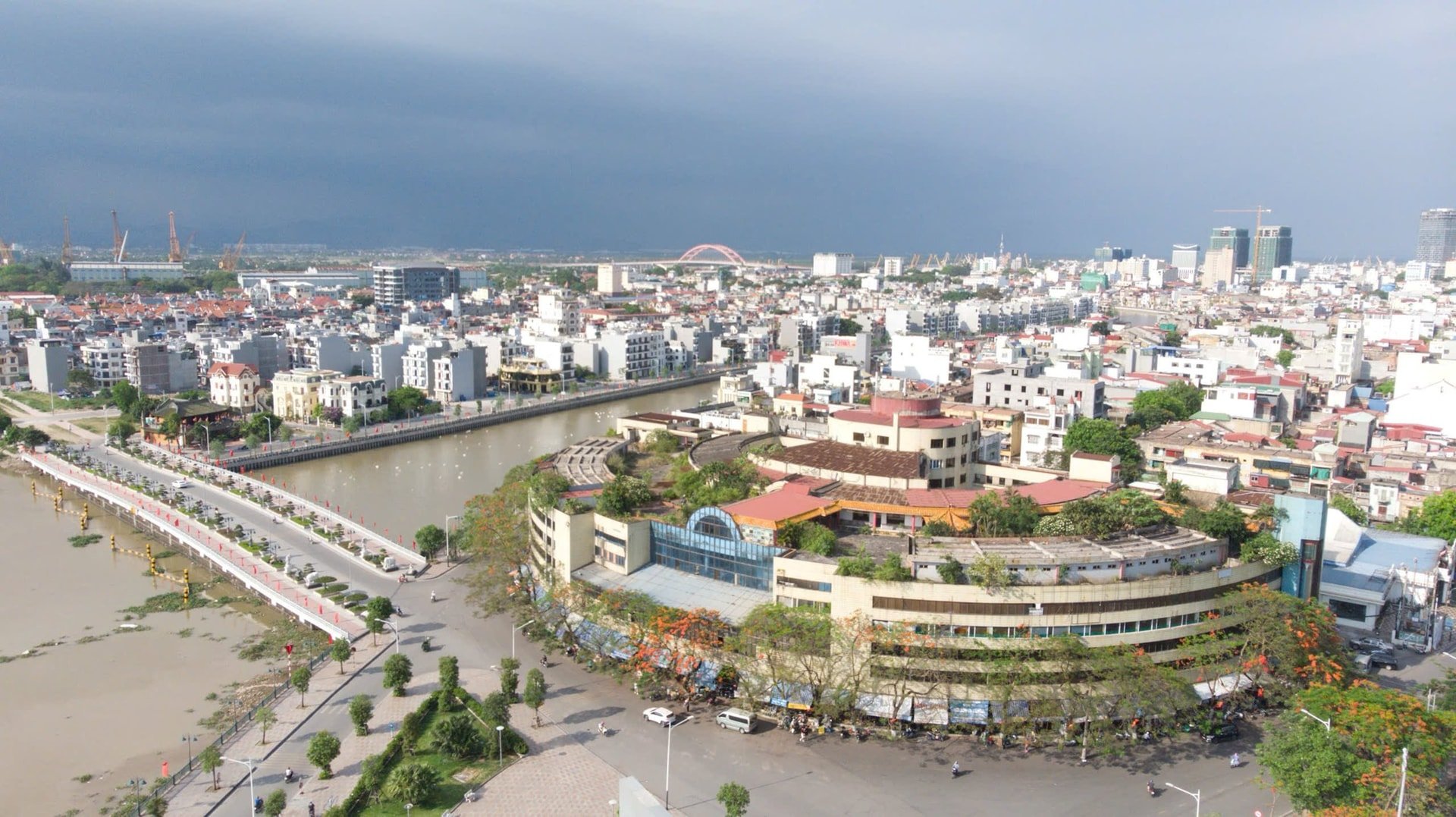
Emphasis on historical and cultural elements.
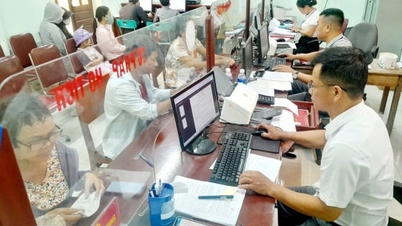
The name of a province or a commune is not simply an administrative unit, but also relates to many issues concerning the people, such as birth certificates, citizen identification cards, health insurance, seals, signs, and related administrative procedures.
It is for this reason that, when the Standing Committee of the Government Party Committee gave its opinion on the Project for reorganizing administrative units at all levels and building a two-tiered local government model, Prime Minister Pham Minh Chinh noted: “The naming of provincial-level administrative units must have a sense of continuity. The selection of the administrative- political center must consider historical and geographical factors, infrastructure connectivity, development space, national defense, security, and integration.”
Associate Professor Dr. Dang Van Bai - Vice Chairman of the National Cultural Heritage Council, believes that regarding the names of communes after mergers, efforts should be made to preserve ancient names. Ancient place names are linked to shared memories. The world has a "toponymy" system that focuses on ancient place names because they evoke many historical memories. "Therefore, the more ancient place names we preserve, the better. Besides that, we need to choose names that are easy to remember and convenient for communication and media. As for the names of provinces and cities after reorganization, those in major, representative cultural regions should be preserved to remain associated with those regions, so they don't get lost," said Dr. Bai.
Professor Vu Van Hien, former Director General of the Voice of Vietnam Radio and former Vice Chairman of the Central Theoretical Council, presented four viewpoints. According to him, it is possible to combine the names of two provinces into a single name, but this must be based on compatibility between the two sides. Secondly, attention should be paid to the historical elements of the two provinces and whether they share any commonalities or connections. If the combined name is not appealing, then the historical elements of 2-3 provinces could be combined into a new name that is "equally appealing" to all parties. This means creating consensus among the provinces due to cultural factors. Thirdly, a completely new name could be used. Fourthly, the name of a place with greater potential and more development than the other provinces could be chosen. For example, merging Bac Ninh and Bac Giang provinces would retain the name Bac Ninh. This means using a place name that has a guiding influence.
From a historian's perspective, Professor Dr. Do Quang Hung, Chairman of the Advisory Council on Religion of the Central Committee of the Vietnam Fatherland Front, believes that the top priority for the name of the new administrative unit after the merger should be a name that evokes tradition without eliminating existing units. "Preserving traditional names is the best and highest form of language, evoking inherent traditions," said Professor Hung, noting that priority should be given to traditional names that reflect national sentiment and the homeland.
According to Mr. Hung, the second priority is to retain one of the two names to represent the two provinces jointly. The third priority is to combine them into a new name. Because if the two provinces are not satisfied, a new name can be created – a "neutral approach" to merge the two provinces into one name, but the new combined name must be linguistically sound.
According to Mr. Bui Hoai Son, a National Assembly representative from Hanoi, choosing a new name when merging provinces is not simply an administrative decision, but also a matter of history, culture, and identity. The name of a locality is not just a designation, but is also linked to the memories, pride, and attachment of its people across generations. Therefore, whether to retain the old name or choose a new one needs careful consideration, based on community consensus and in line with development trends.
Mr. Son stated that if a name has been around for a long time, carries deep historical value, and is beloved by the people, then continued use is a reasonable choice to ensure continuity. However, if the merger opens a new phase of development, finding a name that more fully reflects the geographical characteristics, culture, and potential of the region is also worth considering. When choosing a new name, important factors must be considered to ensure both continuity and suitability for the new development phase. The name of the locality should reflect its rich tradition, important events, or distinctive values that have shaped the identity of that region. If there is a change in name, a name with a broader meaning, representing the overall spirit of the entire area, should be found, rather than just reflecting a part of the previous locality.
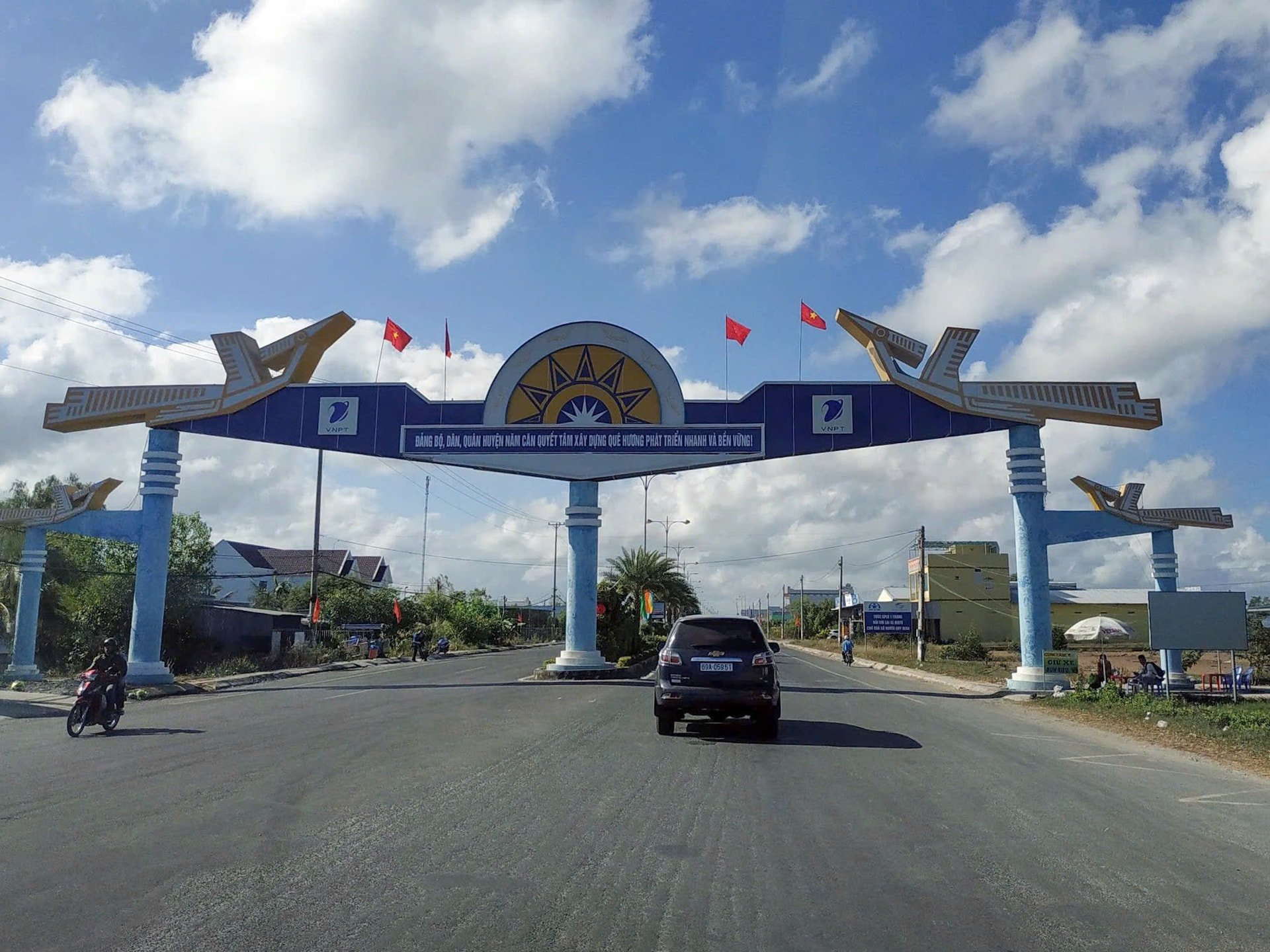
Choose a name to avoid having to redo paperwork, which is costly and wasteful.
Dr. Nguyen Quan, former Minister of Science and Technology, said that there should be principles in naming provinces after mergers. Accordingly, one principle is to preserve tradition and minimize costs for society. “Changing names, seals, signs, and other administrative procedures is a major concern. Therefore, it's better to keep one name because many names are very traditional,” Dr. Quan said, giving an example: “If three provinces merge into one, the name of one province should be used so that at least one province doesn't have to redo seals and documents for its citizens. Therefore, the option of keeping one province should be chosen. Using a new name would mean redoing documents for all three provinces, which would be a tremendous waste of administrative resources.”
Regarding the post-merger naming convention, Mr. Quan also stated that it is necessary to focus on and think for the common good. As General Secretary To Lam said, we are not afraid of losing our names, but most afraid of the country being poor and backward. That is true because in a merger, it is impossible to retain all the names. In the past, we changed names many times, but they still worked well, like Ha Nam Ninh and Binh Tri Thien.
Associate Professor Dr. Dang Van Bai also suggested that when naming new provinces, it is necessary to avoid too many changes that would lead to the need to redo numerous documents and procedures, causing social waste and expense.
“For example, if Dong Thap merges with An Giang, the name Dong Thap should be retained. This way, only the documents for An Giang need to be redone, instead of creating a new name that would require redoing documents for both provinces. Similarly, when Hoang Lien Son was divided into two provinces (Yen Bai and Lao Cai), the documents for both provinces had to be changed. Or, if Tuyen Quang and Ha Giang merged to form Ha Tuyen, the documents for both provinces would have to be redone. But if the province is named Tuyen Quang, then only the documents for one province need to be redone. We prioritize Tuyen Quang because of its historical significance; it's home to Tan Trao and the ATK war zone,” Mr. Bai analyzed, suggesting that retaining the name of a province would facilitate transactions. Alternatively, for provinces with larger populations, the name could be retained and used to reflect the larger province's population, thus reducing the need for redoing related documents.
Professor Do Quang Hung also analyzed that if the chosen name is for a place with many historical relics, it must be a "truly special case." Because homeland and birthplace must be treated equally. "If you have sacredness, I also have sacredness," except in extremely special cases. For example, if Hanoi merges with a certain province X and completely disappears from Hanoi or Thang Long, that would be very inappropriate because Hanoi is the capital, a major place of the whole country. Therefore, truly special cases should be prioritized.
The opinions of the people and scientists should be sought.
Recently, at its 9th extraordinary session, the National Assembly passed the Law on Organization of Local Government in 2025. This law stipulates that the National Assembly decides on the establishment, dissolution, merger, division of administrative units, adjustment of boundaries, and renaming of provincial-level administrative units. The Standing Committee of the National Assembly decides on the establishment, dissolution, merger, division of administrative units, adjustment of boundaries, and renaming of district and commune-level administrative units.
The law also stipulates that: The dossier for the establishment, dissolution, merger, division of administrative units, adjustment of boundaries, and renaming of administrative units must include a summary report of public opinions, opinions of People's Councils at all levels, and relevant agencies and organizations. The proposal for the establishment, dissolution, merger, division of administrative units, adjustment of boundaries, and renaming of administrative units must be subject to public consultation in the commune-level administrative units directly affected. The provincial People's Committee is responsible for organizing the collection of public opinions on the policy of establishing, dissolving, merging, dividing administrative units, adjusting boundaries, and renaming administrative units through appropriate methods as prescribed by the Government.
Professor Vu Van Hien also believes that the naming process should involve public consultation. Sharing this view, Associate Professor Le Van Cuong, former Director of the Institute for Strategic Studies, Ministry of Public Security, stated that before making a decision, public and scientific opinions should be sought, especially from people in the areas affected by the merger of communes and provinces, to present their options and express their wishes. Based on this, the state agency has the right to make a decision. It is also necessary to explain to the people why a particular name is chosen and not another. Currently, we still have time because the National Assembly is deciding on the merger and naming of the province. “But before the National Assembly makes a decision, it should be widely publicized to the people, and public opinion should be sought. In addition, the 2-3 provinces being merged could invite scholars and scientists to provide their opinions. After that, the National Assembly's decision would be more reasonable,” said Professor Cuong, suggesting that this process should be carried out quickly.
“Regardless of the chosen direction, the most important thing is to have broad consultation, listening to the opinions of the people, historians, cultural researchers, and administrators to ensure that the new name is not only administratively reasonable but also creates consensus, pride, and a sense of belonging for the people in the region,” said National Assembly Deputy Bui Hoai Son (Hanoi City Delegation), emphasizing that the name of a new locality also needs a long-term vision, consistent with future development orientations. A name should not only evoke the past but also reflect aspirations for progress, connection with modern trends, and integration.
Dr. Nguyen Thi Suu - Member of the National Assembly's Ethnic Council: Determining the priority level for name selection.
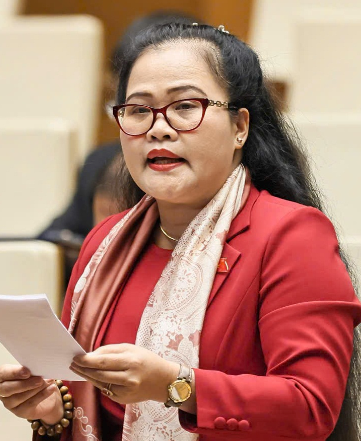
When merging 2-3 provinces into one, the name doesn't necessarily have to be an extension of the place names. Instead, the most representative name from the 2-3 locations should be chosen, representing the best aspects from a cultural, economic, diplomatic, and national security perspective. Because all these relationships are important, the level of priority can be determined based on the specific location.
Furthermore, a thorough analysis is needed regarding the advantages and disadvantages of merging 2-3 provinces and retaining the name of a single province, as well as the advantages and disadvantages of combining the names of two provinces. We must establish criteria, because the shorter and more concise the name of an administrative unit, the more advantageous it will be. Nowadays, names are not simply for individual use but also relate to the global context, integration, and diplomacy. Long names are difficult to remember. This is an issue that requires comprehensive, objective, and coordinated analysis and guidance from the Party.
Mr. Le Van Cuong - former Deputy Head of the National Assembly Delegation of Thanh Hoa province: Gathering opinions to ensure "the Party's will aligns with the people's will."
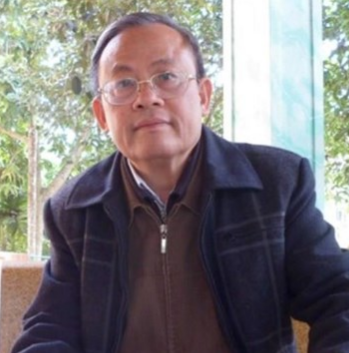
It is advisable to organize workshops and gather public opinion on the names of the merged provinces, allowing people to participate and contribute their ideas. Through multiple channels of information, we can understand the advantages and disadvantages, and identify any promising initiatives, so that the central government can make a decision. This will be more objective and better, avoiding biased thinking when one province retains its name while another loses it. Having many opinions from the public and scientists contributes to determining the best option. The final decision rests with the competent authority, but the people feel satisfied when they are involved in providing input. We "put the people first," "rely on the people," so now that the people have the opportunity to give their opinions, the decision-making power should align with the will of the people—that's the best approach.
Source: https://daidoanket.vn/ten-goi-sau-sap-nhap-tinh-xa-chu-trong-yeu-to-lich-su-the-hien-xu-the-hoi-nhap-10301835.html
![[Photo] Closing Ceremony of the 15th Conference of the Central Committee of the 13th Party Congress](/_next/image?url=https%3A%2F%2Fvphoto.vietnam.vn%2Fthumb%2F1200x675%2Fvietnam%2Fresource%2FIMAGE%2F2025%2F12%2F23%2F1766462841764_a1-bnd-3731-1647-jpg.webp&w=3840&q=75)

























































Comment (0)