

The issue of ensuring income and livelihoods for those whose land is expropriated continues to be a concern for many delegates, experts, and citizens in the 2023 amended Land Law.
Ensuring a livelihood: A humane approach.
Minister of Natural Resources and Environment Dang Quoc Khanh particularly emphasized this point during the group discussion on the Draft Land Law on June 9th.
According to the Minister, the amendment of the law must ensure efficient land management and use, and safeguard the interests of the people.
Regarding compensation, support, and resettlement, the head of the Ministry of Natural Resources and Environment emphasized that the principle of compensation, support, and resettlement "must ensure that those whose land is confiscated have housing, guaranteed income, and living conditions equal to or better than their previous residence" needs to be clarified.
“ The resettlement area must be equal to or better than the old residence, and the lives of the people after resettlement must be ensured to be equal to or better than before. In particular, the technical infrastructure, social infrastructure, production, and new livelihoods must be equal to or better than their previous lives ,” the Minister affirmed.
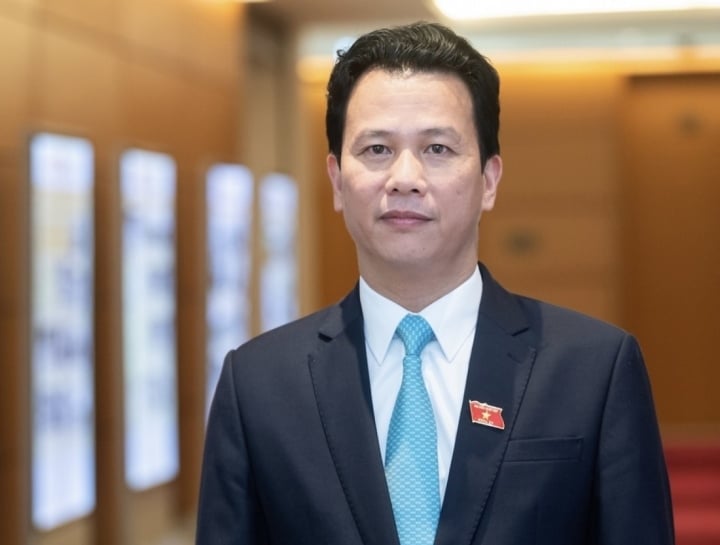
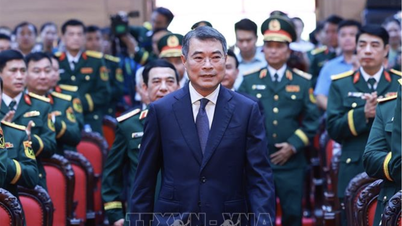
Minister of Natural Resources and Environment Dang Quoc Khanh
At the same time, in addition to issues of resettlement, transition, and vocational training, Minister Dang Quoc Khanh also emphasized how vulnerable groups such as the elderly, children, and disadvantaged people should be managed in terms of production and livelihoods. The law provides a framework, requirements, goals, and objectives; but local authorities must participate. In particular, attention must be paid to the customs, traditions, and cultural identity of each region.
Commenting on the previously drafted revised Land Law, delegate Nguyen Quang Huan ( Binh Duong delegation) assessed that this is a progressive and humane viewpoint in the spirit of Resolution 18 of the Central Committee, consistent with the interests and aspirations of the people.
Sharing the same view, Dr. Bui Ngoc Thanh - former Head of the National Assembly Office - also stated that, psychologically, the first concern of people whose agricultural land is confiscated is how to find stable, long-term employment to ensure their future livelihood. On the other hand, the Party and State of Vietnam have always advocated ensuring that people's lives are equal to or better than their previous living conditions after land confiscation. To achieve this, the most important thing is that people must have jobs and stable, regular income.
Mr. Thanh also stated that during the implementation of the 2013 Land Law, based on Clause 2, Article 74, which allows "if there is no land for compensation, compensation may be made in money...", some localities have considered the task completed simply by handing over the money to those whose land has been confiscated.
Many people receive compensation but cannot find new jobs; they are unemployed but still need to eat and spend money, and suddenly, their money runs out, leaving them in a situation where they need social assistance.
Therefore, according to him, the draft Land Law (amended) needs to add new issues regarding the reorganization of production and job creation to the Articles on land acquisition in Chapter VI, to serve as a basis for specific regulations in Chapter VII, on compensation and resettlement support when the State acquires land.
Commenting on the draft Law on Land (amended), Mr. Hoang Minh Hieu - Standing Member of the National Assembly's Law Committee - also stated that the current compensation and support for people whose land is confiscated mainly consists of a one-time lump sum payment, without aiming to create new livelihoods for them.
Over time, as these projects have become operational, the land and livelihoods of many households have continued to be negatively affected, such as flooding, and in some cases, the inability to continue living on the remaining land. This has caused disruption and resentment in the community, and in some cases, people living around certain hydropower plants have no access to electricity.
" I propose that the drafting committee add a mechanism for sharing benefits between investors and local people in projects that have a significant impact on the living environment. This aims to create conditions for the long-term recovery and development of livelihoods for those whose land has been expropriated ," Mr. Hieu emphasized.
According to Mr. Hieu, benefit sharing is not just about direct support and compensation for damages, but also includes many other tools, such as long-term sharing of revenue from projects, applying preferential electricity prices, or establishing community development funds. At the same time, the State and businesses must improve people's income and living environment through various measures, such as implementing projects in healthcare, education, supporting investments, and job creation.
Mr. Hieu said that many countries have implemented this policy effectively, such as South Korea, Norway, Brazil, and Thailand... When meeting with voters in western Nghe An, many also said that the benefit-sharing mechanism as described above would create a harmonious connection between businesses, people, and local authorities.
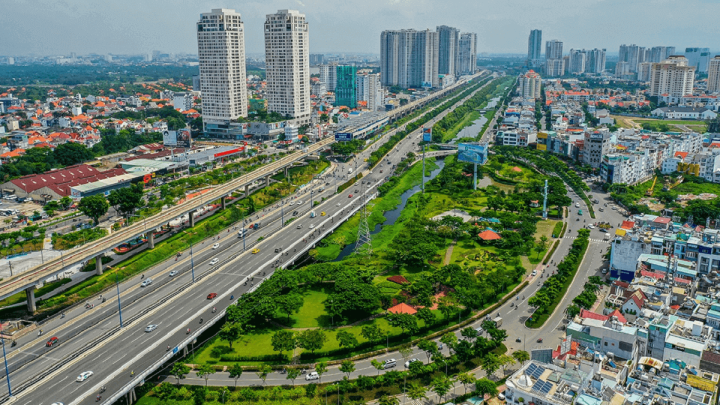
The amended Land Law needs to be more specific in creating livelihoods for people who have lost their land.
The law needs to be more specific.
Professor Dang Hung Vo, former Deputy Minister of Natural Resources and Environment, frankly stated that the issue of people's livelihoods needs to be more specifically regulated in the amended Land Law. Accordingly, ensuring people's income must clearly state "how."
" I believe that specific policies should be included in the Law or delegated to the Government to regulate, so that resettled people can create new livelihoods and occupations ," Mr. Vo emphasized.
According to Mr. Vo, new livelihood orientations could be achieved through policies that allocate land for non-agricultural production and business, or provide new land to enable people to generate income.
For land areas that are subject to expropriation and are located on main roads, on-site resettlement is mandatory. The new land area may be smaller than the old one, but the residents will benefit from the wider new road frontage.
Regarding agricultural and forestry land, the amended Land Law stipulates that compensation may be provided in the form of land of the same type, money, or land of a different type and assets attached to the land. The provision for compensation in the form of a different type of land is a new feature of the Law, but it should be explicitly stated instead of simply "may".
Furthermore, according to Mr. Vo, the amended Land Law should stipulate that vocational training for people who have lost their land must be aligned with the skills of the workers and the actual needs of the market. A current reality is that many vocational training centers only provide training in skills they know, rather than based on the skills of the people and the actual market demand.
" If people move to a new place with higher income, they will be willing to relocate ," Mr. Vo emphasized.
Mr. Vo also stated that many localities are now implementing measures to create livelihoods for people after relocation. He cited Da Nang as an example, where many families, after relocating from their old homes, have been allocated new kiosks by the government to conduct business in roadside areas or in newly established markets.
" Because of its strong social welfare system, Da Nang has been able to easily clear land and develop a modern, livable city ," Mr. Vo emphasized.
Commenting on the draft Land Law (amended), Mr. Nguyen Van Manh, former Director of the Institute of State and Law, Ho Chi Minh National Political Academy, also stated: “The draft contains many provisions that consider the interests of those whose land is confiscated. However, in my opinion, it is unclear who will be responsible for implementation. For example, for farmers whose land is confiscated, who will bear the cost of organizing vocational training classes? In my opinion, the project owner should bear that cost. Previously, such regulations existed, but in practice, implementation was often superficial or non-existent. People whose land is confiscated simply wander around aimlessly without anyone paying attention, even though the law stipulates it.”
The draft Land Law (amended) has emphasized ensuring income and livelihoods for those whose land is expropriated, but when it comes to concretizing it, clear and feasible regulations are needed; otherwise, it could lead to delays in land clearance.
Ngoc Vy
Beneficial
Emotion
Creative
Unique
Source





























































































Comment (0)