

Signing of a memorandum of understanding on protecting children in cyberspace.
The program “Teenagers Speak 2026: Co-creating Solutions for Digital Safety and Digital Health” (“Teenagers Speak 2026”) not only opens a multi-faceted dialogue forum on digital safety and digital health, but also marks a strategic collaboration between the National Cybersecurity Association, TikTok, and MSD to build a safe and healthy online environment for the young generation of Vietnam.
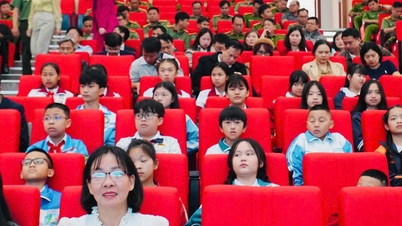
The event brought together numerous representatives from regulatory agencies, cybersecurity experts, social organizations, teachers, parents, and hundreds of young people, creating a large-scale forum on protecting the younger generation in the digital environment.
In the context of widespread digital transformation, the internet and social media platforms are increasingly becoming essential learning, creative, and networking spaces for young people. However, along with these immense benefits come a host of inherent risks such as online fraud, cyberbullying, identity fraud, personal data breaches, harmful content, platform addiction, and negative impacts on mental health.
In particular, the rapid development of artificial intelligence (AI) and new technologies such as deepfakes, fake content, and fake news are making the digital environment more complex, requiring more comprehensive protection solutions for young users.
It is in this context that "Teenagers Speak 2026" is organized not only as a forum for discussion but also as a strategic step to promote multi-stakeholder collaboration among the State, technology companies, social organizations, families, and young people.
The highlight of the program was the signing of the Memorandum of Understanding (MOU) between the National Cybersecurity Association and TikTok Vietnam. This agreement marks TikTok's official partnership with the Association in communication activities, training, dissemination of legal knowledge, and raising public awareness about cybersecurity, personal data protection, and digital safety.
According to the agreement, the two parties will cooperate in implementing community communication campaigns to raise awareness among parents, teachers, and young people about safe use of digital platforms; and to support the prevention, detection, and reduction of harmful behaviors against children in the online environment.
In addition, the MSD Institute continues to collaborate with TikTok in developing digital skills training programs, digital health education , and promoting the proactive role of young people in building a positive online environment.

Building a "digital shield" to protect children in the digital environment.
In his opening remarks, Colonel Ha Van Bac, Deputy Director of the Cyber Security and High-Tech Crime Prevention Department ( Ministry of Public Security ), highly appreciated the initiative to organize the seminar "Teenagers Speak 2026: Co-creating Solutions for Digital Safety and Digital Health" by the National Cyber Security Association, MSD United Way Vietnam, and TikTok Vietnam. He also acknowledged the joint efforts of agencies, experts, schools, parents, and especially teenagers – the central subjects of the current and future digital environment.

According to Colonel Ha Van Bac, cyberspace is opening up many great opportunities for the younger generation in learning, creativity, connection, and self-development. However, along with that come a series of risks such as online fraud, identity fraud, privacy violations, harmful content, as well as digital health issues such as platform dependence, emotional stress, and decreased concentration.
He particularly emphasized that the rapid development of artificial intelligence has created new challenges such as deepfakes, fake news, and misleading content, making it more difficult to distinguish between genuine and fake information, especially for young users.
Given this reality, protecting children online cannot stop at just issuing warnings; it needs to focus on equipping children with digital skills, self-protection abilities, risk identification, understanding of personal data, and building habits of safe and responsible technology use.
Colonel Ha Van Bac stated that Vietnam has been promoting many important policies to protect children in cyberspace, most notably Decision No. 468/QD-TTg dated March 23, 2026, of the Prime Minister on the Program "Protecting and supporting children's development in the online environment in the period 2026 - 2030".
The program sets three major goals: to popularize cybersecurity solutions in 100% of general education institutions and internet service providers; to deploy technology solutions to support digital skills education in all provinces and cities; and to ensure that 100% of children who are abused online receive timely support and intervention.
According to him, protecting children in cyberspace must be done through a holistic approach with the participation of the entire society. Families need to work together; schools need to strengthen digital skills education; technology platforms must enhance their responsibility; and the media, social organizations, and experts need to disseminate knowledge, skills, and a culture of safe behavior. In particular, young people need to be empowered to share their experiences, report problems they encounter, and participate directly in the solution-making process.
In the near future, the Government plans to launch the "Program to Protect and Support Children's Development in the Online Environment 2026-2030" on May 29th to promote communication, raise awareness, and build a sustainable "digital shield" for Vietnamese children.
Colonel Ha Van Bac emphasized that the "digital shield" not only comes from technology but must also be built upon awareness, skills, responsibility, and close coordination from the entire society.
He also sent a message to teenagers: safe internet use is not simply about accessing technology, but about knowing how to use technology intelligently and selectively, protecting personal data, being vigilant about risks, and proactively seeking support when needed.
For parents, teachers, and technology companies, Colonel Ha Van Bac suggested the need to continue to enhance understanding and social responsibility, invest more heavily in tools to protect children, improve mechanisms for detecting and handling harmful content, and closely coordinate with relevant authorities in preventing and handling violations.
"Protecting children in cyberspace is not only the responsibility of cybersecurity forces but also a shared responsibility of families, education, society, and the entire digital ecosystem. With the joint efforts of all parties, we can absolutely build a safer, healthier, and more humane online environment for Vietnamese children," Colonel Ha Van Bac affirmed.
90% have experienced or witnessed risks in the digital environment.
At the seminar, the Institute for Sustainable Development Management Research (MSD) announced preliminary data from the "Voices of Vietnamese Children 2026" survey, currently being conducted on 2,500 children (aged 12-15). The results revealed a noteworthy reality: approximately 9 out of 10 teenagers reported having learned about or accessed content on online safety, but at the same time, 9 out of 10 also reported having directly or indirectly faced risks in the digital environment.

This reality reveals a significant gap between children's theoretical understanding and their practical response capabilities, requiring closer attention and guidance from families, schools, and other stakeholders. Against the backdrop of the Vietnamese government's efforts to protect young people online and enhance AI literacy among the population, this seminar serves as a timely forum contributing to this collective effort.
To address this problem, "Teenagers Speak 2026" has incorporated "Solution Labs" into its design model. These are interactive and co-design spaces where teenagers, parents, and stakeholders participate in discussions, critiques, and directly propose specific solutions for the digital environment.
Ms. Nguyen Phuong Linh, Director of the Institute for Sustainable Development Management Research (MSD), emphasized: “Today’s seminar is a significant milestone, a testament to the enduring partnership between MSD and TikTok in jointly building a safe digital space for the younger generation. The difference in this year’s program is the design of “Solution Labs,” interactive spaces, and co-design… We believe that young people should not be seen as passively vulnerable to protection, but rather as ‘architects’ with voices, perspectives, and the capacity to build a civilized online environment. There, they will no longer be limited by online risks, but will confidently leverage the power of technology to optimize their personal potential, becoming leaders of change for a safer, kinder, and more humane digital world.”

In addition to strategic solutions, the discussion also emphasized the role of parents in supporting their children through technological tools. Over the years, TikTok has consistently focused on providing easy-to-use, safe, and privacy-focused tools to help parents customize their children's online experiences. In particular, the Smart Family feature allows parents to link their TikTok accounts with their children's to manage screen time, track account activity, manage topics, control blocking, set restrictions, direct messaging, and includes a Meditation feature for teenagers.
TikTok is committed to building a safe and positive platform for Vietnamese users.
Mr. Nguyen Lam Thanh, Representative of TikTok Vietnam, stated: “TikTok is committed to building a safe and positive platform for Vietnamese users in general and young people in particular. Through our partnership with the National Cybersecurity Association, TikTok can support the Association in communication efforts and collaborate on content production to raise public awareness about cybersecurity, prevent, detect, and mitigate risks when using digital platforms; while simultaneously raising awareness among the community, parents, and youth about online safety.”
Source: https://baophapluat.vn/chung-tay-bao-ve-thanh-thieu-nien-tren-khong-gian-so.html

![[Photo] General Secretary and President To Lam presides over a meeting on preparations for the review of one year of operation of the three-tiered government system.](https://vphoto.vietnam.vn/thumb/1200x675/vietnam/resource/IMAGE/2026/06/02/1780391821195_a1-bnd-4595-9717-jpg.webp)









![[INFOGRAPHICS] 11 key tasks and solutions for implementing the "Protecting and supporting children's development in the online environment, 2026-2030" program.](https://vphoto.vietnam.vn/thumb/402x226/vietnam/resource/IMAGE/2026/03/28/1774692899624_1774692716.webp)







































































Comment (0)