


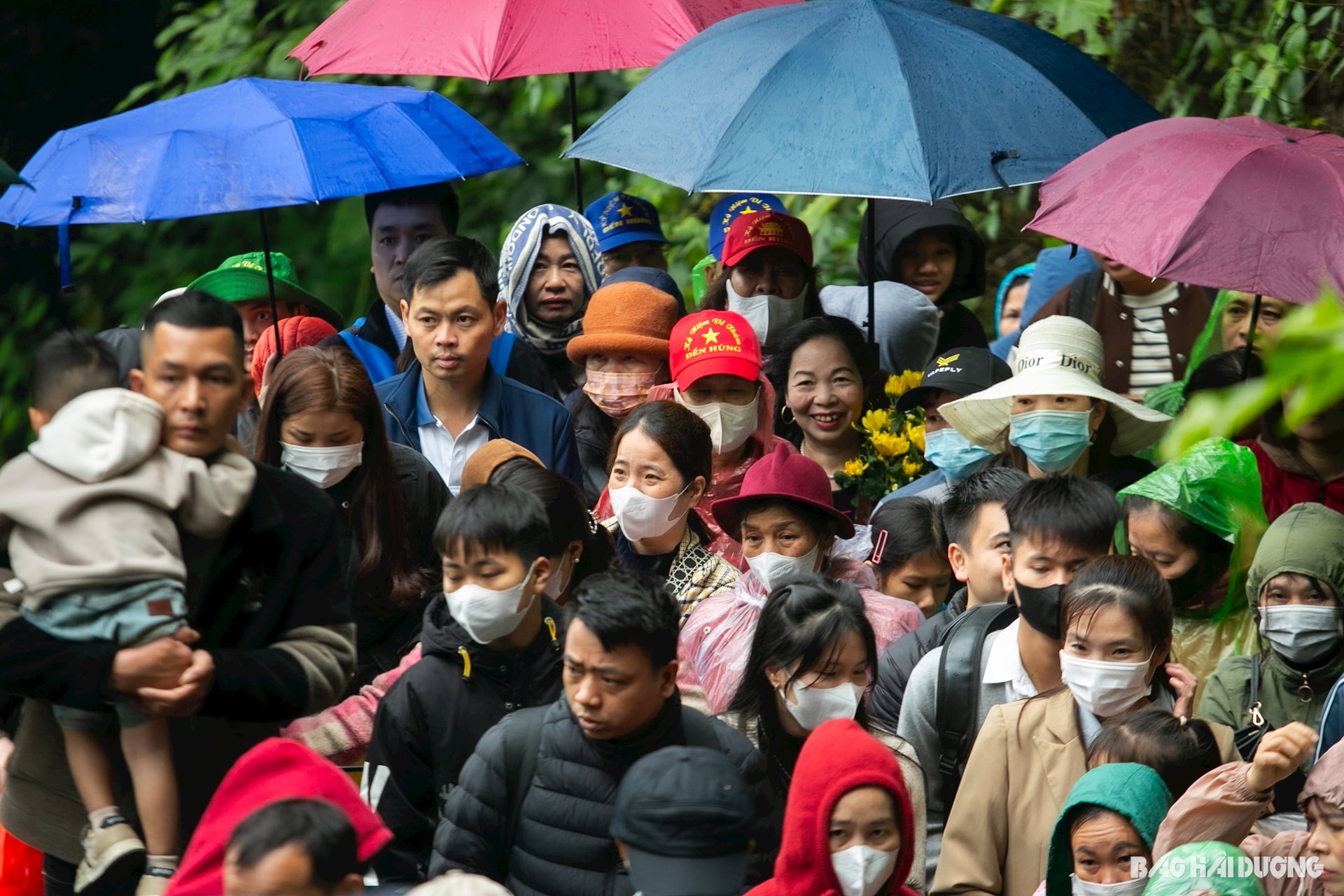
On the first day of the third lunar month, with a light drizzle falling, we made a pilgrimage to the ancestral land under the guidance of Mr. Nguyen Cao Khoi, a friend from Viet Tri City ( Phu Tho province). We were fortunate to have him as one of the locals knowledgeable about the Hung Temple historical site.
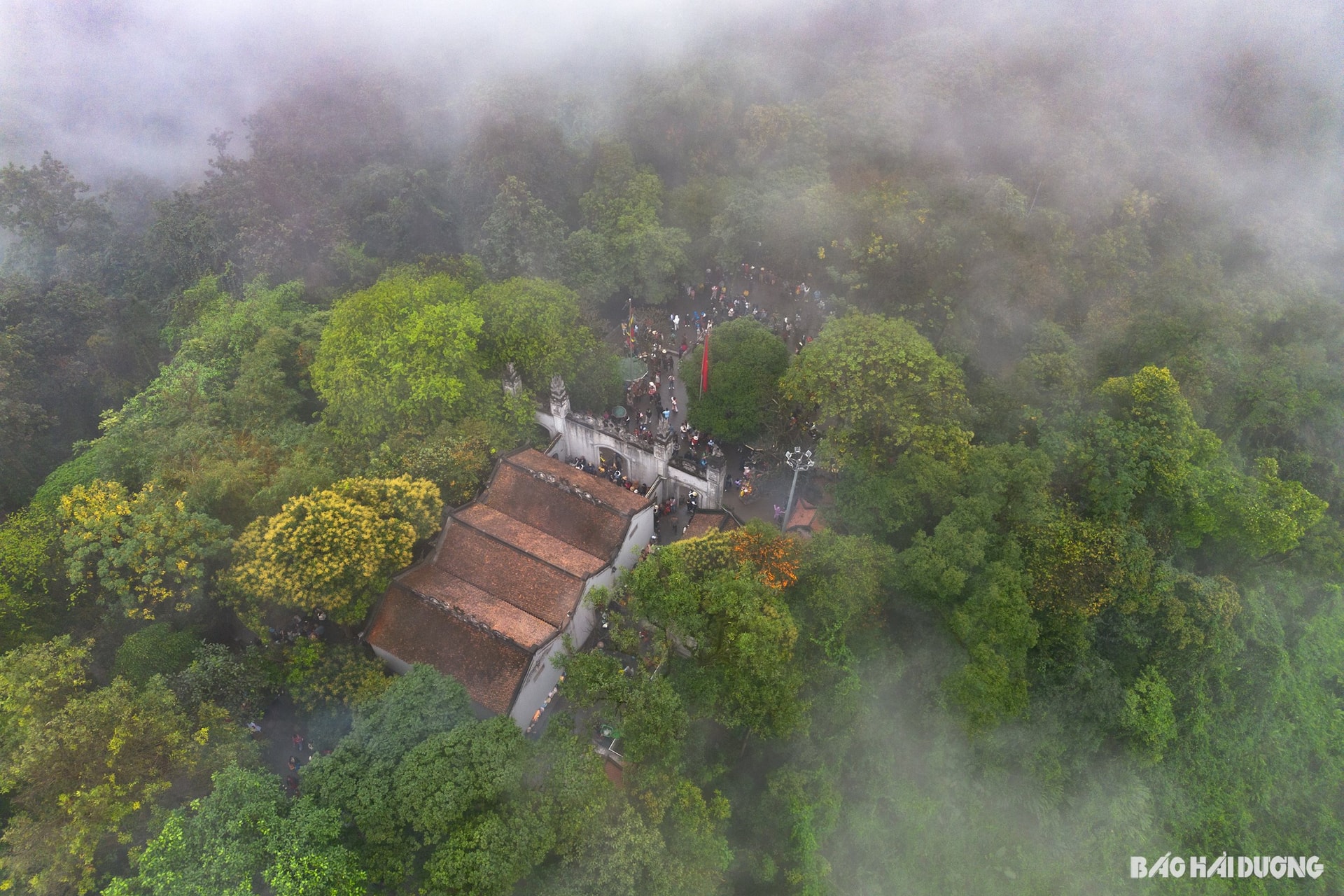
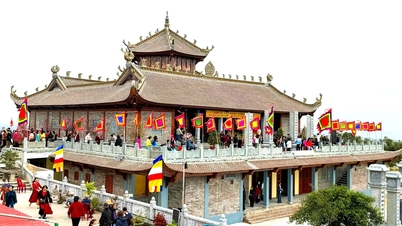
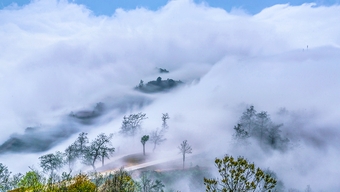
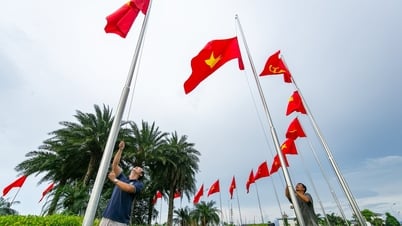
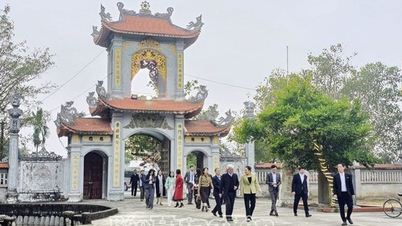
Over 20 years ago, I visited Hung Temple as a child. My impressions of Hung Temple from that time are no longer vivid, but the historical site has certainly changed, becoming much more spacious and imposing. This is immediately apparent in the well-invested and large-scale ceremonial gate area, featuring a massive triple-arched gate and 18 large flags symbolizing the 18 generations of Hung Kings. Instead of walking as before, visitors now travel smoothly on electric trams into the mountain-top historical site… As we get closer, looking up at the peak of Nghia Linh mountain, where the temples dedicated to the Hung Kings are located, the fragrant incense and the lingering mist on the green trees make us feel as if we are about to enter a sacred place.
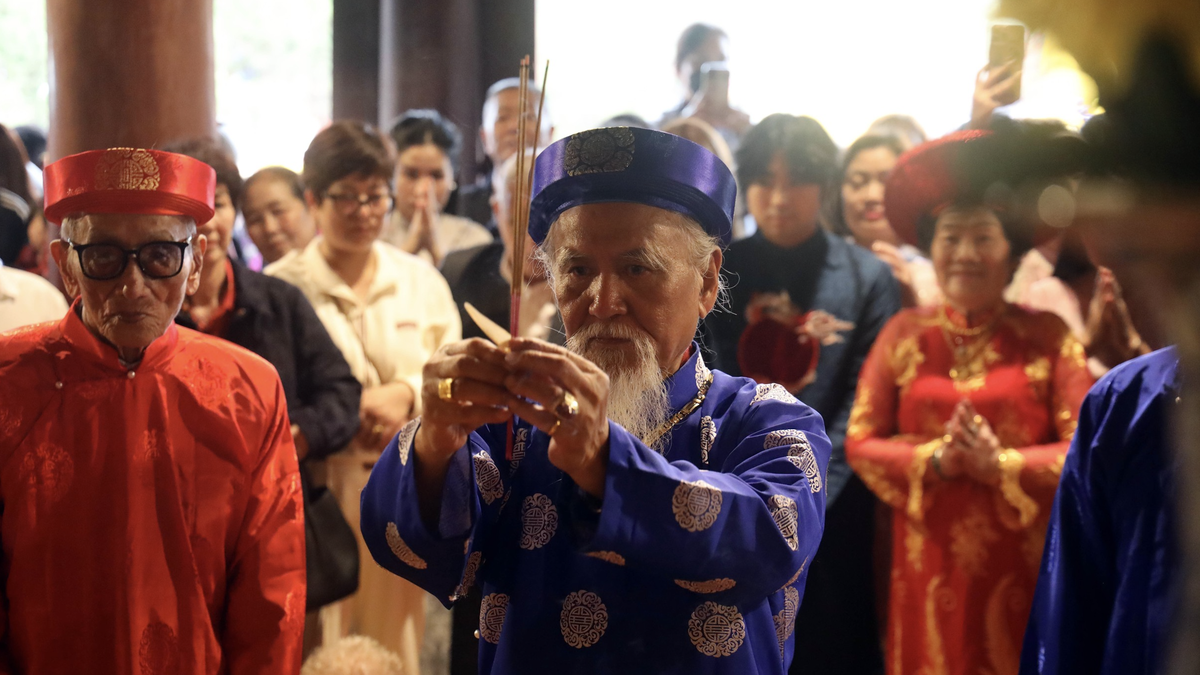
Although the main festival is still a week away, tens of thousands of people have already flocked here. Besides young people, there are many elderly people, and even babies being carried or led by their parents. Mr. Khoi said, "This is nothing compared to the main festival; when the festival starts, millions of people will come and fill this place to capacity." Mr. Nguyen Tien Trinh, 75 years old (from Thai Nguyen province), affirmed his strong belief: "Every family has its ancestors, but this place is the root from which generations of Vietnamese people have been born." Walking enthusiastically, he recited a poem explaining why he has attended the Hung Temple festival for over 15 years: "Humans have ancestors and lineage / Like trees have roots, like rivers have sources."
At the foot of Nghia Linh Mountain, also known as Hung Mountain, lies the main gate leading to the temples, bearing the Chinese characters: Cao Son Canh Hanh (meaning "High Mountain, Great Road")... Inching forward in the stream of pilgrims, I saw straight-trunked trees on both sides of the path. Mr. Khoi said these were rare and precious Dipterocarpus trees, about 100 years old. Hung Temple National Forest is a special-use forest, covering 538 hectares with diverse flora. Among them, 15 rare plant species are listed in the Vietnamese Red Book. There are also many ancient trees with a lifespan of 500-600 years; 3 rare Dai Khai flowering trees that always bloom on the occasion of the Ancestor Commemoration Day, with flowers only blooming on the trunk, not on the branches. Particularly noteworthy is an 800-year-old cycad with 3 branches symbolizing the 3 regions of North, Central, and South Vietnam…
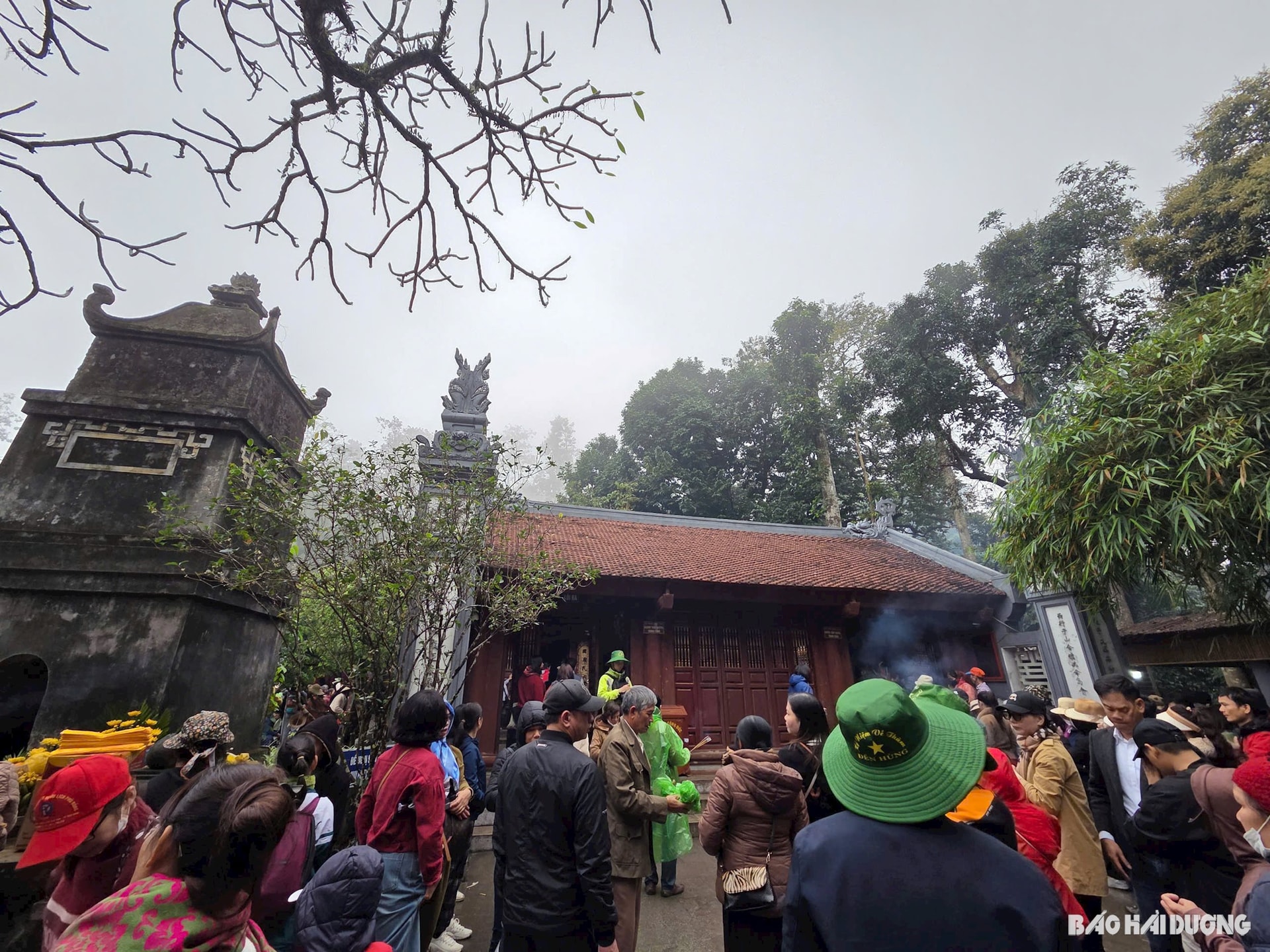
Our first stop was the Lower Temple. Legend says that here, Mother Au Co gave birth to a hundred eggs, which later hatched into a hundred sons. When the sons grew up, Father Lac Long Quan took 50 sons to the coastal region to build dikes and expand the territory. Mother Au Co took 49 sons to the mountains to cultivate mulberry trees, raise silkworms, and weave cloth. The eldest son remained to become king, and the dynasty lasted for 18 generations, all known as Hung Kings… Next to the Lower Temple is Thien Quang Pagoda, dedicated to Buddha. In front of the pagoda stands an 800-year-old cycad tree.
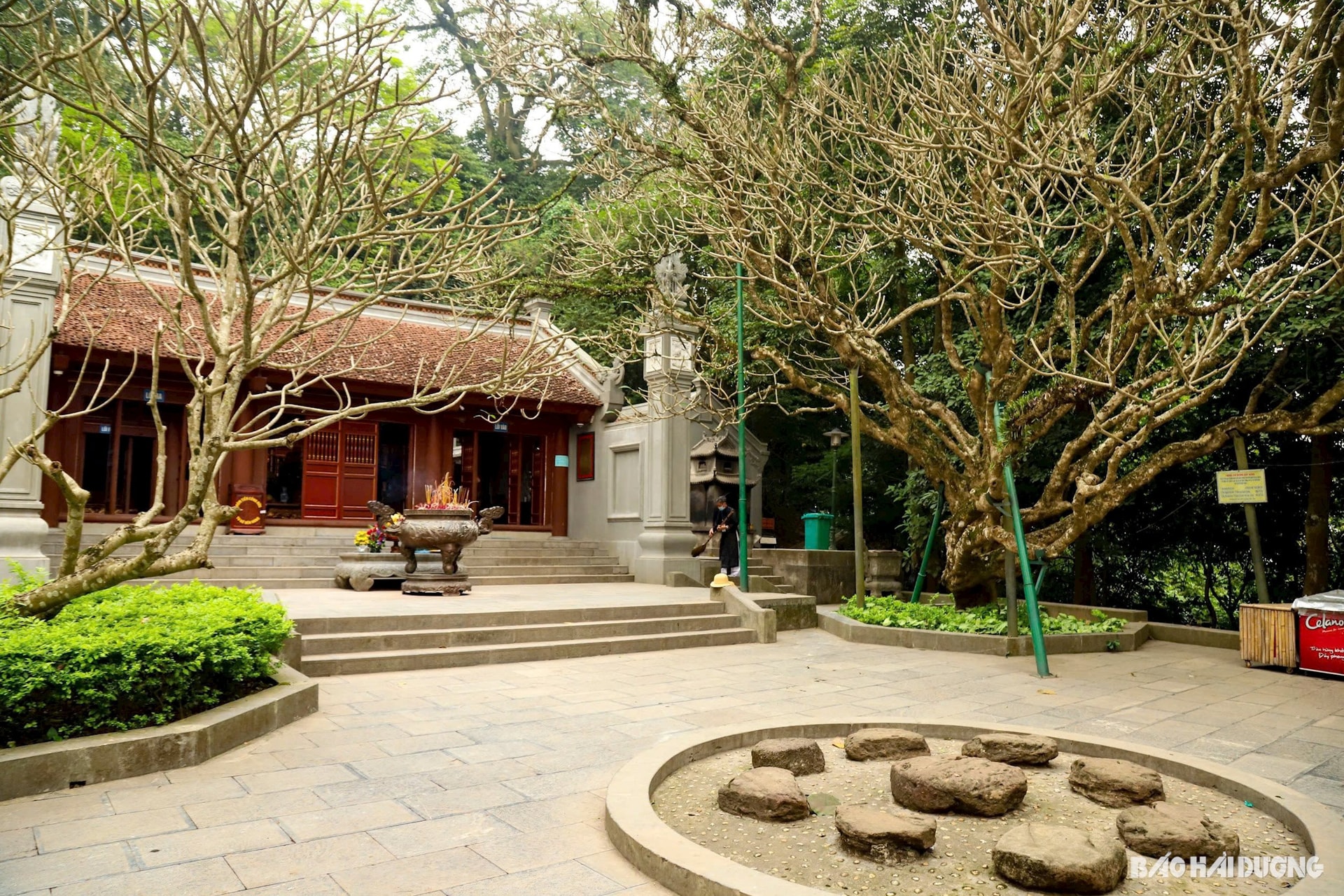
From the Lower Temple, after climbing more than 150 stone steps, visitors reach the Middle Temple. In the temple courtyard, there is a set of eight stone tables with simple, flat stones that have aged over time. Legend says this was where the Hung Kings, along with the Lac Hau and Lac Tuong, admired the scenery and discussed state affairs. It is also said that the sixth Hung King abdicated his throne here to Lang Liêu – his filial son who invented the banh chung and banh giay (traditional Vietnamese rice cakes).
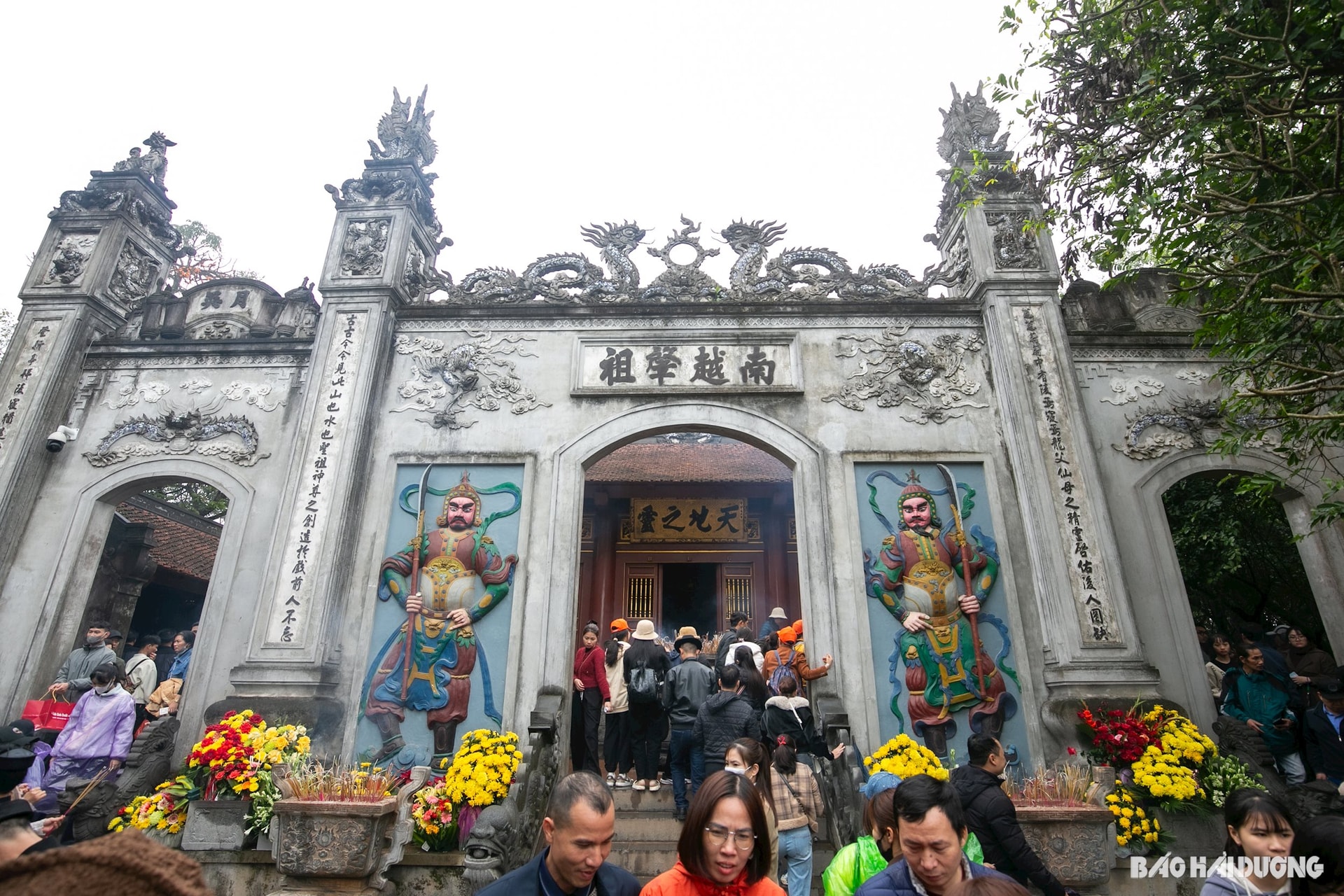
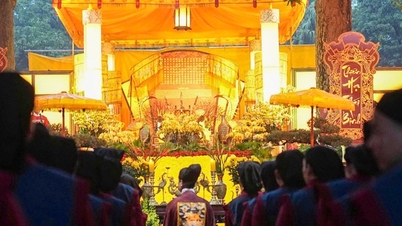
At the summit of Nghia Linh Mountain lies the Upper Temple, a sacred site where the spiritual energy of heaven and earth converges. To the left is the Tam Dao mountain range, and to the right is Ba Vi mountain, forming the shape of a green dragon on the left and a white tiger on the right. In front of the temple is where the three rivers Hong, Lo, and Da merge. Surrounding Nghia Linh Mountain are 99 hills, like 99 elephants bowing towards the Ancestor King… Legend says that the temple was where the Hung Kings often performed rituals to pray to heaven and earth, hoping for favorable weather, bountiful harvests, and prosperity and happiness for the people. This is also the main location for the most important rituals on the Ancestor Commemoration Day. As visitors approach the inner sanctuary, where the altars of the 18 Hung Kings are placed, they feel a unique and sacred atmosphere, a sense of lightness mixed with emotion, perhaps due to the belief in returning to their roots.
To the right of the Upper Temple, there is also a stone pillar erected according to an ancient legend: the 18th Hung King had no sons, so heeding the advice of his son-in-law, Tan Vien, he ceded the throne to Thuc Phan. Grateful, Thuc Phan erected a stone pillar on the summit of Nghia Linh mountain and swore: Vietnam will endure forever, and the temple dedicated to the Hung Kings will remain for eternity.
From the Upper Temple, following the road down, visitors pass the Hung Kings Mausoleum, the Ancient Well (traditionally believed to be where Ancestress Au Co bathed her children), the Well Temple (where Princess Tien Dung and Ngoc Hoa, daughters of the 18th Hung King, are worshipped)... The pilgrimage to Hung Temple only takes about two hours. Therefore, visitors can also visit the temple of Ancestress Au Co located on Van Mountain, and the temple of National Ancestor Lac Long Quan on Sim Hill.
According to Mr. Khoi, this year's Hung Temple Festival focuses more on the ceremonial aspects than the festive ones, with many traditional rituals. The festive part includes a week-long cultural and tourism event. The festival space will extend across the entire Viet Tri City area. Notably, at the Hung Temple historical site, a camp will be held for 13 districts, towns, and cities, showcasing the unique cultural characteristics of the 23 ethnic groups living there.
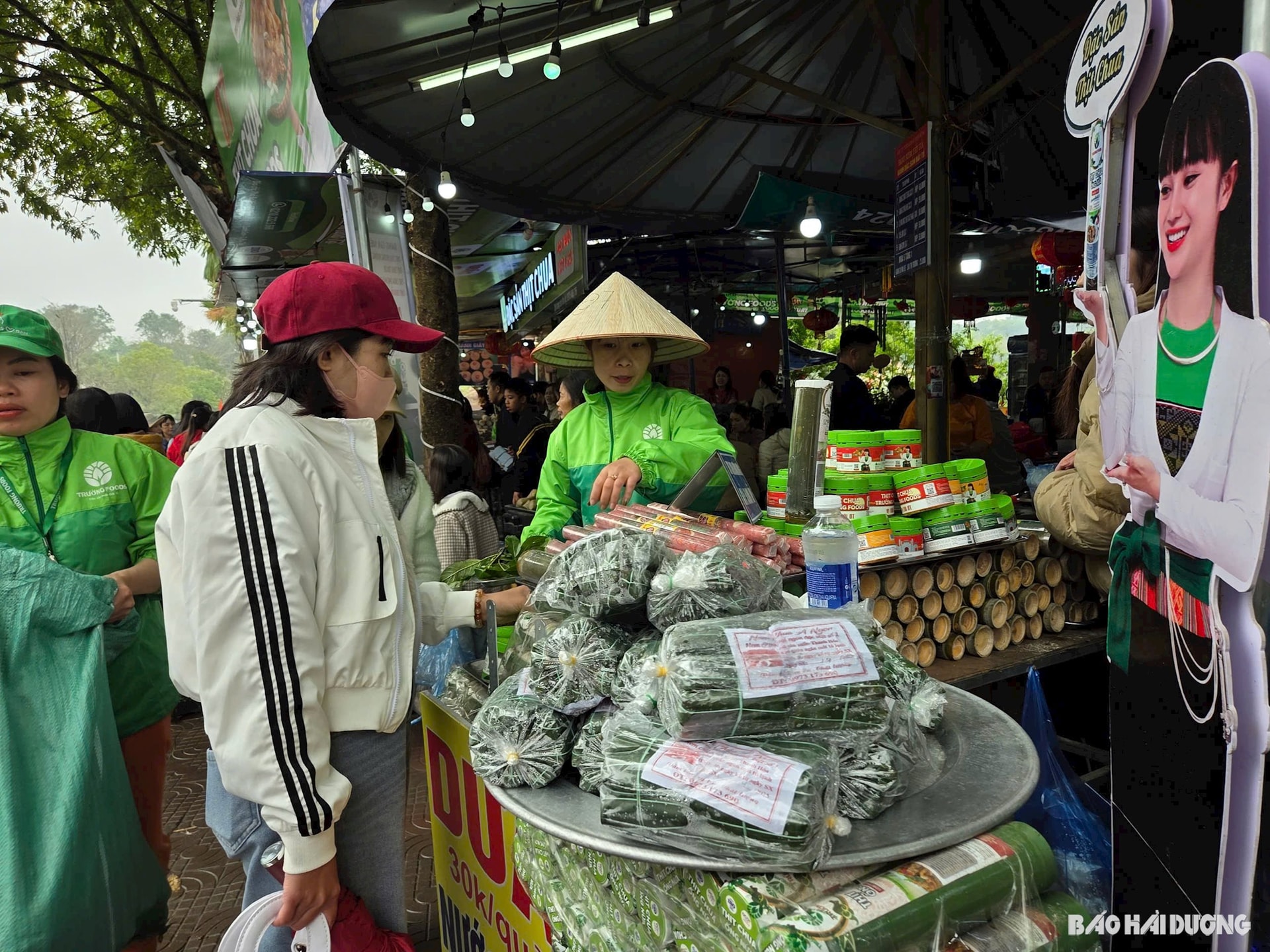
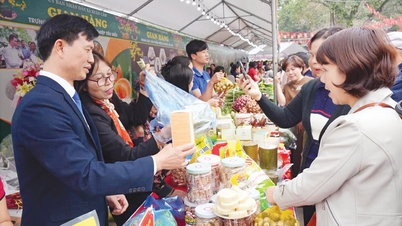
At the historical site, visitors can also sample and buy local products sold by locals as souvenirs, such as: palm fruit, fermented pork, cassava cake, multi-toed chicken, five-colored sticky rice, etc. Visitors can also stop by Viet Tri City to enjoy many local specialties such as: catfish, fried fish, snakehead fish from the Da and Lo rivers, rice rolls, rice balls wrapped in palm leaves... The price per meal is approximately 200,000 VND per person.
LE HUONGSource: https://baohaiduong.vn/chuyen-hanh-huong-ve-dat-to-408769.html



























![[Image] National Conference on studying, understanding, and implementing Resolutions No. 79 and No. 80 of the Politburo](https://vphoto.vietnam.vn/thumb/402x226/vietnam/resource/IMAGE/2026/02/25/1771990845625_anh-man-hinh-2026-02-25-luc-10-40-34.png)













Comment (0)