

In 2013, Shibatong Village in Xiangxi Province, Hunan Province, China, was a typical impoverished village: the average arable land per person was approximately 0.0553 hectares, the average net income per person in the entire village was only 1668 RMB, and the poverty rate was as high as 57%. Located in a remote mountainous area, the Miao ethnic minority people guarded only a few barren plots of land, facing extremely difficult living conditions.
It was also in this year that Comrade Xi Jinping, just one year into his term as General Secretary of the Communist Party of China, visited the area for an inspection and first proposed the important concept of "precise poverty reduction." After more than 10 years, the per capita income in Shibatong Village increased tenfold, exceeding 20,000 RMB, and the village's collective economic resources, which were previously empty, grew to over 5 million RMB. This tremendous transformation of this remote Miao village, while a victory in poverty alleviation on the surface, is, in a deeper sense, a vivid example of the Chinese-style political achievement-oriented approach.
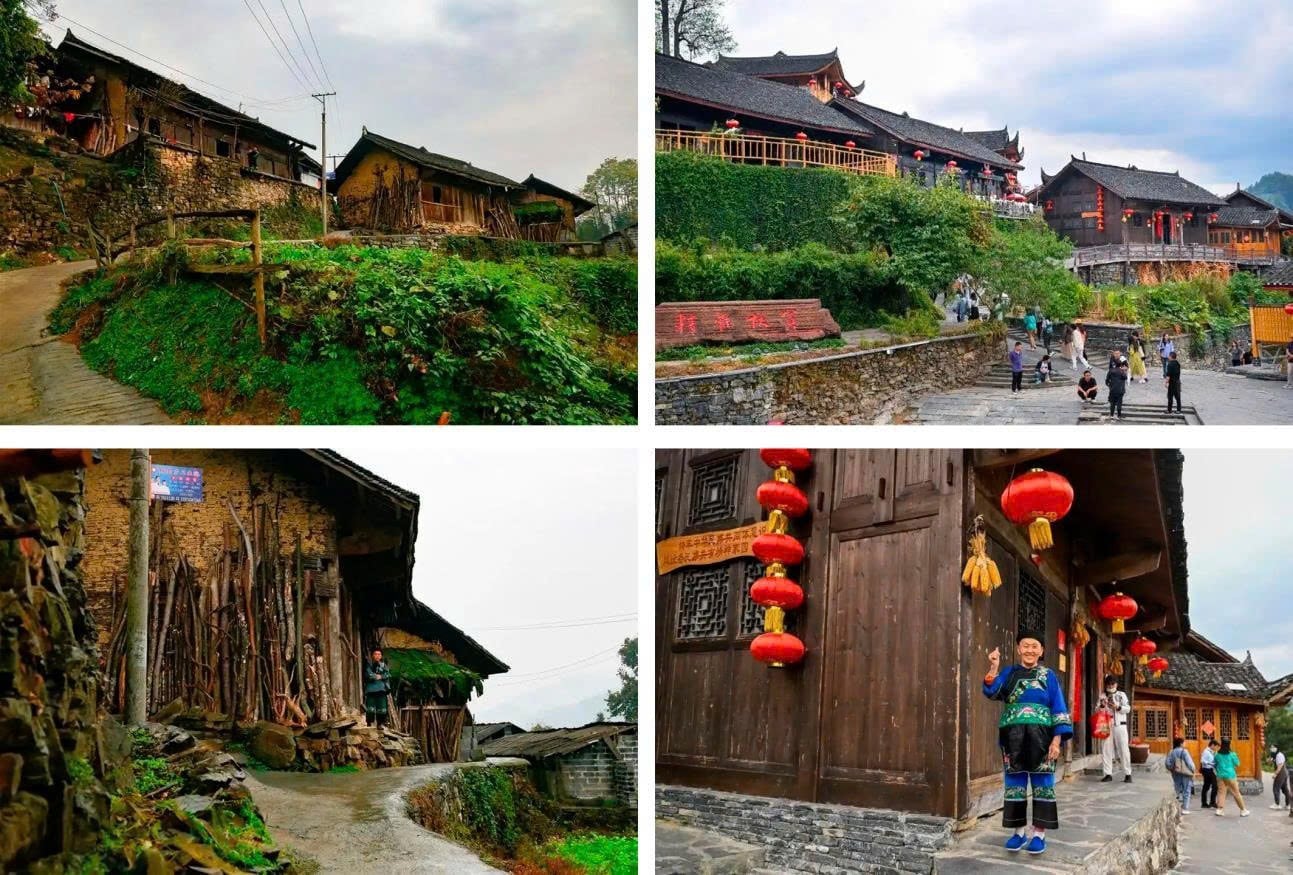 |
| The village of Thập Bát Động then and now. (Photo: Xinhua News Agency) |
The transformation of Thap Bat Dong village is not the result of a single leader's term, but rather the long-term support of many generations of cadres. In early 2014, Comrade Long Tu Lam assumed the position of the first Team Leader of the Poverty Eradication Task Force in Thap Bat Dong village. He served a term of over two years, leading the villagers in road repairs, water supply, and industry development. His successor continued his work, further developing the village's industries such as tourism , kiwi fruit cultivation, and Miao ethnic brocade embroidery. By April 2026, a total of seven team leaders had served, each becoming an indispensable supporter, ultimately achieving a record of "complete poverty alleviation" and "rural revitalization."
The key to the success of the poverty alleviation program in Thap Bat Dong village lies in the word "accurate." It didn't involve simply picking a "beehive" or using average figures. Instead, it accurately identified the root causes of poverty for each household and individual, then developed specific solutions for each case. Those with the ability to work received job support, while those without the ability were provided with basic security; children who couldn't attend school received educational support; and those living in precarious conditions were relocated to new homes. Ultimately, no poor household, no Miao ethnic minority person in the entire village, was left behind in this poverty alleviation effort.
Similarly, for over 70 years, more than 20 generations of Party Secretaries in Huu Ngoc district (Shanxi province) have persistently planted trees and reclaimed sand, transforming barren, rocky land into a green oasis. In Tai Han Ba, three generations of reforestation workers have also persevered for 60 years to green the wasteland, building a "Green Great Wall" on the barren plain.
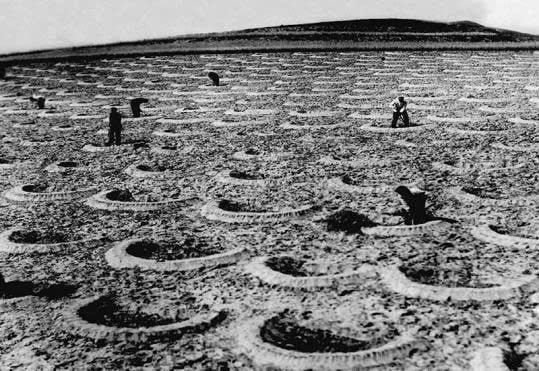 |
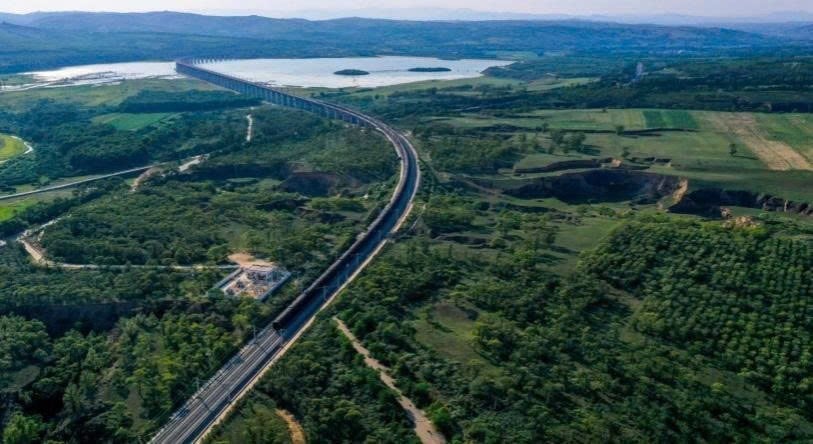 |
| Huu Ngoc District then and now. (Photo: Xinhua News Agency) |
In China, "the people" is the people in the broadest sense. From helping nearly 98.99 million rural residents escape poverty to enabling around 150 million farmers to move to cities to live and work, China's development policies aim to improve people's lives and prevent them from being left behind in the development process.
Today, the world faces many major challenges such as climate change, the widening gap between rich and poor, and public health issues. These are all significant problems that require a long-term vision and cannot be solved in just a few years or with solutions that benefit some while others suffer. The story of Thap Bat Dong village, though small, shows that when development policies consistently aim for the benefit of all citizens and leave no one behind, even seemingly insurmountable problems can gradually find solutions.
Source: https://thoidai.com.vn/chuye-n-thoa-t-nghe-o-cu-a-thon-tha-p-ba-t-do-ng-trung-quoc-221575.html

![[Image] Hanoi's urban life under the challenge of a "scorching hot" environment](https://vphoto.vietnam.vn/thumb/1200x675/vietnam/resource/IMAGE/2026/05/25/1779706979265_nang-nong-t5-2026-minh-duy-7-4636-jpg.webp)

![[Image] Close-up view of the interchange connecting the two expressways and Long Thanh Airport.](https://vphoto.vietnam.vn/thumb/1200x675/vietnam/resource/IMAGE/2026/05/25/1779703378210_ndo_br_z7863716673926-224453a31600126cce10622af6290afd-4549-jpg.webp)


















































































Comment (0)