

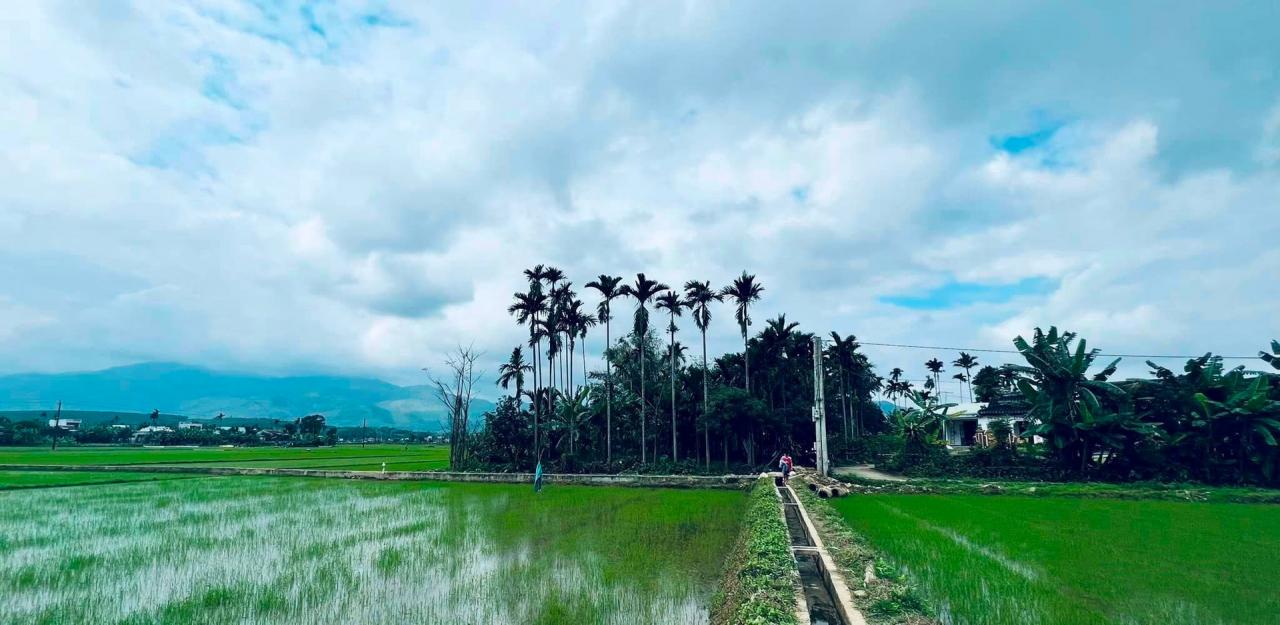
Carrying the village along the migration route.
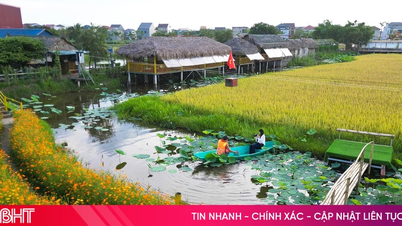
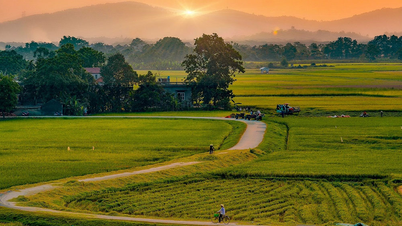
The history of the Vietnamese people is a series of arduous, aimless migrations spanning four thousand years. From small villages nestled in the alluvial plains of Northern Vietnam, with communities of only a few dozen clans, they are now found everywhere – along the S-shaped coastline of Vietnam, and have spread to distant countries across the ocean.
Unconsciously, we observe the surname of a village – a symbol of our origins that remains intact during migrations. Upon arriving in a new land, the culture of the old village intermingles with countless other ethnic groups and communities.
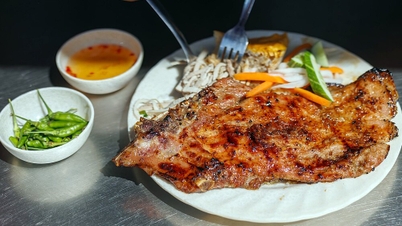
Vietnamese culture can be as simple as names like "Tí" or "Tèo," the middle name "Thị," or the way we address each other within the family: older sister - youngest brother. Culture is how we think about our grandparents and ancestors, and how we behave towards each other. It is our daily way of life, crystallized into simple things, like meals, like the familiar dishes that nourished us in childhood.
In Saigon, you can easily find an authentic bowl of Quang noodles near Ba Hoa Market, where you can listen to people from Quang Nam "arguing" in a genuine and simple way. You can also find a bowl of Hue beef noodle soup near Ba Diem Market, where you can enjoy your meal while listening to people address each other respectfully.
In the Northern Quarter on Chu Manh Trinh Street, one can find a full range of Northern-style tea, pork sausage, pork head cheese, Thanh Tri rice rolls, sticky rice cakes, and more, all accompanied by familiar street vendor calls reminiscent of the subsidy era.
It's easy to see that Vietnamese culinary culture has now reached the world . Vietnamese people have successfully promoted their dishes to friends around the globe. This pride motivates us to strive even harder in preserving our ancestral culture, from familiar things like a bowl of pho or a bowl of noodles...
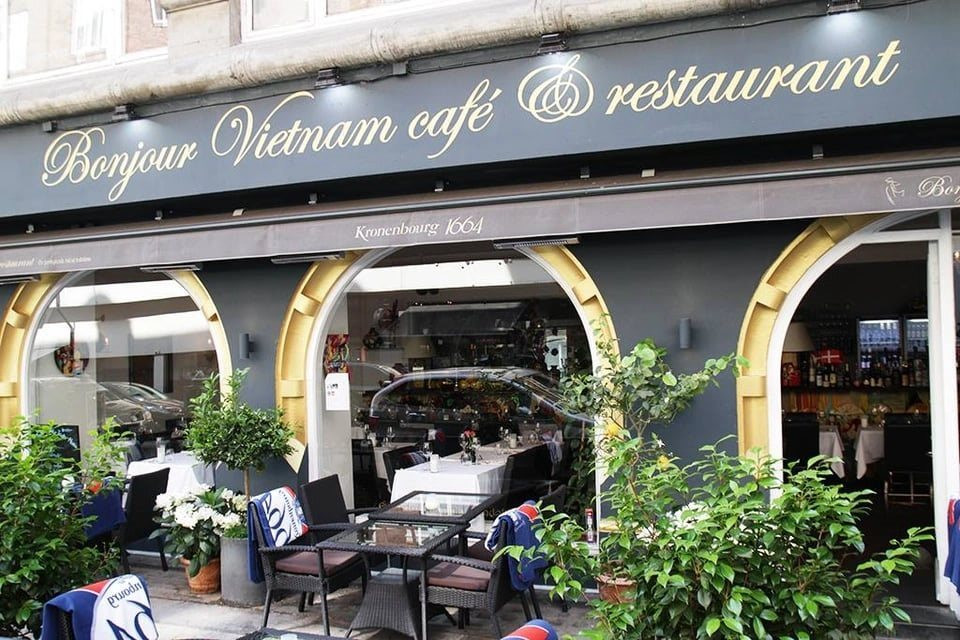
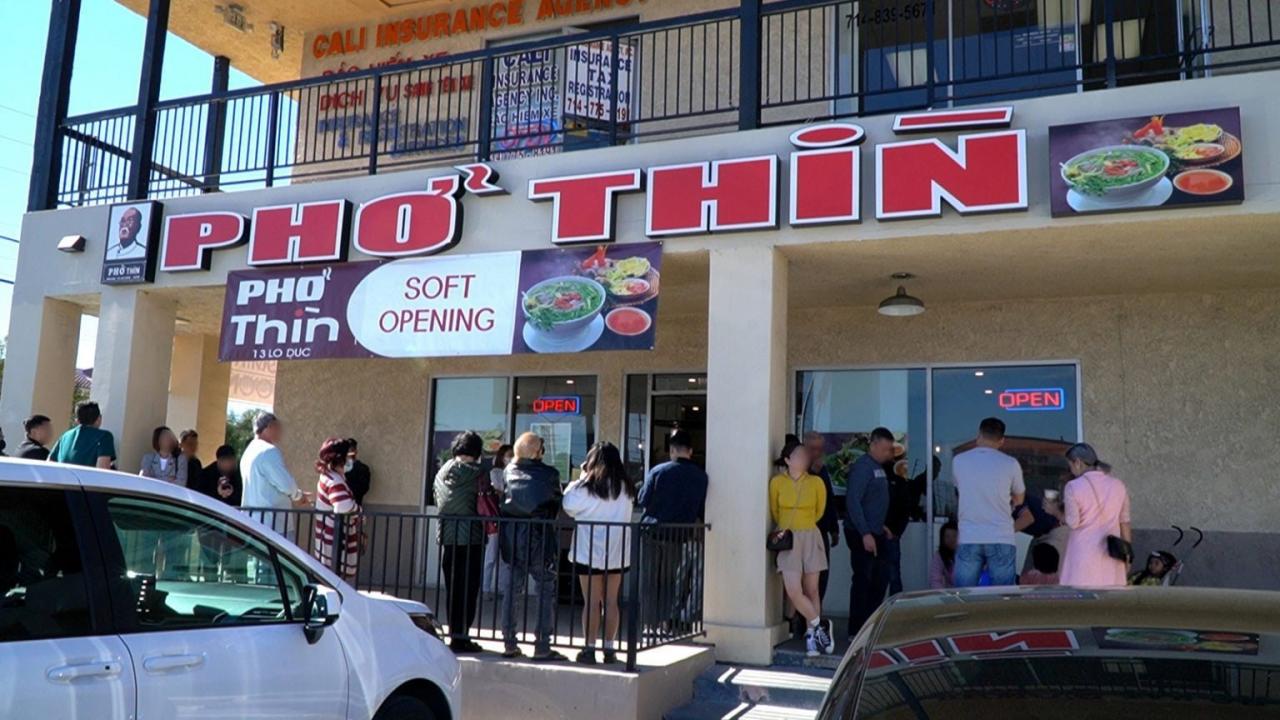
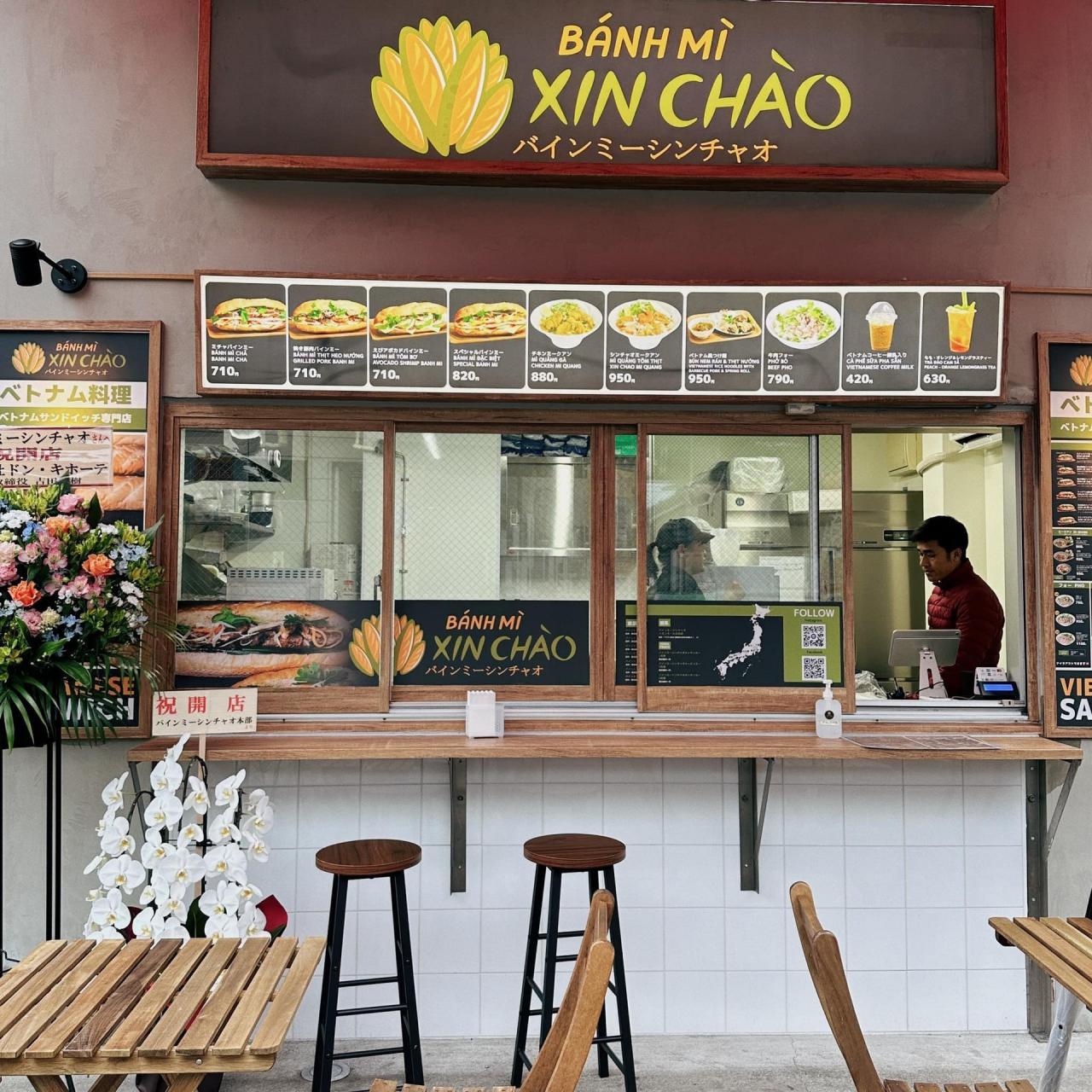
It's wonderful to see the statistics and rankings of dishes favored by tourists. Somewhere in Japan, the US, Australia, and Europe, it's impressive to see foreigners lining up to buy food in front of Vietnamese restaurants. For example, Xin Chào Banh Mi in Japan, Thìn Pho in Little Saigon, California, or Bonjour Viet Nam in Denmark.
Those who... yearn for their homeland
People preserve culture primarily out of habit, and then out of need. Habit makes it easy for us to choose between the old and the new, the familiar and the unfamiliar. Need creates the pursuit and satisfaction.
For generations of Vietnamese migrants, the defining characteristic can be traced back to their cuisine. The food is a crystallization of their homeland, of the rice grain, the fertile soil of the springs, of the buffalo and the plow, the chicken's clucking, the lime leaves – the accumulated experience of generations.
Decades ago, to make a bowl of Quang noodles, the whole village would gather together, some grinding rice, some lighting the fire, some roasting beans, others preparing the toppings... We long for that harmony, that gathering, that atmosphere of sharing and joy. We long for that rich culture, just as we long for a dish.
A recurring theme among Vietnamese people living abroad, whether in Saigon or overseas, is their unconscious longing for the flavors of home. They crave a bowl of Quang noodles, pho, or beef noodle soup. It's also a longing for their homeland, their culture, and their ancestral roots.
Driven by a longing for the flavors of home, the Vietnamese community, whether in America, Australia, or Europe, finds ways to bring the seasonal dishes and culinary delights from distant Vietnamese villages. Gradually, they banded together to open restaurants, and these restaurants became "villages." These "villages" shared a common yearning. They no longer longed for a bowl of noodles or pho, but for their homeland.
Because of love, we will adapt our culture to our lives. Because of love, we can bring the features of Vietnamese villages and streets, the fragrant herbs like mint and coriander, with us as we migrate.
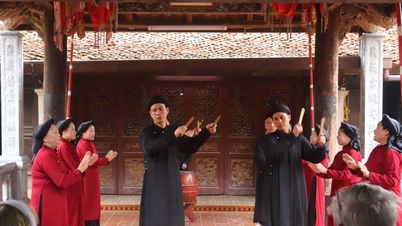
Because we love what has nurtured us, we find happiness in hearing folk songs and traditional opera in foreign lands. Each individual, little by little, forms an invisible "village" abroad, existing without purpose. We don't need to preserve it because it's naturally so.
The feeling of "belonging" to Vietnam
Looking back at our homeland, which tangible or intangible villages still exist? Which Vietnamese people are left with only their surnames, without any trace of their ancestors? Will the Peters, Louiss... who have been and are being born, all speak English in their own motherland? Preserving and promoting national cultural identity helps people define their individual and collective identities, but this needs to be understood from an individual perspective.
As for the younger generation of Vietnamese people born abroad, they will have unusual names like Terry, Trianna, Harry… even though they still retain their original surnames, such as Hoang, Nguyen, Tran… A surname can be passed down through several generations within a Vietnamese expatriate family. But it's difficult to know when these surnames will disappear. New surnames, new branches, will be born. Is it possible that future generations of Vietnamese people might only speak English, or at most, a little Vietnamese? What aspects of their surnames can still be called Vietnamese?
Numerous studies have shown that family and community culture, first and foremost, helps us satisfy our need for "belonging." The feeling of belonging is the process of an individual placing themselves within a familiar community, sharing warmth with those around them, helping them develop a harmonious psychology and personality. The feeling of belonging is crucial. It helps each person cope with difficulties and see the values in life.
Behind the traditional cultural aspects embodied in the bowl of Quang noodles my grandmother cooks, the ao dai dress my mother sews, lies love, a way of treating others, family bonds, and the small, everyday joys of life.
Is this perhaps the continuity, the deepest form of culture? Like a thread stretching from the past to the present, migrating from Vietnamese villages to invisible villages all over the world.
The thread sometimes helps the seamstress mend things during times of hardship and difficulty in making a living in a foreign land. We don't intentionally try to preserve our culture; it's just that this thread still draws us together.
Vietnamese people living abroad may not remember many historical events, may not know many Vietnamese songs, and may not live near us. But in one way or another, they still share stories of the past, simple Vietnamese dishes, and the good qualities of the Vietnamese people during family meals. Children will again enjoy Quang noodles and beef noodle soup, yearn to hear stories of their ancestors, and understand their roots to feel more secure and connected to themselves.
Vietnamese culture exists in this way: we can live the way we want, with very different value systems, all over the world, but at a crucial moment, we still choose to live as Vietnamese.
That is the value each person discovers for themselves within their homeland's culture...
Source
![[Photo] National Assembly Chairman Tran Thanh Man working with the Standing Committee of the Law and Justice Committee](https://vphoto.vietnam.vn/thumb/1200x675/vietnam/resource/IMAGE/2026/05/21/1779378929214_ndo_br_1-4610-jpg.webp)

![[Photo] General Secretary and President To Lam presides over a working session with the Central Policy and Strategy Committee on the development of the materials industry.](https://vphoto.vietnam.vn/thumb/1200x675/vietnam/resource/IMAGE/2026/05/21/1779359935432_a3-bnd-3129-1412-jpg.webp)




























































Comment (0)