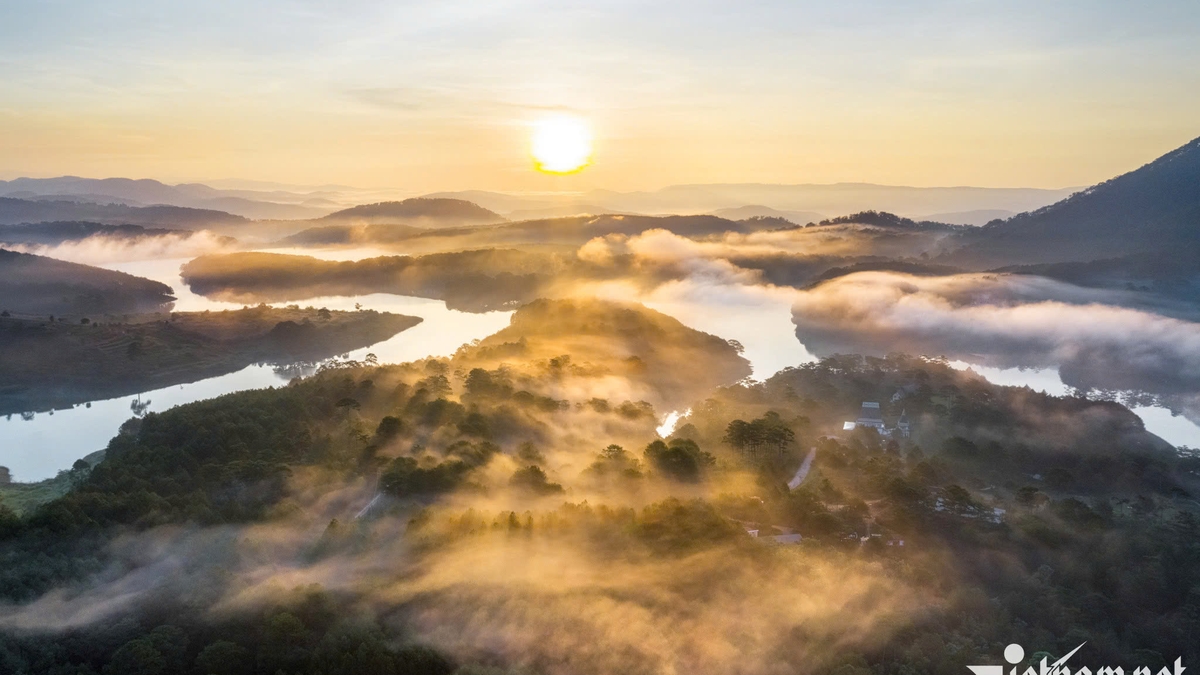
After graduating from university, I found a job at a government agency and settled down in the dreamy city of Da Lat . Therefore, for many years now, my small family hasn't used a wood-burning stove.
The last firewood truck of the year
 Việt Nam•28/12/2023
The image of the wood-burning stove and the bluish smoke rising from the kitchen annex of my thatched-roof house in the countryside during the winter months remains vivid in my memory whenever I recall those days. In the early 1980s, every year-end, not only my family but most families in Ham Thuan Nam district, no matter what they were doing, would prepare a pile of firewood stacked on the porch to fuel the stove during the Tet holiday.
You may also like



Suoi Kiet is making thorough preparations for the national festival.These days, the atmosphere in Suoi Kiet commune is more vibrant and enthusiastic than usual. Along the roads leading to the commune center and the villages, banners and slogans promoting the election are prominently displayed; the public address system regularly broadcasts election information... all creating a lively atmosphere, leading up to this important political event of the country.
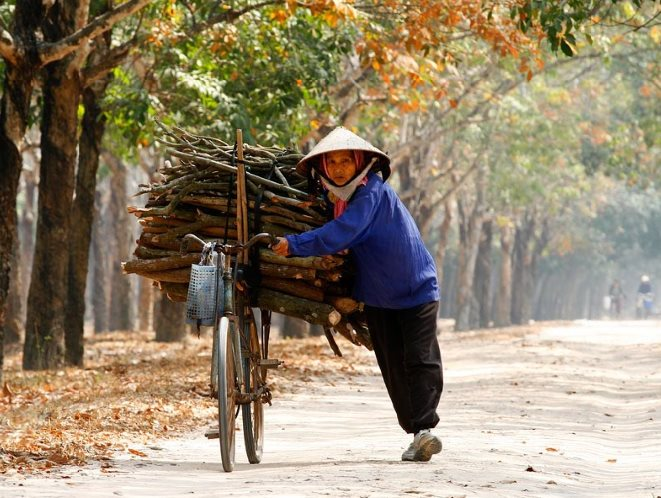
Firewood is used for cooking and boiling water daily. It's also used to fuel ovens for roasting rice, making puffed rice, and baking cakes; for cooking banh chung and banh tet (traditional Vietnamese rice cakes); for stewing meat and braising bamboo shoots… and for everything that needs to be cooked by fire. I remember that at the end of the year, the fathers and older brothers in the family would spend two or three days preparing rice, fish sauce, and dried fish, along with a pair of oxen and a cart, going into the forest to collect firewood. Every afternoon, around 3 or 4 o'clock, the ox carts would head straight towards the mountains and forests. Group after group, the dust would fly until the carts disappeared from the village's sight. Once, during a school break, my father let me go along to herd the oxen, and I was so happy. I still remember those trips to this day. I don't know how far the journey was, but places like Ba Bau, Thon Ba, Ham Can, My Thanh, Suoi Kiet, Dan Thung, Ruong Hoang… are places where people often went to collect firewood. The firewood brought back consists of dry logs, carefully selected for their straightness, with the ends cut off, measuring approximately 4 to 6 meters in length and 30 centimeters or more in diameter. Most of the logs are charred and damaged, due to people burning the fields while the wood was still fresh. Each truck can only carry a maximum of 10 to 15 logs, depending on their length and size. Some years, my father would make 3 to 4 trips into the forest to collect firewood, storing it for cooking throughout the following rainy season. Furthermore, in the last days of the year, besides collecting firewood, people in my village also gather tamarind to use in making rice cakes, jams, and dried tamarind for making sour soups and tamarind sauce. They also search for and cut branches of yellow apricot blossoms, stripping the leaves, singeing the roots, and soaking them in water until the Lunar New Year when the flowers bloom to decorate the house.
My brothers and I would saw the firewood we brought home into small, short pieces about 40 cm long; then we'd use hammers and machetes to chop them into five or seven smaller pieces to store in the kitchen for our grandmother and mother to cook with. Memories of a peaceful countryside bordering Phan Thiet town evoke a deep longing for the late winter months of a time of poverty. I can never forget the image of my father diligently selecting straight, dry firewood, especially choosing wood that held a fire for a long time and produced little smoke, gathering it into bundles to transport home by ox cart. In the last days of the year, the forest grass had withered, and in some places it had been burned; the buffaloes and oxen only ate handfuls of dry straw brought by their owners and drank muddy water from the remaining streams to have the strength to pull the firewood cart home.

Senior Party and State leaders send letters and telegrams congratulating the United States on its National Day.In congratulatory letters and messages on the US Independence Day, senior leaders of the Vietnamese Party and State reaffirmed that Vietnam considers the United States one of its strategically important partners.
Senior leaders of the Vietnamese Party and State send letters and telegrams congratulating the United States on its National Day.In congratulatory letters and messages on the US Independence Day, senior leaders of the Vietnamese Party and State reaffirmed that Vietnam considers the United States one of its strategically important partners.

Strengthening the friendship between Vietnam and the United States.On July 3rd, as part of the Pacific Partnership - Friends of the Pacific 2026 program, the U.S. Army Pacific delegation, led by Lieutenant General Joel Vowell, Deputy Commander of the U.S. Army Pacific, paid a courtesy visit to the Quang Tri Provincial Military Command.
Life has changed; from cities to villages, homes have replaced wood-burning stoves with gas stoves, electric stoves, pressure cookers, electric rice cookers, electric kettles, and microwave ovens. Now, although my siblings and I have bought Mom a gas stove and an electric rice cooker, she still keeps her old stove with three wood-burning burners. She gathers dried coconut husks, chops them up to boil water and make medicine; sometimes she braises fish or cooks rice when needed. She often tells us, "Every time I sit by the three wood-burning burners, I see images of my grandmother and my beloved husband in the flickering firelight; then tears flow, I don't know if it's from the smoke stinging my eyes or from missing my loved ones." During my visits home, sitting beside Mom, I love the smell of smoke emanating from the stove where she boils water. The fire from the wood burns intensely. The fire of love from my grandmother, my mother, and my father, who raised us, still burns in my memories and has stayed with me almost my entire life.
Source




















































































FIFTEEN YEARS OLD

Young buds amidst the vast forest