

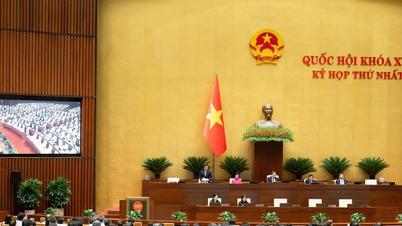
Continuing the session's agenda, on the morning of November 17th, the National Assembly heard presentations and verification reports on the draft Law on National Reserves (amended); the draft Resolution of the National Assembly on specific mechanisms and policies to implement Resolution No. 71-NQ/TW dated August 22, 2025 of the Politburo on breakthroughs in education and training development; and the draft Resolution of the National Assembly on mechanisms and policies to effectively implement Resolution No. 72-NQ/TW dated September 9, 2025 of the Politburo on some breakthrough solutions to strengthen the protection, care, and improvement of people's health.
Utilize all legitimate resources effectively for national reserves.
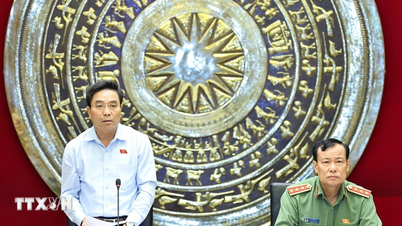
Presenting the Government's report, Minister of Finance Nguyen Van Thang clearly stated that the purpose of drafting the Law on National Reserves (amended) is to institutionalize the Party and State's guidelines and directions; to improve the legal framework in the field of national reserves; to promote decentralization and delegation of power in the development of mechanisms, policies, and laws; to promote the simplification of administrative procedures and the application of science and technology, innovation, and digital transformation; and to unlock and effectively utilize all legitimate resources for national reserves.
The draft law consists of 6 chapters and 35 articles (a reduction of 31/66 articles compared to the current law).
The revised and improved content (comprising 29 articles) focuses on: the scope of regulation and applicable subjects; the objectives of national reserves; definitions of terms; regulations on state management of national reserves; principles of management and use of national reserve goods; responsibilities of state management agencies; responsibilities of organizations and enterprises receiving contracts for storage; state budget allocation for national reserves; national reserve strategy; list of national reserve goods, etc.
Chairman of the National Assembly's Economic and Financial Committee, Phan Van Mai - representing the reviewing body - stated that the Committee agrees with the necessity of enacting the amended Law on National Reserves; and requests the Government to direct further review of the scope of amendments, focusing on urgent and necessary contents and ensuring the quality of the draft Law.
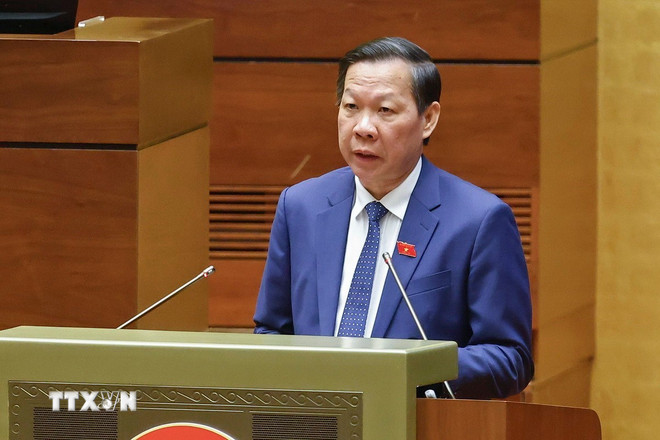
Strategic reserves are a key component of the draft Law. The regulations, especially those concerning the management and use of reserve goods, have essentially concretized the objectives of strategic reserves. However, to ensure feasibility, consistency, and responsiveness to the requirements of strategic reserves in the new context, the reviewing agency proposes that the Government direct relevant agencies to finalize regulations on the principles of managing strategic reserves; state policies on strategic reserves; the list of strategic reserve goods; strategic reserve levels; the application of science and technology in strategic reserves; methods, tools, and mechanisms for market regulation; and strategic reserves for important resources and minerals.
Ensuring transparency in the recruitment and deployment of educational personnel.
The resolution stipulates a number of specific and superior mechanisms and policies to achieve breakthroughs in education and training development, allowing for applications different from those of current law within a defined scope, target, and timeframe; it also prescribes mechanisms for monitoring, evaluation, and summarization to serve as a basis for future legislation.
Based on Resolution No. 71-NQ/TW of the Politburo and practical implementation, the Ministry of Education and Training proposes a Resolution focusing on adjusting six key policy groups with direct impact and high feasibility, including: management and development of human resources in the education sector; curriculum, content and mechanisms for educational development; digital transformation, science and technology and innovation; international integration; finance, incentives and investment.
The regulations aimed at institutionalizing the Party's guidelines and the State's policies include: Policies on the development of teachers, administrators, and educational human resources; Policies on reforming the mechanisms, programs, and system of education; Policies on science, technology, and digital transformation in education; Policies on international cooperation and integration in education and training; Policies on finance, investment, and resource incentives for education; and Policies on the organization and governance of the education system.
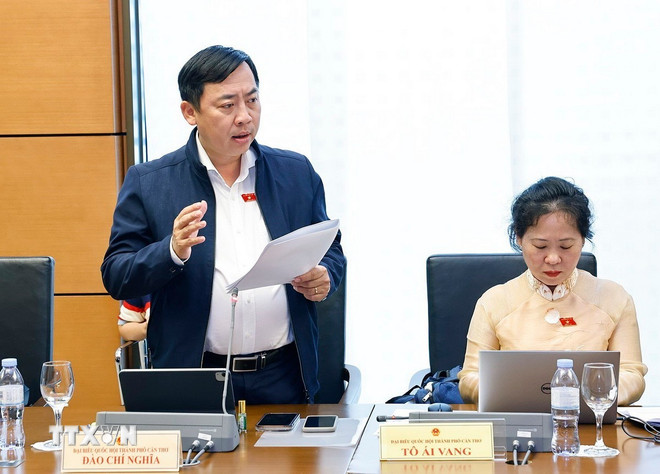
Institutionalizing Resolution 71-NQ/TW, the draft Resolution stipulates special and superior preferential policies for teachers and staff in educational institutions; grants authority to the Director of the Department in recruitment, assignment, and secondment to ensure unified management of human resources in the sector; and simultaneously promulgates a mechanism for attracting, valuing, and developing high-quality human resources in teaching, research, and management.
The draft Resolution also stipulates mechanisms to ensure comprehensive autonomy for higher education and vocational education institutions; reform of preschool, primary, secondary, university, and continuing education curricula; organization of the unified use of a single set of textbooks nationwide; and the building of an open, interconnected education system that promotes lifelong learning and a learning society.
At the same time, the draft Resolution stipulates mechanisms to promote comprehensive digital transformation in management, teaching, learning, and accreditation; develop a smart education platform and a national education database; and promote cooperation between the State, schools, and businesses in research, technology transfer, and the development of high-quality human resources associated with science, technology, and innovation.
Notably, the draft Resolution stipulates transitional provisions regarding the reorganization of the education system; the application of a unified set of textbooks; the termination of school council activities in public educational institutions (except for schools with international agreements); and the implementation of a model where the Party Secretary also serves as the head of the educational institution, ensuring unified leadership and governance and improving the effectiveness and efficiency of operations.
The National Assembly's Committee on Culture and Social Affairs endorsed the necessity, purpose, and perspective of drafting the Resolution; and agreed with the Government's proposal to submit the Resolution to the National Assembly for promulgation using a simplified procedure.
Regarding human resource development in the education sector (Article 2), point a, clause 1, which stipulates the authority of the Director of the Department of Education and Training in the deployment, transfer, secondment, placement, assignment, and change of job positions for teachers, educational administrators, and staff in public educational institutions related to areas spanning two or more commune-level administrative units, is not precise enough and could be interpreted as "two communes" within the same province or belonging to two different provinces.
The Director of the Department of Education and Training of a province cannot exercise this authority over educational personnel of a locality belonging to another province.
Therefore, the reviewing agency recommends considering revisions and clearly defining regulations between commune-level administrative units within the same province; simultaneously, considering specific regulations on mechanisms for supervision, inspection, and periodic reporting to ensure transparency and fairness in the recruitment, assignment, and transfer of educational personnel, avoiding the risk of negativity and parochialism; and continuing to research and regulate the decentralization and delegation of authority to public educational institutions in the province that meet the necessary conditions and capabilities to carry out the recruitment and acceptance of educational personnel.
Focus on improving the capacity of the healthcare system.
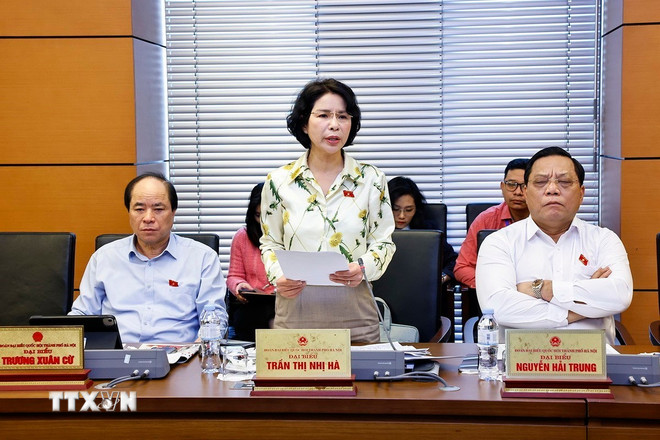
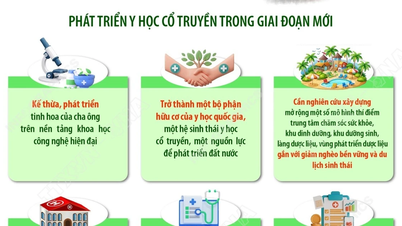
The draft Resolution of the National Assembly on some breakthrough mechanisms and policies for the protection, care, and improvement of people's health stipulates six groups of tasks, including: strongly innovating thinking and actions in leadership, direction, and organization of the work of protecting, caring for, and improving people's health; promptly perfecting institutions, focusing on improving the capacity of the health system, especially preventive medicine and primary healthcare, and promoting the strengths of traditional medicine; improving medical ethics, developing high-quality and comprehensive medical personnel to meet patient satisfaction and international integration.
This also includes promoting reforms in healthcare financing and developing effective and sustainable health insurance policies; breakthroughs in science, technology, innovation, and comprehensive digital transformation in healthcare; promoting the development of private healthcare, and mobilizing and effectively utilizing all resources for healthcare development.
Based on a review of the current obstacles, difficulties, and shortcomings in the healthcare sector, the draft Resolution is expected to focus on addressing breakthrough and strategic issues to promptly institutionalize Resolution 72-NQ/TW of the Politburo and to develop the healthcare sector.
Specifically, the policy group focuses on reducing healthcare costs for citizens: From 2026, free annual health check-ups will be provided at least once a year, prioritized according to target groups and a roadmap; basic hospital fees will be waived within the scope of health insurance benefits according to a roadmap, consistent with the socio-economic development conditions of the country; and pilot programs will be allowed to diversify health insurance packages and supplementary health insurance based on people's needs.
The draft Resolution also stipulates: a group of policies on salary and allowances for medical staff; a group of policies on specialized training in the health sector; and a group of policies and solutions regarding land, taxes, finance, etc.
Chairman of the Committee on Culture and Social Affairs Nguyen Dac Vinh agreed with the Government's proposal to submit the Resolution to the National Assembly for promulgation using a simplified procedure; he requested the Government to continue to thoroughly review and explain each content in the tasks and solutions of Resolution No. 72 to clarify the basis for selecting only some specific tasks and solutions of Resolution No. 72 as in the draft Resolution.
Source: https://www.vietnamplus.vn/co-che-chinh-sach-dot-phat-trien-giao-duc-cham-soc-suc-khoe-nhan-dan-post1077385.vnp



![[Photo] The General Secretary, President and his wife lay flowers at the Ho Chi Minh Monument in Manila.](https://vphoto.vietnam.vn/thumb/1200x675/vietnam/resource/IMAGE/2026/05/31/1780219759477_anh-man-hinh-2026-05-31-luc-16-29-07.png)











![[Video] Sunset at Lap An Lagoon – Where the sun sets over the fishing nets](https://vphoto.vietnam.vn/thumb/340x192/vietnam/resource/IMAGE/2026/05/31/1780192137701_beach-landscape-sea-water-nature-grass-745871-pxhere-com.jpeg)

































































Comment (0)