

Becamex Industrial Development Corporation (Becamex IDC, stock code BCM) has just announced the results of a shareholder consultation on a plan to offer additional shares to the public to increase its charter capital.
Becamex has once again missed its plan to raise 7,500 billion VND.
According to the vote count, Becamex received 136 votes, representing over 1 billion shares, accounting for 98.29% of the company's charter capital. However, only 128 votes, corresponding to nearly 29.5 million shares (2.85%), approved the plan.
Conversely, 6 votes representing over 987.8 million shares, accounting for 95.44% of the voting shares, did not express an opinion. This is precisely the controlling stake held by the People's Committee of Binh Duong province – now under the management of the People's Committee of Ho Chi Minh City after the merger – which caused the issuance plan to fail.
This result means that the company's plan to offer additional shares to the public was not approved. This is the second time this major industrial real estate developer has missed its planned offering.
Earlier this year, Becamex attracted attention with its plan to offer 150 million shares to the public through an auction on the Ho Chi Minh City Stock Exchange (HoSE), with a minimum starting price of 50,000 VND per share.
If successful, the company could raise at least VND 7,500 billion, including VND 2,000 billion for infrastructure investment in the Cay Truong industrial park, VND 500 billion for the expansion of the Bau Bang industrial park, VND 3,330 billion for equity contributions to existing companies (specifically VND 2,276 billion in the VSIP joint venture), and VND 1,670 billion to repay maturing loans and bonds.
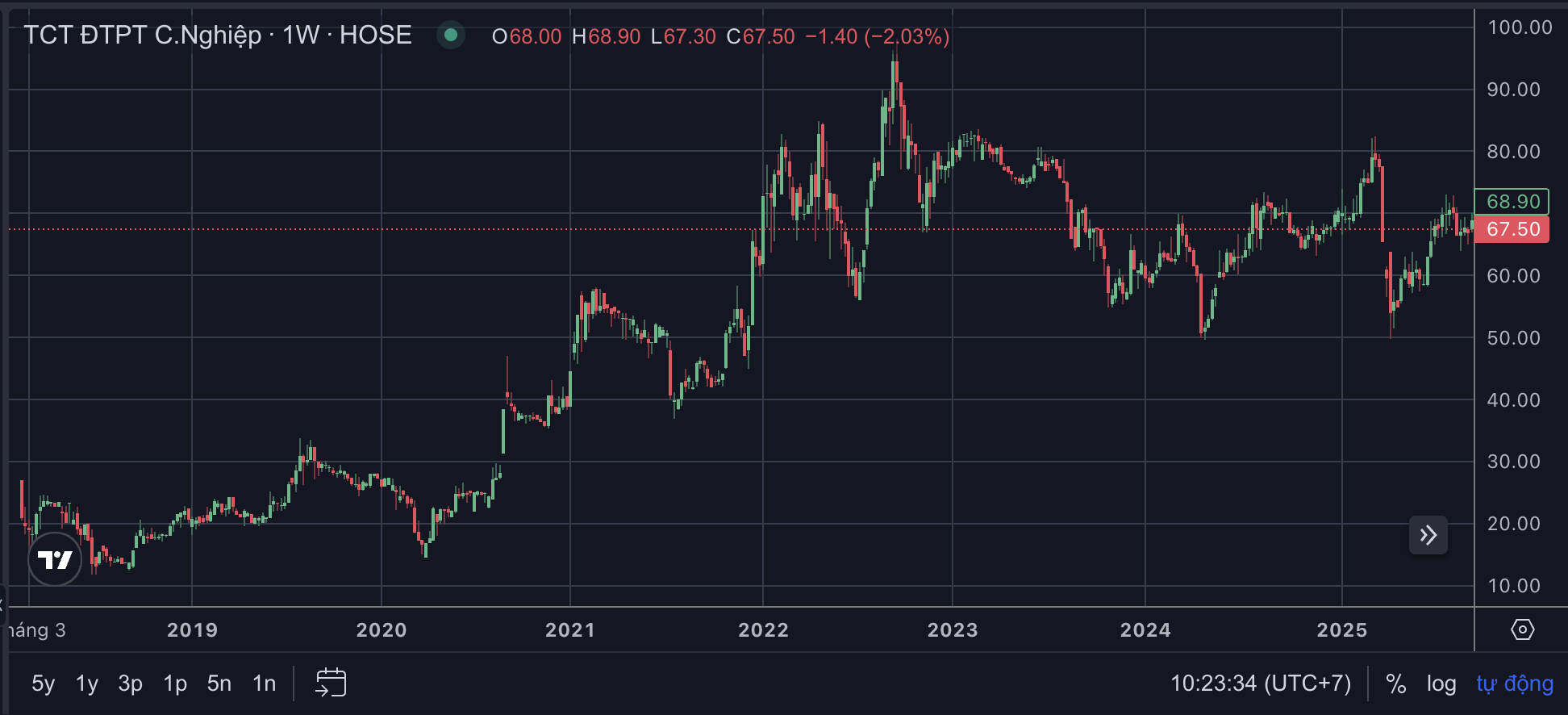
BCM shares are traded on the stock exchange (Photo: VNDStock).
However, a surprise occurred on April 3rd when news that the US might impose a 46% tariff on Vietnam dealt a severe blow to market sentiment. Along with the general market decline, BCM shares plummeted by more than 20%, making the auction impossible, and the company's board of directors had to pass a resolution to postpone it on April 11th.
Undeterred, Becamex then proceeded to propose a smaller-scale Plan B, seeking shareholder approval in writing for the offering of 150 million shares at a starting price of no less than VND 50,000 per share. The new objective was to raise at least VND 7,500 billion to continue investing in projects.
However, according to the results announced on September 17th, this plan once again failed, with only 2.85% of shareholders approving it.
Recalling the disappointment of the 2017 IPO "flop".
As a major player in the industrial real estate sector, Becamex was once hailed as a "blockbuster" IPO at the end of 2017. According to a plan approved by the Prime Minister , Becamex announced the offering of over 311 million shares to the public at an initial price of 31,000 VND per share, representing 23.63% of its charter capital.
At the time, Becamex's IPO was known to be the largest of the year in terms of value (if successful, it would raise nearly 10,000 billion VND) and in terms of scale, second only to Vietcombank 's IPO in December 2007.
However, the plan failed miserably when the company only sold 19 million shares, equivalent to 6.1% of the more than 311.2 million shares offered at auction.
At the beginning of 2018, the company's renewed efforts were no more successful, selling only an additional 5.1 million shares.
In total, across two rounds, Becamex IDC sold 24 million shares (7.7%), raising a mere 745 billion VND. Analysts at the time attributed this to the high initial price, limited public information, and a heavily debt-leveraged financial structure, creating a challenging precedent.
Annual profits in the trillions, outstanding debt exceeding 1 billion USD.
In terms of business, since going public, the company's profits have increased sharply from a few hundred billion VND to thousands of billions VND each year. In the first half of 2025, Becamex achieved a net profit of 1,825 billion VND, nearly five times the figure for the same period.
As of June 30th, the company had total assets exceeding $2 billion, primarily allocated to accounts receivable and inventory. Cash and cash equivalents were quite modest, at only approximately VND 2,833 billion.
The company currently has outstanding liabilities exceeding VND 35,878 billion, of which loans account for VND 22,360 billion. The company's equity stands at VND 21,413 billion, and it possesses reserves of over VND 3,000 billion in development investment funds and VND 7,820 billion in undistributed after-tax profits.
Becamex is currently one of the largest industrial real estate companies in Vietnam in terms of assets, with VND 57,291 billion as of June 30th (over USD 2 billion).
Becamex's predecessor was the Ben Cat General Trading Company, established in 1976. In 1996, Becamex developed the first VSIP industrial park based on a modern integrated industrial-urban-service model through a joint venture with VSIP.
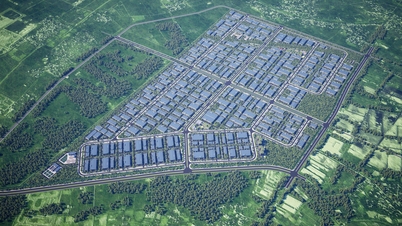
Currently, Becamex operates 21 industrial parks across 15 provinces and cities nationwide, with a network of dozens of member enterprises in various fields such as healthcare, education, telecommunications, energy, and infrastructure.
Industrial parks within the Becamex network include VSIP Bac Ninh, VSIP Hai Phong, VSIP Hai Duong, VSIP Nghe An, VSIP Quang Ngai, VSIP Binh Dinh, and VSIP Binh Duong.
The company announced that it has received investment approval for seven new industrial parks, including VSIP Lang Son, VSIP Thai Binh, VSIP Quang Ngai II, VSIP Ha Tinh, VSIP Can Tho, VSIP Quang Tri, and VSIP Nam Dinh.
Source: https://dantri.com.vn/kinh-doanh/co-dong-lon-im-lang-becamex-that-bai-trong-ke-hoach-chao-ban-co-phieu-20250921125603826.htm























































































Comment (0)